
35W Portable Jewelry Ultrasonic Cleaners
600ml Household Ultrasonic Bath
Application:
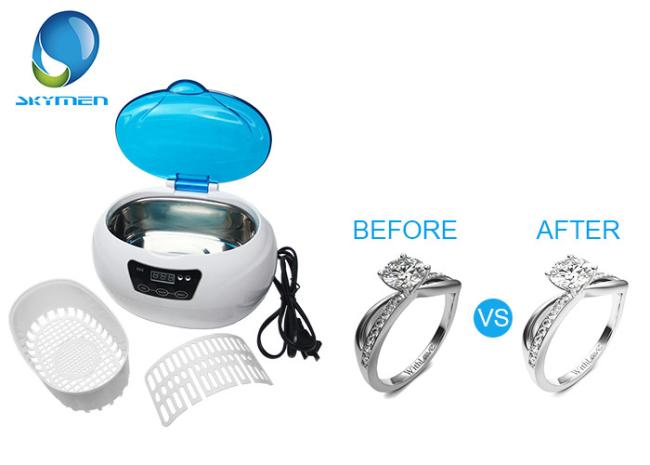
Jewelry, diamond, wedding ring, necklace, earring, body jewelry, body piercing, clock & watches, eyeglasses, contact lens, dentures, table-ware, printer inkjet, seal and comb, toothbrush, baby feeder, baby nipple, etc.and all your small things.
Specificatoin:
| Model | JP-890 |
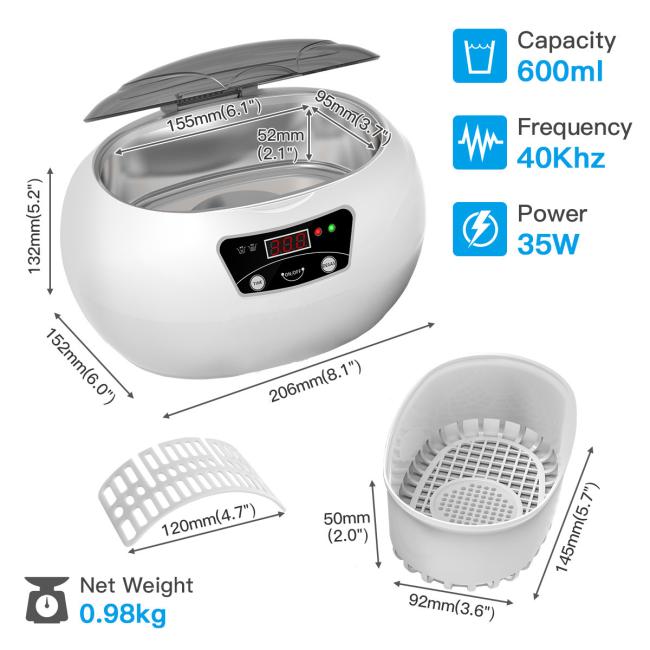
| Tank capacity | 600ml |
| Ultrasonic power | 35W |
| Timer | 18 interval times ad |
| Frequency | 40000Hz |
| N.W. | 0.95KG |
| Power Supply | AC 100 ~ 120V, 50 / 60Hz ; AC 220 ~ 240V, 50 / 60 Hz |
| Tank size | 155× 95×52mm |
| Unit size | 206 ×152×132mm |
| Inner packing | 245×175×165mm |
| Big Carton packing | 545×510×355 mm |
Product description:
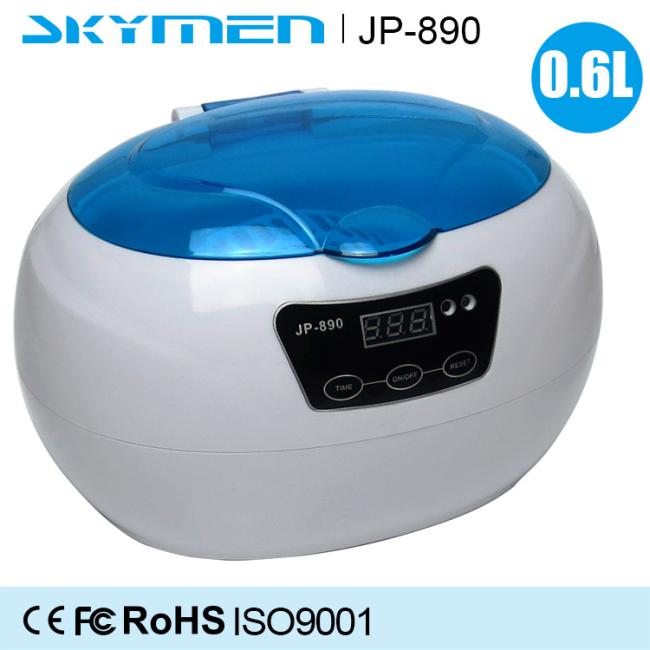
600ml digital ultrasonic cleaner, ultrasonic jewelry cleaning machine
JP-890 with 18 digital timer cycle settings
Having great effect of sterilizing and cleaning
Home used mini ultrasonic cleaner
Timer: 1.5m/2m/3.5m/4m/4.5m/5m/5.5m/6m/9m/12m/15m/21/24m/27m/30m
Features
- It presents the capacity of 600ml.
- Ideal for cleaning spectacles, jewelry, dentures & Braces, cleaning watches and many more to maintain hygiene.
- Presents a gentle cleaning method with a high cleaning frequency of 42KHz normally with a cleaning power of 35W.
- Presents a stainless steel tank to use the cleaning fluid to clean the items at high frequency.
- It vibrates at a high frequency to remove the dirt from the smallest and inaccessible particles.
- Has a fine quality mesh basket for safe cleaning
Images of this model:



How does Ultrasonic Cleaner work?

How to use an ultrasonic cleaner?
(take medical instruments as example)
In all cases manufacturers’ instructions should be followed when using an ultrasonic cleaning process. These are representative steps.
Fill the ultrasonic cleaning tank with an approved medical instrument cleaning solution such as CLN-LR012 available from Tovatech following dilution instructions provided. Turn the cleaner on to start the degassing process. This step removes entrained air in new solutions that interferes with the efficiency of cavitation and takes approximately 10 minutes.
In the meantime:
- Segregate instruments by alloy or composition to avoid potential damage (Chromium plated instruments should not be cleaned ultrasonically)
- Instruments with movable parts should be disassembled to facilitate cleaning
- Place the instruments the ultrasonic cleaner’s mesh basket, taking care that they do not come in contact with each other
- Cannulated or lumened instruments should be positioned to insure interiors are wetted with the cleaning solution. In some instances placing them on an angle will facilitate this
- Set the control panel per manufacturers’ instructions and start the cleaning process
At the end of the cycle, remove the instruments from the ultrasonic cleaning bath and thoroughly rinse them to remove all traces of the cleaning solution. Deionized water rinses will avoid spotting. If the instruments are not to be immediately disinfected and sterilized be certain that they are thoroughly dried and protected. Part reassembly can occur after sterilization.
Procedures should be in place to guide the replacement of used ultrasonic cleaning solutions. In some instances it is recommended that solution be drained and tanks thoroughly cleaned and dried after each ultrasonic cleaning cycle. Most solutions available today are biodegradable, which facilitates disposal but local authorities should be consulted on proper practices.
Get in Touch
Have questions about our products or want to discuss a custom order? Our team is ready to help you.