
Food Chemical Battery Material Dust Removal Screening Discharge Machine
Food chemical battery material dust removal screening discharge machine
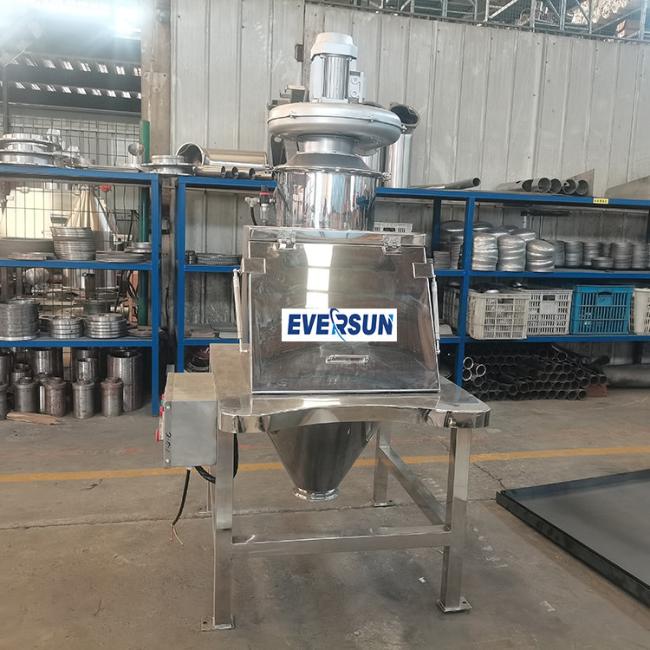
Dust-free feeding station is an efficient material handling equipment, widely used in chemical, food, battery materials and other industries. The main feature of this type of equipment is that it can realize dust-free and automatic feeding of materials, significantly improve production efficiency, while reducing environmental pollution and reducing labor costs
characteristic
1. Easy to clean
2. Environmental protection and dust-free
3. Safe operation
4. Can be connected to a variety of equipment
5. Automatic dust collection
6. Non-blocking material
Product parameter
| Model | Screening area | Power | Rotational speed | Exciting force | Flow rate |
|
GF-800 |
0.42 |
2×0.15kw |
1460
r/min |
2.5×2 |
1550-997 |
|
GF-1000 |
0.64 |
2×0.25kw |
1460
r/min |
5×2 |
1550-997 |
Advantages
1---Improve production efficiency: high degree of automation, can greatly reduce manual operation, improve feeding efficiency.
2---Improve working environment: effectively control dust emission, create a clean and safe working environment.
3---Improve product quality: avoid external impurities entering the production process, ensure product purity and quality.
4---Reduce production costs: greatly reduce manual labor input and reduce labor costs.
Application
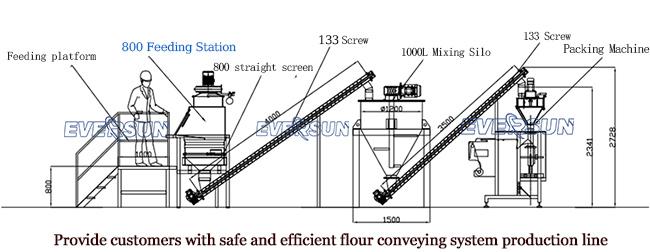
The Bag Tipping Station (dust-free feeding station) is suitable for unpacking, placing, screening and discharging small bag materials in pharmaceutical, chemical, food, battery materials and other industries. When unpacking, due to the role of dust collecting fan, material dust can be prevented from flying around.

Packing and shipping
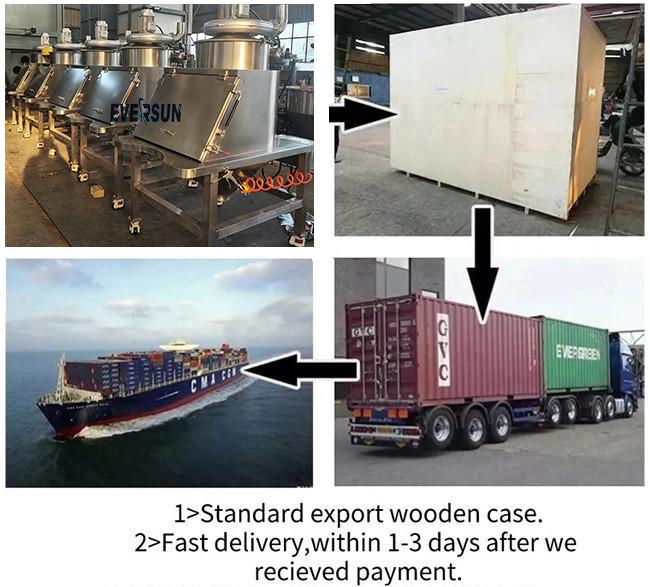
The packaging and shipping of Bag Tipping Stations will usually be arranged according to the specific equipment design and size.
Packaging and transportation:
1---Select appropriate packaging materials, such as wooden boxes, cushions, etc., and take protective measures such as moisture-proof, shock-proof, and rust-proof.
2---Use fixing devices such as binding belts for loading to prevent equipment movement, pile up vulnerable parts or precision equipment, and adopt special fixing methods.
3---Take measures such as transportation monitoring during transportation to ensure the safe arrival of the goods, and check whether the appearance and function of the equipment are intact when signing for the goods.
Get in Touch
Have questions about our products or want to discuss a custom order? Our team is ready to help you.