
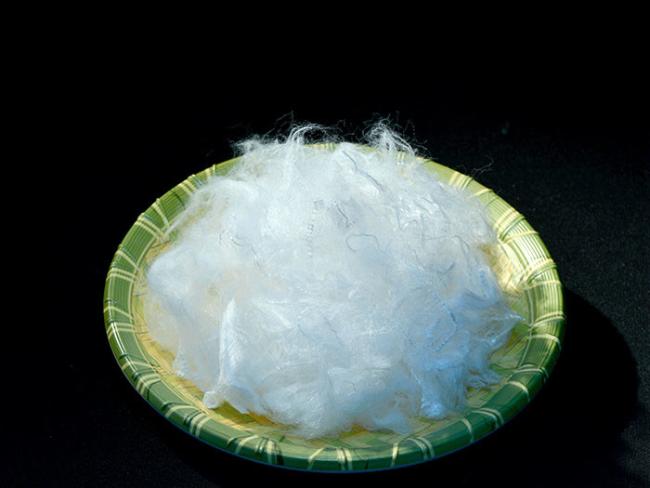
Antibacterial Carbon Polylactic Acid Fiber White For Spinning
1.75dtex Carbon Fiber Polylactic Acid Fiber For Spinning
PLA Degradable Fiber 1.5D For Medical Nonwoven
1 . Descriptions:
There are a vast array of applications for Polylactic Acid. Some of the most common uses include plastic films, bottles, and biodegradable medical devices (e.g. screws, pins, rods, and plates that are expected to biodegrade within 6-12 months). For more on medical device prototypes (both biodegradable and permanent) read here. PLA constricts under heat and is thereby suitable for use as a shrink wrap material. Additionally, the ease with which Polylactic Acid melts allows for some interesting applications in 3D printing (namely “lost PLA casting” - read more below). On the other hand, its low glass transition temperature makes many types of PLA (for example, plastic cups) unsuitable to hold hot liquid.
2 . Specifications:
| No | Test | Unit | Data | ||
| 1 | Titre | dtex | 1.5. | ||
| 2 | Tenacity at break | cN/dtex | 3.55 | ||
| 3 | Elongation at break | % | 38.27 | ||
| 4 | Length | mm | 39.2 | ||
| 5 | Crimp number | number/25mm | 15 | ||
| 6 | Defect | mg/100g | / | ||
| 7 | Over-length fiber | mg/100 | 2 | ||
| 8 | Oil content | % | 0.2 | ||
| 9 | Dry thermal shrinkage | % | 5 | ||
| 10 | Moisture | % | - | ||
3 . Advantages:
- They are good for the environment because there is no harm done to the earth when recovering fossil fuels. Also, in this process there are very few greenhouse gas and harmful carbon emissions. Regular plastics need oil for their manufacturing, which pollutes the environment.
- They require less energy to produce than petroleum-based plastics.
- They are recyclable.
- They are non toxic.
- They reduce dependence on foreign oil.
- They are made from renewable resources.
4 . More pictures:
Get in Touch
Have questions about our products or want to discuss a custom order? Our team is ready to help you.