
Tungsten Carbide Dies
Overview
Tungsten Carbide Dies are high-performance forming dies made of tungsten carbide (WC) as the main hard phase and cobalt (Co) and other materials as binders, using powder metallurgy. They combine ultra-high hardness, excellent wear and impact resistance, and are core equipment in the field of metal-plastic processing. They are widely used, especially in the wire drawing or forging processes of non-ferrous metals or special alloys, and can greatly improve processing accuracy and production efficiency.
Tungsten Carbide Advantages
- Extremely high hardness and wear resistance, far exceeding traditional mold steel, effectively resists frictional wear during metal billet forming, with a lifespan 50-100 times longer than steel molds.
- Excellent resistance to deformation, high elastic modulus, and resistance to plastic deformation or collapse, maintaining cavity dimensional accuracy over a long period and ensuring consistency in batch production.
- Good high-temperature resistance and thermal shock resistance prevent mold cracking due to thermal expansion and contraction, while reducing wear failure caused by high-temperature softening.
- Excellent chemical stability; does not readily react with metal billets such as iron, copper, and aluminum, helping prevent adhesion problems and ensuring a smooth surface finish on the workpiece.
Tungsten Carbide Dies Specification
| Grade | YG8/YG15/YG20 |
| OD | 10--120mm |
| Length | 12--50mm |
| Aperture | 1-67mm |
| Hardness | ≥87HRA |
| Density | 14.4-15.87g/cm³ |
| Surface | Grinding, Polishing |
| Delivery time |
ASTM, GB |
| Certification | ISO 9001 |
Cemented Carbide Dies Application
1. For Wire Drawing
- Special alloy wire: Can be used for drawing difficult-to-process wires such as stainless steel wire, tungsten-molybdenum alloy wire, and titanium alloy wire, such as high-temperature alloy wire for aerospace applications, medical titanium alloy guide wire, and tungsten wire for cemented carbide tools.
- Wire and cable industry: Mainly used for multi-pass drawing of fine copper wire and aluminum rods, and a single die can complete the drawing of large quantities of copper wire, with a lifespan more than 60 times that of traditional steel dies, significantly reducing the cost of die replacement in cable production.
- Electronic components industry: Used for drawing ultra-fine wires such as precision electronic lead wires, semiconductor bonding wires, and miniature antenna wires.
- Metal processing: Suitable for forming general metal products such as steel wire, iron wire, and aluminum wire, such as binding steel wire for construction and high-carbon steel wire for hardware springs, ensuring the straightness and surface accuracy of the wire.
| YG6X / YG6 | Fine wires, non-ferrous metals (copper, aluminum, gold, silver) | It has fine grain size, high hardness, and good wear resistance, making it suitable for drawing wires of small diameters. |
| YG8 | General purpose (carbon steel, stainless steel, medium-gauge wire) | This grade offers the best balance of performance, possessing both good wear resistance and high strength, making it the most widely used grade. |
| YG15 | Bars and tubes (high-carbon steel, bearing steel) | With a high cobalt content, it possesses excellent toughness and high compressive strength, making it suitable for drawing operations involving large deformations and high stresses. |
2. Forging Applications
- Hot forging dies: Used for high-temperature forming of high-end forged parts such as engineering machinery components, titanium alloy blades, high-temperature alloy turbine discs, and aerospace fasteners.
- Cold heading dies: Used for producing fasteners such as bolts, nuts, and screws. Carbide dies and punches can withstand repeated impacts and high pressure, producing bolts with well-formed heads and precise dimensions.
- Cold extrusion dies: Used for manufacturing complex solid or hollow parts, such as automotive components and bearing rings.
- Drawing/stamping dies: Used for deep drawing metal sheets into cylindrical or box-shaped parts (such as automotive or electronic components).
Process
① According to the specified grade requirements, precisely proportion the tungsten carbide (WC) powder and cobalt (Co) binder phase powder.
② Utilize ball milling for mixing to ensure uniform powder distribution and consistent particle size.
③ Load the mixed powder into the mold cavity and form the workpiece using cold isostatic pressing to ensure uniform density.
④ High-temperature sintering is performed under a vacuum or hydrogen protective atmosphere to form a dense cemented carbide blank from the WC particles and Co binder phase.
⑤ The outer diameter, height, and end face of the blank are machined using a surface grinder and cylindrical grinder to ensure outer diameter tolerance.
⑥ Initial micro-holes are created using electrical discharge machining (EDM), with hole position deviation controlled within 0.002mm, providing a reference for mold core formation.
⑦ Diamond grinding rods are used for rough grinding of the pre-drilled holes, gradually expanding the hole diameter to near the target size.
⑧ Coating treatment is applied to high-precision, high-load molds to improve wear resistance and service life.
⑨ Comprehensive quality inspection throughout the entire process, including hardness testing, dimensional inspection, visual inspection, and non-destructive testing, ensures that the product meets international export standards.
Tungsten Carbide Dies Pictures


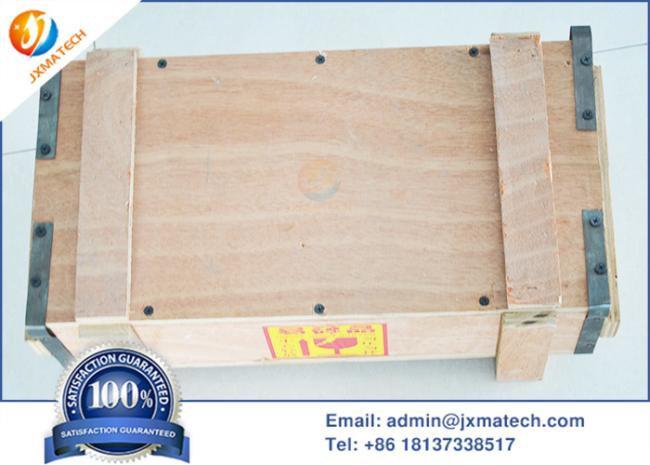
Packing
Get in Touch
Have questions about our products or want to discuss a custom order? Our team is ready to help you.