
Pure Moly Ion Implantation Parts In Precision Components Application
Pure Moly Ion Implantation Parts in Precision Components Application
Moly Ion Implantation Parts mean that when an ion beam is emitted into a solid material in vacuum, the ion beam knocks the atoms or molecules of the solid material out of the surface of the solid material. This phenomenon is called sputtering;
When the ion beam hits the solid material, it bounces back from the surface of the solid material or passes through the solid material. These phenomena are called scattering;
Another phenomenon is that after the ion beam is shot into the solid material, it is slowly reduced by the resistance of the solid material, and finally stays in the solid material. This phenomenon is called ion implantation.
SPECIFICATION & CHEMICAL COMPOSITIONS (NOMINALS)
| Material | Type | Chemical Composition (by wt.) |
| Pure Moly | Mo1 | >99.95%min. Mo |
| Ti-Zr-Mo Alloy | TZM | 0,5 % Ti / 0,08 % Zr / 0,01 - 0,04 % C |
| Mo-Hf-C | MHC | 1,2 % Hf / 0,05 - 0,12 % C |
| Moly Rhenium | MoRe | 5,0 % Re |
| Moly Tungsten | MoW20 | 20,0 % W |
| Moly Tungsten | MoW505 | 0,0 % W |
Advantages of Moly Ion Implantation Parts Technology:
Ion implantation technology is an ion beam technology that ionizes the atoms of an element into ions, accelerates them at a voltage of tens to hundreds of kV, and injects them into the surface of workpiece material placed in vacuum target chamber after obtaining high speed.
After ion implantation, the physical, chemical and mechanical properties of the surface of the material will change significantly. The continuous wear resistance of the metal surface can reach 2 ~ 3 orders of magnitude of the initial implantation depth.
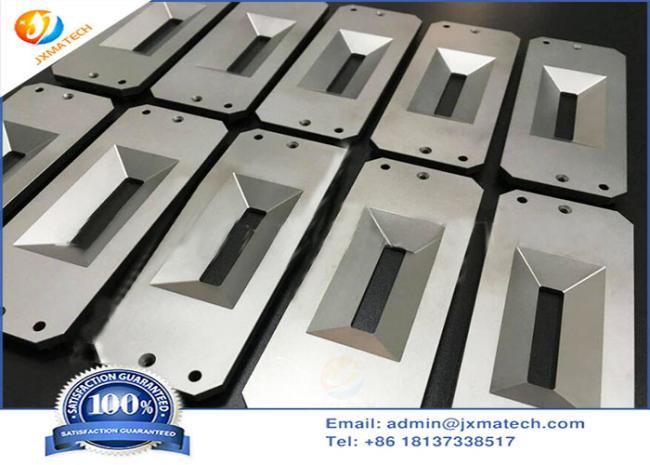
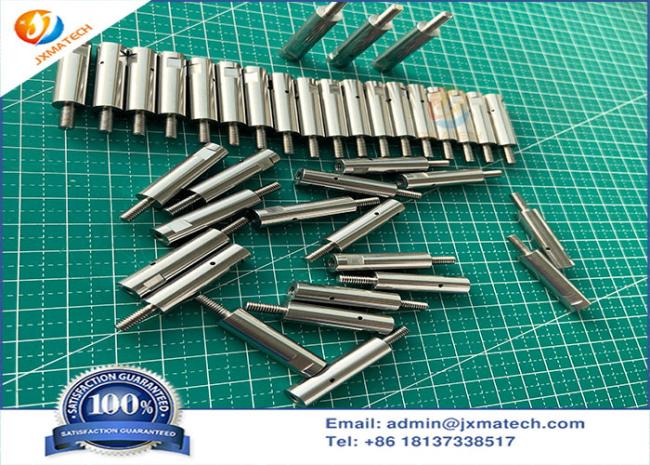
Moly Ion Implantation Parts Picture:
APPLICATIONS of Moly Ion Implantation Parts
The application of moly ion implantation in the modification of metal materials is to inject a certain dose and energy of ions into the metal material surface after heat treatment or surface coating process, so as to change the chemical composition, physical structure and phase state of the material surface, so as to change the mechanical, chemical and physical properties of the material.
Specifically, ion implantation can change the acoustic, optical and superconducting properties of materials, improve the working hardness, wear resistance, corrosion resistance and oxidation resistance of materials, and finally prolong the working life of materials.
Get in Touch
Have questions about our products or want to discuss a custom order? Our team is ready to help you.