Double Braided Nylon Mooring Rope for Marine Towing and Docking
Double braided nylon mooring rope is a high-performance rope commonly used in marine, dock, and towing applications due to its strength, elasticity, and durability. Here’s a detailed breakdown of its features and uses:
Key Features:
-
Material: Made from nylon, which provides excellent:
-
Strength-to-weight ratio (high tensile strength for its size).
-
Elasticity (can stretch up to 20-30%, absorbing shock loads effectively).
-
Resistance to abrasion, UV rays, and chemicals (treated for marine environments).
-
Floatability (some variants float, though nylon typically absorbs water).
-
-
Construction:
-
Double Braided Structure: Consists of a braided core inside a braided cover, offering better strength and flexibility than a single braid.
-
Smooth Handling: The outer braid protects the inner core, reducing wear and kinking.
-
Balanced Design: Resists hockling (twisting) and provides uniform load distribution.
-
-
Advantages Over Other Ropes:
-
-
Higher strength than three-strand nylon ropes of the same diameter.
-
More flexible and easier to handle than twisted ropes.
-
Better resistance to wear due to the protective outer braid.
-
Common Uses:
-
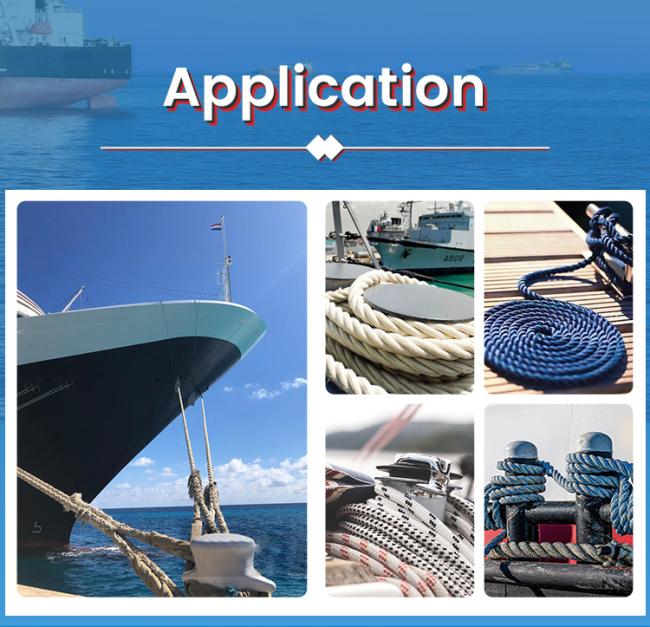
Mooring lines for boats, ships, and docks (absorbs shock from waves and wind).
-
Towing & anchor lines (handles dynamic loads well).
-
Dock lines & marine applications (durable in saltwater conditions).
-
Industrial & utility applications where strong, abrasion-resistant rope is needed.
-
Sizing & Strength:
-
Diameter Range: Typically from 3/8" (10mm) to 2" (50mm) or more.
-
Breaking Strength: Varies by diameter (e.g., a 1/2" nylon double braid may have a breaking strength of ~10,000 lbs).
-
Working Load: Usually 15-20% of breaking strength for safety.
Maintenance Tips:
-
Rinse with fresh water after saltwater use to prolong lifespan.
-
Inspect regularly for cuts, abrasions, or UV damage.
-
Store dry and coiled to prevent kinks and mildew.
Alternatives:
-
Polyester Double Braid: Less stretch, better for static loads.
-
Three-Strand Nylon: Cheaper but less flexible.
-
Spectra: Higher strength, no stretch, but more expensive.




Get in Touch
Have questions about our products or want to discuss a custom order? Our team is ready to help you.