
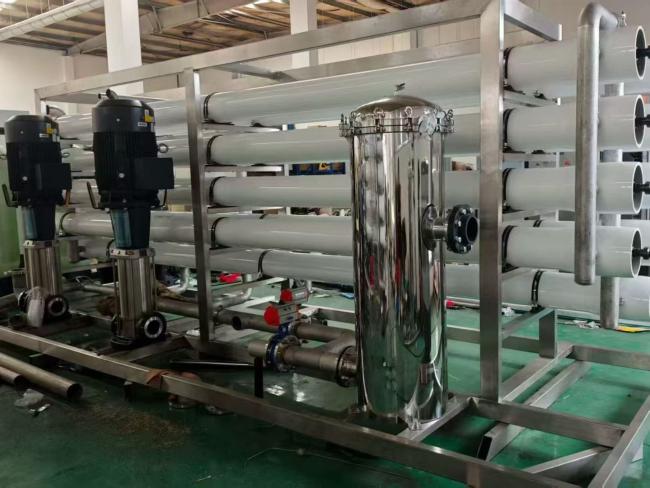
"Experience Unmatched Efficiency with Our High-Performance Membrane Bioreactor for Reverse Osmosis
Product Description:
To ensure accurate membrane product selection and performance prediction, customers should conduct at least one comprehensive chemical analysis of the feed water. Ideally, multiple analyses should be performed over an extended period or during potential abrupt changes in water quality. Historical trends in membrane system performance parameters are crucial, particularly for surface water sources, which may exhibit seasonal variations due to spring runoff or lake/pond turnover events. Frequent changes, such as heavy rainfall or even wind—which can stir up sediments in lakes or ponds—affect surface water composition and lead to fluctuations in feed turbidity. Generally, the more existing and historical data analyzed, the better the overall system design.
For example:
Surface water may contain suspended solids, organic matter, and various microorganisms;
Well water might include scaling substances such as hardness and silica;
Municipal water sourced from surface supplies could contain residual chemicals from treatment processes, including aluminum and iron, which may deposit on membranes in the form of hydroxides or silicates;
Recycled industrial wastewater may introduce various contaminants, scaling components, and membrane-damaging compounds such as oils, surfactants, and defoamers.
2. The minimum salt rejection rate is 99.0%.
3. The flow rate of a single element may vary within a range of ±15%.
Maximum Operating Pressure: 600 psi (4.14 MPa)
pH Range, Continuous Operation: 3-10
Maximum Feed Silt Density Index (SDI): < 5
Maximum Feed Flow Rate: 16 gpm (3.6 m³/h)
Chlorine Tolerance: < 0.1 ppm
a. The maximum temperature for continuous operation at pH above 10 is 95 °F (35 °C).
b. Under certain conditions, free chlorine and other oxidizing agents may cause premature membrane failure. Since damage from oxidation is not covered under warranty, it is recommended that customers remove residual chlorine through pretreatment prior to membrane contact.

|
Membrane type
|
Membrane Model
|
Stable Salt Rejection%
|
Minimum Salt Rejection%
|
Average Water ProductionGDP(M3/d)
|
Membrane area ft2(m2)
|
Feed Spacer (mil)
|
Test condition
|
||
|
Test Pressure psi(bar)
|
Test Solution Concentration nacl(ppm)
|
Recovery Rate%
|
|||||||
|
Ultra-Low Pressure Reverse Osmosis
|
ECO1-8040
|
99.0
|
98.5
|
10500(39.7)
|
400(37.2)
|
28
|
100(6.9)
|
500
|
15
|
|
ECO1-4040
|
99.0
|
98.5
|
2600(9.8)
|
93(8.6)
|
28
|
||||
|
ECO2-8040
|
99.0
|
98.5
|
11000(41.6)
|
440(41.0)
|
28
|
||||
|
ECO2-4040
|
99.0
|
98.5
|
2800(10.5)
|
103(9.6)
|
28
|
||||
|
Ultra-Low Pressure Reverse Osmosis
|
LPO1-8040
|
99.3
|
99.0
|
11000(41.6)
|
400(37.2)
|
32
|
150(10.3)
|
1500
|
15
|
|
LPO2-8040
|
99.3
|
99.0
|
11500(43.5)
|
420(39.0)
|
30
|
||||
|
LPO3-8040
|
99.3
|
99.0
|
12000(45.4)
|
440(41.0)
|
28
|
||||
|
LPO1-4040
|
99.3
|
99.0
|
2500(9.5)
|
93(8.6)
|
28
|
||||
|
LPO2-4040
|
99.3
|
99.0
|
2600(9.8)
|
103(9.6)
|
28
|
||||
|
LPO1-8040HR
|
99.5
|
99.3
|
10000(37.8)
|
400(37.2)
|
32
|
||||
|
LPO2-8040HR
|
99.5
|
99.3
|
10500(39.7)
|
420(39.0)
|
30
|
||||
|
LPO3-8040HR
|
99.5
|
99.3
|
11000(41.6)
|
440(41.0)
|
28
|
||||
|
Low-Pressure (Brackish Water) Reverse Osmosis Membrane
|
PRO1-8040
|
99.5
|
99.3
|
10500(39.7)
|
400(37.2)
|
32
|
225(15.5)
|
2000
|
15
|
|
PRO2-8040
|
99.5
|
99.3
|
11000(41.6)
|
420(39.0)
|
30
|
||||
|
PRO3-8040
|
99.5
|
99.3
|
11500(43.5)
|
440(41.0)
|
28
|
||||
|
PRO1-4040
|
99.5
|
99.3
|
2500(9.5)
|
93(8.6)
|
28
|
||||
|
PRO2-4040
|
99.5
|
99.3
|
2600(9.8)
|
103(9.6)
|
28
|
||||
|
Low-Pressure (Brackish Water) High-Rejection Reverse Osmosis Membrane
|
PRO1-8040HR
|
99.7
|
99.5
|
9500(36.0)
|
400(37.2)
|
32
|
|||
|
PRO2-8040HR
|
99.7
|
99.5
|
10000(37.8)
|
420(39.0)
|
30
|
||||
|
PRO3-8040HR
|
99.7
|
99.5
|
10500(39.7)
|
440(41.0)
|
28
|
||||
|
PRO1-4040HR
|
99.7
|
99.5
|
2000(7.6)
|
93(8.6)
|
28
|
||||
|
PRO2-4040HR
|
99.7
|
99.5
|
2100(8.1)
|
103(9.6)
|
28
|
||||
Applications
Suitable for desalination and advanced treatment of brackish water, surface water, and tap water with a salinity of approximately 1500 ppm or less, such as small commercial water purifiers, hospital and laboratory water purification equipment, etc.
Conclusion
Notes:
a. The maximum temperature for continuous operation at pH above 10 is 95 °F (35 °C).
b. Under certain conditions, free chlorine and other oxidizing agents may cause premature membrane failure. Since damage from oxidation is not covered under warranty, it is recommended that customers remove residual chlorine through pretreatment prior to membrane contact.
Get in Touch
Have questions about our products or want to discuss a custom order? Our team is ready to help you.