
Stop Rust Failure With ASTM A240 316L Seamless Stainless Steel Tube For Marine And Chemical Service
Stop Rust Failure With ASTM A240 316L Seamless Stainless Steel Tube For Marine And Chemical Service
Product Overview
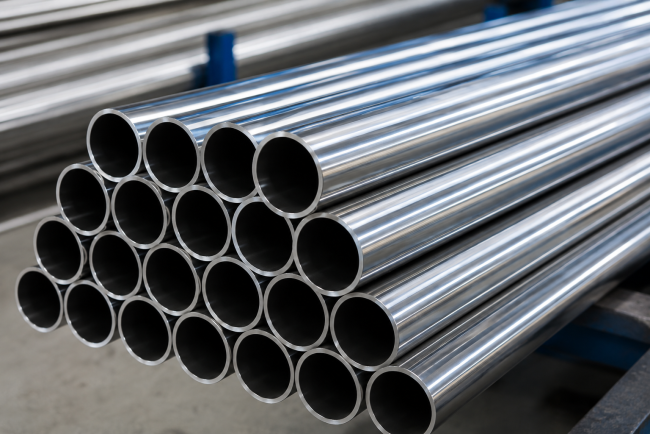
Hot Rolled ASTM A240 316/316L Seamless Stainless Steel Tube is a premium corrosion-resistant stainless steel tubing widely used in decorative structures, chemical processing equipment, heat exchangers, marine engineering, food processing, and architectural projects.
Manufactured through advanced hot rolling and seamless production processes, these tubes provide excellent mechanical strength, superior resistance to chloride corrosion, and outstanding weldability. Compared with standard 304 stainless steel tubing, 316 and 316L stainless steel tubes contain molybdenum, significantly improving pitting and crevice corrosion resistance in harsh environments.
316L stainless steel features a lower carbon content than 316, minimizing carbide precipitation during welding and ensuring better corrosion resistance in welded structures.
Cause
Many industrial projects fail prematurely due to corrosion, rust formation, and material degradation caused by:
- Exposure to seawater and chloride-containing environments
- Chemical processing fluids
- High humidity and coastal climates
- Poor weldability of conventional stainless steel grades
- Surface pitting and crevice corrosion
Traditional carbon steel tubes and standard 304 stainless steel tubes may not provide sufficient protection under these demanding conditions.
Solution
ASTM A240 316 and 316L Seamless Stainless Steel Tubes offer an effective solution by providing:
- Superior corrosion resistance
- Excellent chloride resistance
- High-temperature oxidation resistance
- Outstanding weldability
- Long service life
- Attractive decorative appearance
- Low maintenance requirements
For projects involving extensive welding operations, 316L stainless steel is recommended due to its lower carbon content and improved resistance to intergranular corrosion.
Specifications
| Item | Specification |
|---|---|
| Product Name | Hot Rolled ASTM A240 316 316L Seamless Stainless Steel Tube |
| Material Grade | 316, 316L, 304, 304L, 321 |
| Manufacturing Process | Hot Rolled, Seamless |
| Outer Diameter (Round Tube) | 5mm – 500mm |
| Wall Thickness | 0.2mm – 50mm |
| Square Tube Size | 4×4mm – 2000×2000mm |
| Rectangular Tube Size | 2×4mm – 1500×2000mm |
| Length | 2m, 3m, 5m, 5.8m, 6m, 11.8m, 12m or Customized |
| Surface Finish | Pickled, Polished, Bright Annealed, Satin Finish |
| Standard | ASTM A240, ASTM A312, EN 10216-5, DIN 17456, JIS G3459 |
| Inspection | PMI, UT, Hydrostatic Test, Dimension Inspection |
| Certificate | EN10204 3.1, MTC, SGS, BV, TUV |
Chemical Composition of 316/316L Stainless Steel (%)
| Grade | C | Si | Mn | Cr | Ni | Mo |
| 316 | ≤0.08 | ≤1.00 | ≤2.00 | 16.0-18.0 | 10.0-14.0 | 2.0-3.0 |
| 316L | ≤0.03 | ≤1.00 | ≤2.00 | 16.0-18.0 | 10.0-14.0 | 2.0-3.0 |
Application
316 and 316L seamless stainless steel tubes are widely used in:
Chemical Industry
- Chemical reactors
- Acid and alkali transportation systems
- Storage tanks
Petrochemical Industry
- Refinery piping systems
- Offshore oil platforms
- Gas transportation equipment
Heat Transfer Equipment
- Heat exchangers
- Condensers
- Boilers
Marine Engineering
- Shipbuilding
- Seawater desalination plants
- Coastal infrastructure
Food & Beverage Industry
- Food processing equipment
- Dairy production lines
- Brewing systems
Decorative Construction
- Handrails
- Architectural structures
- Interior and exterior decoration
Medical Industry
- Surgical equipment
- Pharmaceutical processing systems
How It Works
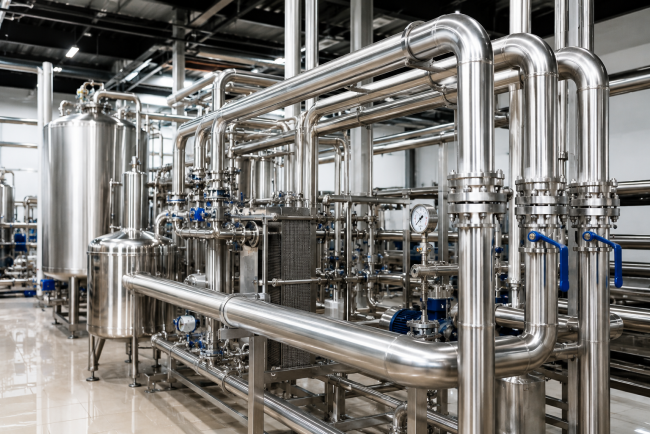
316 and 316L stainless steel tubes achieve corrosion resistance through the formation of a stable chromium oxide passive film on the metal surface.
When exposed to oxygen, chromium reacts to form a protective layer that prevents further oxidation. The addition of molybdenum enhances resistance against chloride-induced pitting corrosion, making these tubes ideal for marine and chemical environments.
In 316L stainless steel, reduced carbon content minimizes carbide precipitation during welding, maintaining corrosion resistance in the heat-affected zone and extending service life in welded structures.
How To Choose
Selecting the correct stainless steel tube depends on operating conditions:
Choose 316 When:
- Welding is limited
- Cost control is important
- General corrosion resistance is sufficient
- Structural applications are involved
Choose 316L When:
- Extensive welding is required
- Post-weld heat treatment is unavailable
- High corrosion resistance is critical
- Chemical or marine environments are present
Consider These Factors:
- Working temperature
- Corrosive media concentration
- Pressure requirements
- Surface finish requirements
- Dimensional tolerance requirements
FAQ
Q1: What is the difference between 316 and 316L stainless steel tubes?
316L contains lower carbon content (≤0.03%) than 316 (≤0.08%), providing better weldability and improved resistance to intergranular corrosion after welding.
Q2: Is 316L better than 304 stainless steel?
Yes. 316L contains molybdenum, which significantly improves corrosion resistance, especially in chloride-rich environments such as seawater and chemical processing plants.
Q3: Can 316 seamless tubes be used outdoors?
Yes. 316 and 316L stainless steel tubes are widely used in outdoor architectural, marine, and industrial applications because of their excellent weather and corrosion resistance.
Q4: What inspection certificates can be provided?
We can provide EN10204 3.1 Material Test Certificates, PMI reports, UT reports, SGS inspection reports, and third-party certifications upon request.
Q5: Can you manufacture custom sizes?
Yes. Customized diameters, wall thicknesses, lengths, surface finishes, and special processing requirements are available according to customer drawings and specifications.
Get in Touch
Have questions about our products or want to discuss a custom order? Our team is ready to help you.