
1.4845 X8CrNi25-20 Stainless Steel Plates High Temperature Resistance
EN 10088-1:2005 1.4845 High-Temperature ResistanceStainless Steel Plate X8CrNi25-20
ASTM A240 Duplex 304 201 316L 310S 321 430 2b Ba No. 4 Finish Stainless Steel Sheet
Product Description
1. Description
| Product Name | ASTM A240 Duplex 304 201 316L 310S 321 430 2b Ba No. 4 Finish Stainless Steel Sheet |
| Thickness | 0.25~150mm |
| Width | 600mm,1000mm,1219mm,1500mm,1800mm,2000mm,2500mm, 3000mm, 3500mm,etc |
| Length | 2000mm, 2440mm, 3000mm, 5800mm, 6000mm, etc |
| Standard | ASTM GB/T JIS4 ASME BS DIN EN |
| Material | 310S, 310, 309, 309S, 316, 316L, 316Ti, 317, 317L, 321, 321H, 347, 347H, 304, 304L,302, 301, 201, 202, 403, 405, 409, 409L, 410, 410S, 420, 430, 631, 904L, Duplex, etc. |
| Brand Name | TISCO, BAO STEEL, ZPSS, LISCO, POSCO, NAS |
| Technique | Hot Rolled And Cold Rolled |
| Surface | 2B, 2D, BA, NO. 1, NO. 4, NO. 8, 8K, mirror,checkered,embossed,hair line, sand blast, Brush, etching, etc |
| Price Term | Ex-Work, FOB, CNF, CFR, CIF, etc |
2. Surface Treatment and characteristic
| Surface finish | Characteristics and application |
| NO.2B |
The surface brightness and flatness of no2B is better than no2D. then through a special surface treatment to improve its mechanical properties,No2B could nearly satisfy compreh ensive uses. |
| NO.1 |
The surface is finished by heat treatment and pickling or processes corresponding thereto after hot rolling. |
| NO.4 |
Polished with abrasive belt of grit #150-#180,have better brightness with discontinuous coarse stria,but thinner than No3, are used as bathtub buildings inner and external ornaments electrical appliances kitchen utensils and food processing equipment etc. |
| HL |
Polished with abrasive belt of grit #150#320 on the NO.4 finish and has continuous streaks,mainly used as buildingsornaments elevators,door of building,frontal plate etc. |
| BA |
Cold rolled, bright annealed and skin-passed, the product have excellent brightness and good reflexivity like mirror,kitchen apparatus,ornament etc. |
| 8K | The product have excellent brightness and prefer reflexivity can to be the mirror. |
Alloy 310 / 310S / 310H
Stainless Steel Plate
A Multi-Purpose Austenitic Heat Resistant Stainless Steel with Oxidation Resistance Under Mildly Cyclic Conditions to 2010°F (1100°C).
Available thicknesses for Alloy 310/310S/310H:
| 3/16" | 1/4" | 5/16" | 3/8" | 1/2" | 5/8" | 3/4" | 1" |
|---|---|---|---|---|---|---|---|
| 4.8mm | 6.3mm | 7.9mm | 9.5mm | 12.7mm | 15.9mm | 19mm | 25.4mm |
| 1 1/4" | 1 1/2" | 1 3/4" | 2" | 2 1/4" | 2 1/2" | 3" | |
| 31.8mm | 38.1mm | 44.5mm | 50.8mm | 57.2mm | 63.5mm | 76.2mm | |
Specification Sheet Overview
for Alloy 310/310S/310H (UNS S31000, S31008, S31009)
W. Nr. 1.4845:
General Properties
Alloy 310 (UNS S31000) is an austenitic stainless steel developed for use in high temperature corrosion resistant applications. The alloy resists oxidation up to 2010oF (1100oC) under mildly cyclic conditions.
Because of its high chromium and moderate nickel content, Alloy 310 is resistant to sulfidation and can also be used in moderately carburizing atmospheres.
The more severe carburizing atmospheres of thermal process equipment usually require nickel alloys such as 330 (UNS N08330). Alloy 310 can be utilized in slightly oxidizing, nitriding, cementing and thermal cycling applications, albeit, the maximum service temperature must be reduced. Alloy 310 also finds usage in cryogenic applications with low magnetic permeability and toughness down to -450oF (-268oC). When heated between 1202 – 1742oF (650 – 950oC) the alloy is subject to sigma phase precipitation. A solution annealing treatment at 2012 – 2102oF (1100 – 1150oC) will restore a degree of toughness.
310S (UNS S31008) is the low carbon version of the alloy. It is utilized for ease of fabrication. 310H (UNS S31009) is a high carbon modification developed for enhanced creep resistance. In most instances the grain size and carbon content of the plate can meet both the 310S and 310H requirements.
Alloy 310 can be easily welded and processed by standard shop fabrication practices.
Applications
- Cryogenic Components
- Food Processing
- Furnaces – burners, doors, fans, piping and recuperators
- Fluidized Bed Furnaces – coal combustors, grids, piping, wind boxes
- Ore Processing/Steel Plants – smelter and steel melting equipment, continuous casting equipment
- Petroleum Refining – catalytic recovery systems, flares, recuperators, tube hangers
- Power Generation – coal gasifier internals, pulverized coal burners, tube hangers
- Sintering/Cement Plants – burners, burner shields, feeding and discharging systems, wind boxes
- Thermal Processing – annealing covers and boxes, burner grids, doors, fans, muffles and retorts, recuperators, walking beams
Standards
ASTM........A 240
ASME........SA 240
AMS..........5521
Corrosion Resistance
Wet Corrosion
Alloy 310 is not designed for service in wet corrosive environments. The high carbon content, which is present to enhance creep properties, has a detrimental effect on aqueous corrosion resistance. The alloy is prone to intergranular corrosion after long term exposure at high temperatures. However, due to its high chromium content (25%), Alloy 310 is more corrosion resistant than most heat resistant alloys.
High Temperature Corrosion
The high chromium (25%) and silicon (0.6%) content of Alloy 310 make it more resistant to high temperature corrosion in most in-service environments. Operating temperatures are listed below.
Oxidizing conditions (max sulfur content – 2 g/m3)
1922°F (1050°C) continuous service
2012°F (1100°C) peak temperature
Oxidizing conditions (max sulfur greater than 2 g/m3)
1742°F (950°C) maximum temperature
Low oxygen atmosphere (max sulfur content – 2 g/m3)
1832°F (1000°C) maximum temperature
Nitriding or carburizing atmospheres
1562 – 1742°F (850 – 950°C) maximum
The alloy does not perform as well as Alloy 600 (UNS N06600) or Alloy 800 (UNS N08800) in reducing, nitriding or carburizing atmospheres, but it does outperform most heat resistant stainless steels in these conditions.
Creep Properties
Typical Creep Properties
| Temperature | Creep Strain (MPa) | Creep Rupture (MPa) | |||||
|---|---|---|---|---|---|---|---|
| °C | °F | 1000 H | 10000 H | 100000 H | 1000 H | 10000 H | 100000 H |
| 600 | 1112 | 120 | 100 | 40 | 200 | 140 | 80 |
| 700 | 1292 | 50 | 35 | 20 | 80 | 45 | 20 |
| 800 | 1472 | 20 | 10 | 8 | 35 | 20 | 8 |
| 900 | 1652 | 10 | 6 | 3 | 15 | 10 | 5 |
| 1000 | 1832 | 5 | 3 | 1.5 | 9 | 4 | 2 |
Chemical Analysis
Weight % (all values are maximum unless a range is otherwise indicated)
| Element | 310 | 310S | 310H |
|---|---|---|---|
| Chromium | 24.0 min.-26.0 max. | 24.0 min.-26.0 max. | 24.0 min.-26.0 max. |
| Nickel | 19.0 min.-22.0 max. | 19.0 min.-22.0 max. | 19.0 min.-22.0 max. |
| Carbon | 0.25 | 0.08 | 0.40 min. - 0.10 max. |
| Manganese | 2.00 | 2.00 | 2.00 |
| Phosphorus | 0.045 | 0.045 | 0.045 |
| Sulfer | 0.030 | 0.030 | 0.030 |
| Silicon | 1.50 | 1.50 | 0.75 |
| Iron | Balance | Balance | Balance |
Physical Properties
Density
0.285 lbs/in3
7.89 g/cm3
Specific Heat
0.12 BTU/lb-°F (32 – 212°F)
502 J/kg-°K (0 – 100°C)
Modulus of Elasticity
28.5 x 10⁶ psi
196 GPa
Thermal Conductivity 212°F (100°C)
8.0 BTU/hr/ft2/ft/°F
10.8 W/m-°K
Melting Range
2470 – 2555°F
1354 – 1402°C
Electrical Resistivity
30.7 Microhm-in at 68°C
78.0 Microhm-cm at 20°C
Mechanical Properties
Typical Values at 68°F (20°C)
| Yield Strength 0.2% Offset |
Ultimate Tensile Strength |
Elongation in 2 in. |
Hardness | ||
|---|---|---|---|---|---|
| psi (min.) | (MPa) | psi (min.) | (MPa) | % (min.) | (max.) |
| 35,000 | 245 | 80,000 | 550 | 45 | 217 Brinell |
Fabrication Data
Alloy 310 can be easily welded and processed by standard shop fabrication practices.
Hot Forming
Heat uniformly at 1742 – 2192°F (950 – 1200°C). After hot forming a final anneal at 1832 – 2101°F (1000 – 1150°C) followed by rapid quenching is recommended.
Cold Forming
The alloy is quite ductile and forms in a manner very similar to 316. Cold forming of pieces with long-term exposure to high temperatures is not recommended since the alloy is subject to carbide precipitation and sigma phase precipitants.
Welding
Alloy 310 can be readily welded by most standard processes including TIG, PLASMA, MIG, SMAW, SAW and FCAW.
Packaging & Shipping
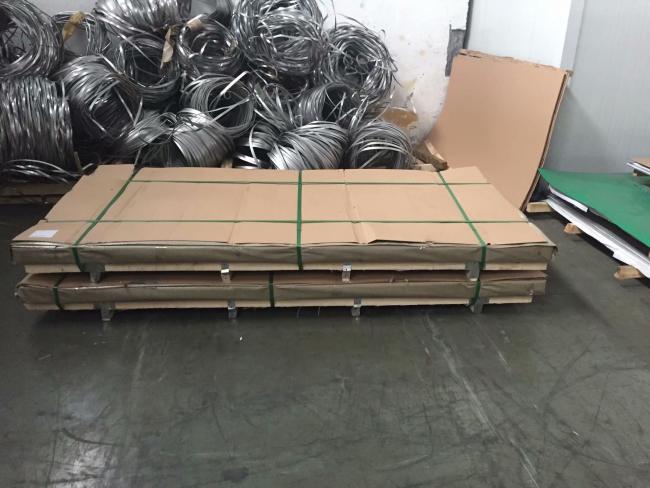
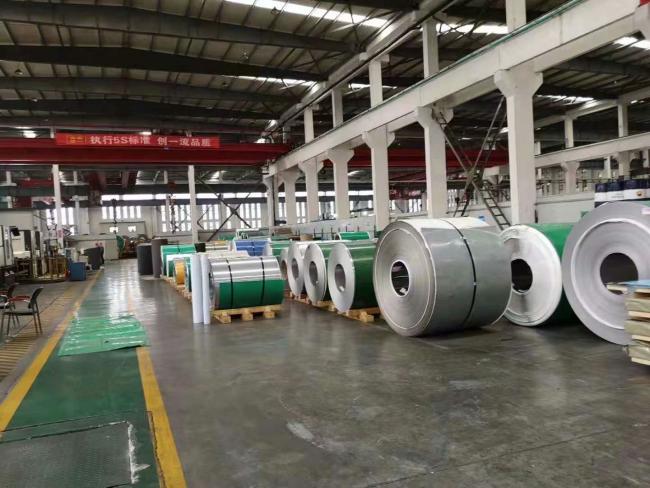
Get in Touch
Have questions about our products or want to discuss a custom order? Our team is ready to help you.