
TK140 Nickel Chrome Resistance Wire NiCr Alloy for Ceramic Kilns Glass Furnaces 1.09 μΩ·m
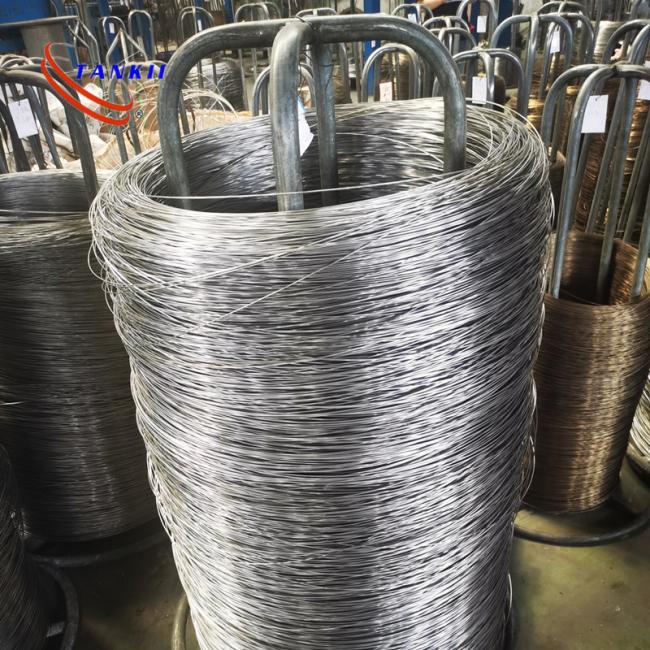
The heating wire is an alloy designed for the characteristics of the tempered glass furnace industry. This product has the characteristics of not losing brown oxide scale at low and medium temperatures, high temperature resistance, small creep, and not easy to deform.
Chemical Composition and Propertes:
Propertes/Grade |
TK140 |
|
Main Chemical Composition(%) |
Ni |
33.0-35.0 |
Cr |
18.0-23.0 |
|
Fe |
Bal. |
|
900℃ Oxidation weight gain rate g/m2·h |
0.129 |
|
Resistivity at 20ºC (μ Ω · m) |
1.09 |
|
A tempered glass furnace is a specialized piece of equipment used in the production of tempered or safety glass. Tempered glass is a type of treated glass that is significantly stronger and more resistant to breakage compared to regular annealed glass.
The key components and operation of a tempered glass furnace are as follows:
-
Furnace Design:
- Tempered glass furnaces are typically large, horizontally oriented ovens or furnaces.
- They are constructed with high-temperature-resistant materials, such as refractory bricks or ceramics, to withstand the intense heat required for the tempering process.
- The furnace is equipped with sophisticated temperature control systems to ensure precise and uniform heating.
-
Heating Process:
- The glass sheets or panels are placed inside the furnace, which is heated to a temperature typically between 620°C and 675°C.
- This high temperature causes the glass to undergo a controlled thermal treatment, known as tempering.
-
Quenching:
- After the glass reaches the desired temperature, it is rapidly cooled or "quenched" by blowing cold air or applying a water spray onto the surface.
- This rapid cooling process creates compressive stresses on the surface of the glass and tensile stresses in the interior, resulting in a significantly stronger and more durable material.
-
Tempering Cycle:
- The entire tempering cycle, from heating to quenching, is carefully controlled and monitored to ensure consistent and reliable results.
- The duration of the heating and quenching stages, as well as the precise temperature profiles, are crucial parameters that must be optimized for each type of glass and desired level of tempering.
-
Safety Features:
- Tempered glass furnaces often incorporate advanced safety features, such as:
- Automated loading and unloading systems to minimize manual handling of the hot glass.
- Robust insulation and shielding to contain the intense heat and prevent heat-related injuries.
- Robust temperature monitoring and control systems to ensure the process remains within safe operating limits.
- Tempered glass furnaces often incorporate advanced safety features, such as:
Tempered glass furnaces are essential equipment in the production of tempered or safety glass, which is widely used in applications such as automotive windshields, architectural glazing, and domestic appliances, where the enhanced strength and safety properties are critical.
The design, operation, and performance of these furnaces are closely regulated and optimized to ensure consistent and reliable production of high-quality tempered glass products.
Get in Touch
Have questions about our products or want to discuss a custom order? Our team is ready to help you.