
Kovar Alloy 4J29 Water Tube Low Expansion Coefficient 5.5e-6/K for Glass-to-Metal Seal
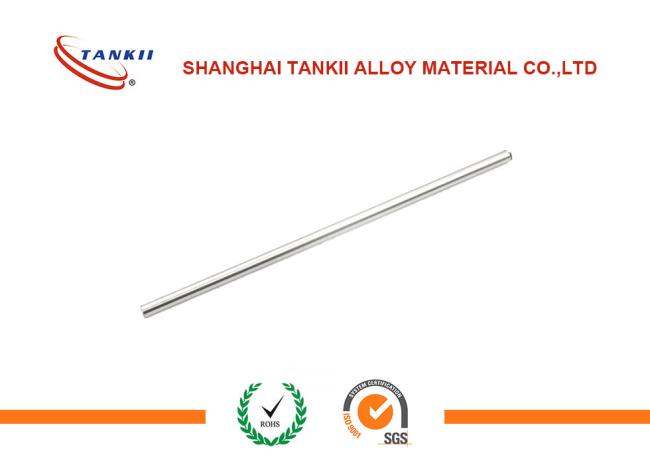
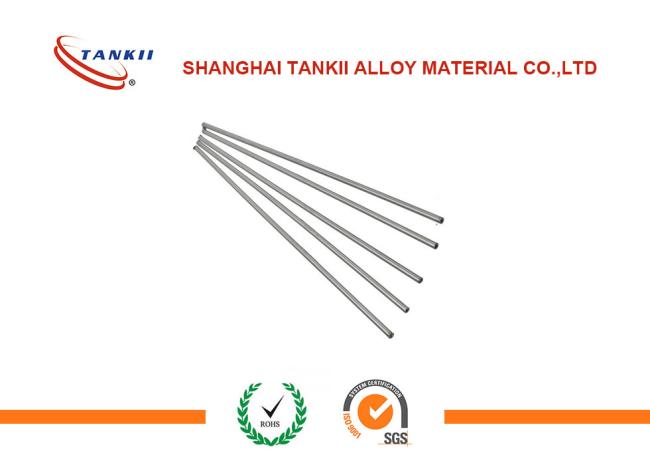
Water Tube Kovar Alloy 4j29 Low Expansion Coefficient With Matellic Colour
Corresponding to GB 4J29, ASTM F15, UNS K94610); KOVAR is a hard glass iron-based seal bond containing 29% nickel and 17% cobalt. The alloy has a coefficient of linear expansion similar to that of hard glass in the range of 20-450 ° C, which can be effectively sealed with the corresponding hard glass, and has a high Curie point and good low temperature structure stability, oxidation of the alloy. The film is dense, easy to weld and weld, has good plasticity, and can be cut and processed. It is widely used in the manufacture of electric vacuum components, launch tubes, picture tubes, switch tubes, transistors, sealed plugs and relay housings. Kovar alloy is more wear-resistant because of its cobalt content.
4J29, is a nickel-cobalt ferrous alloy compositionally identical to Fernico 1, designed to have substantially the same thermal expansion characteristics as borosilicate glass (~5 × 10⁻⁶ /K between 30 and 200 °C, to ~10 × 10−6 /K at 800 °C) in order to allow a tight mechanical joint between the two materials over a range of temperatures. It finds application in glass-to-metal seals in scientific apparatus, and conductors entering glass envelopes of electronic parts such as vacuum tubes (valves), X-ray and microwave tubes and some lightbulbs.
Kovar was invented to meet the need for a reliable glass-to-metal seal, which is required in electronic devices such as light bulbs, vaccum tubes, cathode ray tubes, and in vacuum systems in chemistry and other scientific research. Most metals cannot seal to glass because their coefficient of thermal expansion is not the same as glass, so as the joint cools after fabrication the stresses due to the differential expansion rates of the glass and metal cause the joint to crack.
4J29was invented to meet the need for a reliable glass-to-metal seal, which is required in electronic devices such as light bulbs, vacuum tubes, cathode ray tubes, and in vacuum systems in chemistry and other scientific research. Most metals cannot seal to glass because their coefficient of thermal expansion is not the same as glass, so as the joint cools after fabrication the stresses due to the differential expansion rates of the glass and metal cause the joint to crack.
Main properties:
| Property | sintered | HIPed |
| Density g /cm3 | 8.0 | 8.35 |
| Hardness / HV1 | 160 | 150 |
| Youngs Modulus / GPa | 138 | 138 |
| Reduction of area at fracture / % | 30 | 30 |
| Yield Strength / MPa | 270 | 270 |
| Thermal conductivity / W/K∙m | 17 | |
| Curie temperature / °C | 435 | |
| Electrical resistivity Ω mm2 / m | 0.49 | |
| Specific heat J/g∙K | 0.46 | |
| Thermal expansion coefficient/10−6 K−1 (25 – 200 °C) | 5.5 | |
| (25–300 °C) | 5.1 | |
| (25–400 °C) | 4.9 | |
| (25–450 °C) | 5.3 | |
| (25–500 °C) | 6.2 | |
Get in Touch
Have questions about our products or want to discuss a custom order? Our team is ready to help you.