
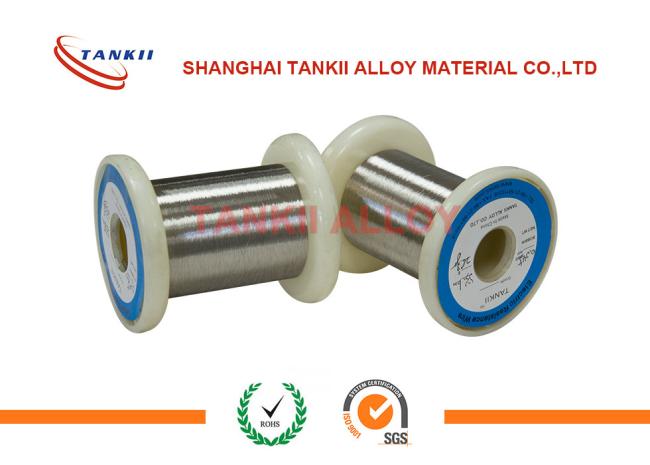
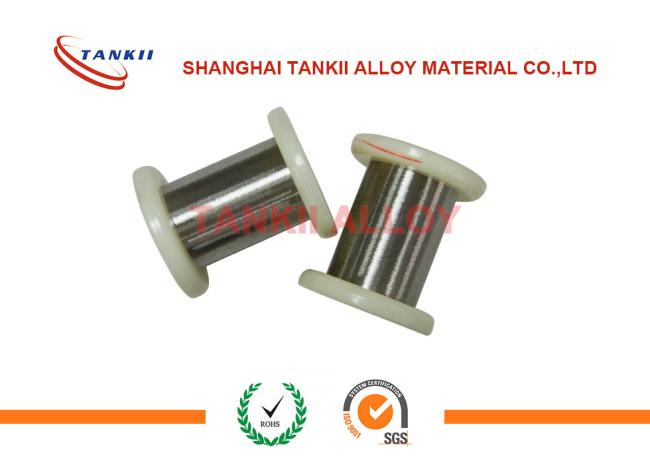
Corrosion Resistant Nickel Precision Alloy Round Wire Ni201 Ni200 High Purity
High Purity Nickel Wire Ni201 Ni200 Corrosion Resistant Filament Round Wire
General Introduction
Ni 201 and Ni 200 are also known as Nickel Alloy Ni-201 and Commercially Pure Nickel, Ni 201. Ni 201 only differs from Ni 200 by its carbon content (.02% max in Ni 201 versus .15% max in Ni 200). This slight drop in carbon allows Ni 201 to be utilized in higher temperature applications (over 600°F) including:
- Handling and manufacturing sodium hydroxide above 300°C
- Soap manufacturing
- Viscose Rayon manufacturing
- Production of benzene, methane, and ethane
- Reactors and vessels
Like Ni 200, Ni 201 offers a wide range of benefits to users including:
- It can be hot formed in a almost unlimited number of shapes
- Cold rolled under proper conditions
- Highly resistant to various reducing chemicals
- Outstanding resistance to caustic alkalis
- Good electrical and magnetostrictive properties
- High electrical and thermal conductivity
- The toughness of nickel
Main Features
Pure nickel shows excellent corrosion resistance in alkaline solutions such as caustic soda, and also shows outstanding resistance against highly pure halogen gas and non-oxidizing acids. It is used in wide areas such as caustic soda concentration containers. The main features of the various types of pure nickel are indicated below.
Types and features of pure nickel handled by Hitachi Metals, Ltd. Okegawa Works
| Ni200 | Normal pure nickel for industrial use. |
| Ni201 | Low-carbon nickel. For its high thermal stability (315°C or above), it is used for equipment utilized at temperatures 315°C or higher. |
| Ni | Precipitation hardening type alloy material made by adding small amounts of aluminum and titanium. It is used for parts that require a high level of strength such as bolts and springs. |
Physical properties/Mechanical Properties
| Material | Specific gravity |
Melting temperature range |
Specific heat cal/(g/°C) |
Coefficient thermal expansion (Temperature range) (×10-6/°C) |
Specific thermal conductivity |
Electrical Resistivity μΩ/cm |
|---|---|---|---|---|---|---|
| NC-Ni (Ni200) |
8.88 | 1435∼1446 | 0.109 | 13.9 (21∼201) |
0.16 | 10.0 |
| LC-Ni (Ni201) |
8.88 | 1435∼1446 | 0.109 | 13.3 (21∼93) |
0.16 | 10.0 |
Mechanical Properties
| Material and shape | Tensile strength N/mm2(kgf/mm2) | Yield Strength (0.2% offset) N/mm2 (kgf/mm2) | Elongation % | Hardness HRB |
|---|---|---|---|---|
| NC-Ni Plate / Bar / Pipe (Annealed) | ≧380(≧38.7) | ≧105(≧10.5) | ≧40 | Reference 90∼140 |
| LC-Ni Plate / Bar / Pipe (Annealed) | ≧350(≧35.2) | ≧80(≧8.4) | ≧40 | Reference 75∼135 |
| NC-Ni Pipe (Stress relieved) | ≧450(≧45.7) | ≧280(≧28.1) | ≧15 | - |
| LC-Ni Pipe (Stress relieved) | ≧410(≧42.1) | ≧210(≧21.1) | ≧15 | - |
Get in Touch
Have questions about our products or want to discuss a custom order? Our team is ready to help you.