
ASTM A182 Stainless Steel 2 Inch Class 600 RF Flat Welding Flange ANSI B16.5
ASTM A 182 Stainless Steel 2 inch Class 600Rf Flat Welding Flange
-
What is the difference between a RTJ, FF, and RF flange on seals and thermowells?
The raised face, RF, is the standard process connection on our third party seals and thermowells. Both have options for a RTJ and FF type flange connections. The Raised Face (RF) is the most common type used in process plant applications.
The gasket surface of the flange is raised above the bolting circle face. A Ring-type Joint (RTJ) can also have a raised gasket face with the difference being the ring groove machined in this face.
This groove will accommodate a steel ring gasket for flange mating. The Flat Face, FF, flange has a gasket surface that is in the same plane as the bolting circle face.
None of these three flange types are interchangeable between types, i.e. RTJ flange cannot be mated to a RF flange.
-
Materials for Flanges
Pipe flanges are manufactured in all the different materials like stainless steel, cast iron, aluminium, brass, bronze, plastic etc. but the most used material is forged carbon steel and have machined surfaces.
In addition, flanges, like fittings and pipes, for specific purposes sometimes internally equipped with layers of materials of a completely different quality as the flanges themselves, which are "lined flanges".
The material of a flange, is basically set during the choice of the pipe, in most cases, a flange is of the same material as the pipe.
All flanges, discussed on this website fall under the ASME en ASTM standards, unless otherwise indicated. ASME B16.5 describes dimensions, dimensional tolerances etc. and ASTM the different material qualities.

-
The most used flange types are:

-
Bolted Flange connections
A bolted flange connection is a complex combination of many factors (Flange, Bolts, Gaskets, Process, Temperature, Pressure, Medium). All these various elements are interrelated and depend upon one another to achieve a successful result.
The reliability of the flanged joint depends critically upon competent control of the joint making process.
Some other Disadvantages of flange connections..
- Each flange connection can leak (some people claim that a flange connection is never 100 percent leak proof).
- Flanged pipe systems need much more space (just think of a pipe rack).
- Insulation of flanged pipe systems is more expensive (special flange caps).
Of course, flange connections have great benefits; some examples..
- A new line can contain multiple pipe spools and can be manufactured in a workshop.
- This pipe spools can be assembled in the plant without the need to be welded.
- NDO (X-ray, Hydro test etc.) in the plant is not necessary, because this has been done in the workshop.
- Blasting and painting in the plant is not necessary, because even this has been done in a workshop
(only paint damages during installation should be repaired).![]()
- FAQ
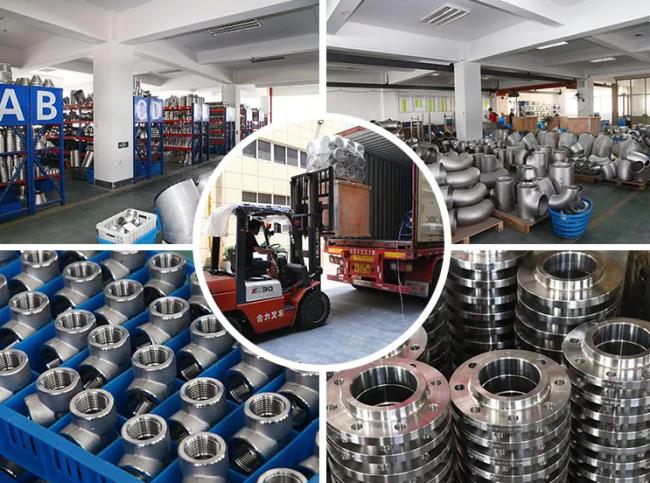
Q1. Are you trade company or factory?
A: We are trading company in shanghai, but we have five branch factories which can supply the best quality pipes, tubes, fittings flanges and related accessories. Welcome to visit us.
Q4. Why is forged metal stronger than cast or machined metal?
Get in Touch
Have questions about our products or want to discuss a custom order? Our team is ready to help you.