60BLS02 24V 204W 3000rpm Planetary Gear BLDC Motor with Encoder NEMA23
60BLS02 24V 204W 3000rpm planetary gear bldc motors with encoder
Feature of dc brushless motor:
- Low power consumption, smaller battery and longer battery life
- No need cleaning and maintenance
- Easy for speed adjustment and reversible direction
- Removable location
- Smaller size, compact and less weight design
- Longer life, higher quality with reliability
- Higher efficiency, low heat lose and high C/P
- Higher speed, high performance
- Lower emissions, lower EMI/RFI
- Smart control, cleaner with smart function
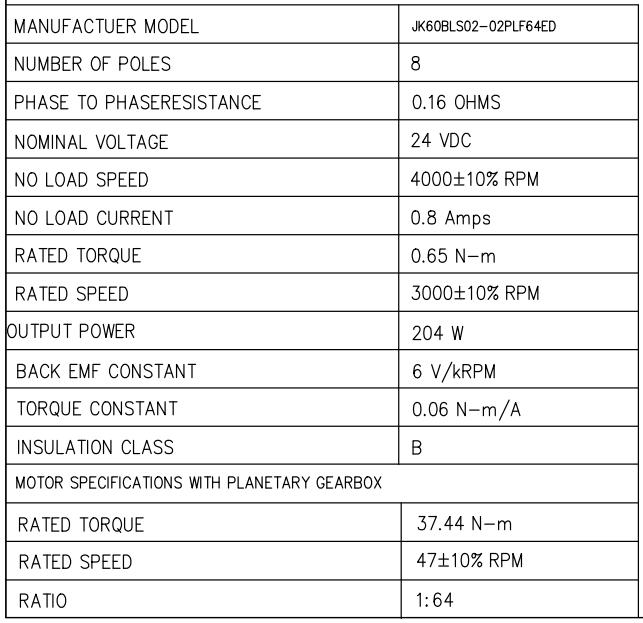
Electrical Specification of NEMA23 brushless dc motor:
ROTATION: CW VIEWED FROM OUTPUT SHAFT:
Encoder Wiring Diagram:

| Electrical connection table | ||
| PHASE U | RED | 3*1mm² |
| PHASE V | BLACK | 3*1mm² |
| PHASE W | BLUE | 3*1mm² |
motores paso a pas
The matching bldc Driver: JKBLD300
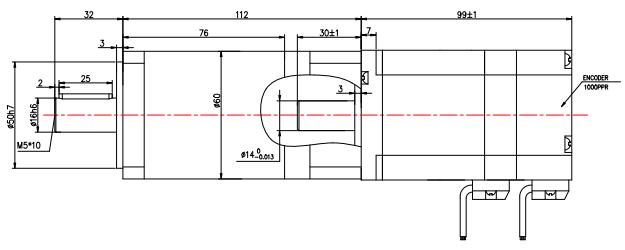
Dimensions of 36v bldc motor: (Unit=mm)

Produce equipment:

Production Process:

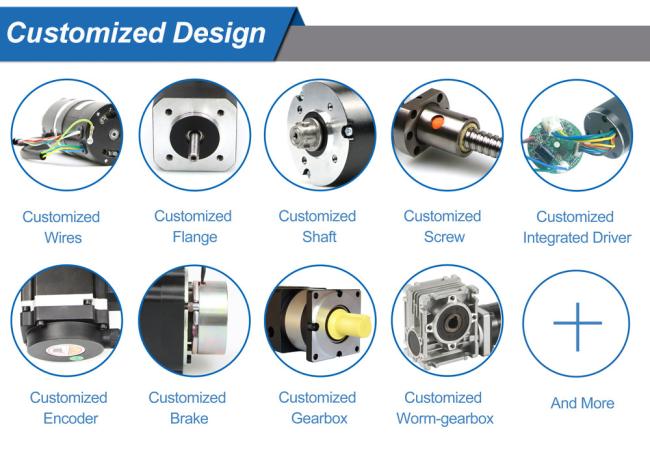
Customized of 57mm brushless electric motor:
- BLDC motor with fan
- BLDC motor with gearbox
- BLDC motor with encoder
- BLDC motor with brake
Advantages of 57mm square bldc motor:
A BLDC motor with three coils on the stator will have six electrical wires (two to each coil) extending from these coils. In most implementations three of these wires will be connected internally, with the three remaining wires extending from the motor body (in contrast to the two wires extending from the brushed motor described earlier). Wiring in the BLDC motor case is more complicated than simply connecting the power cell’s positive and negative terminals; we will look more closely at how these motors work in the second session of this series. Below, we conclude by looking at the advantages of by BLDC motors.
Applications of high quanlity brushless dc motor:
We can expect to see BLDC motors used in a wider range of applications in the future. For example, they will probably be widely used to drive service robots—small robots that deliver services in fields other than manufacturing. One might think that stepper motors would be more suitable in this type of application, where pulses could be used to precisely control positioning. But BLDC motors are better suited to controlling the force. And with a stepper motor, holding the position of a structure such as a robot arm would require a relatively large and continuous current. With a BLDC motor, all that would be required is a current proportionate to the external force—allowing for more power-efficient control. BLDC motors may also be replacing simple brushed dc motors in golf carts and mobility carts. In addition to their better efficiency, BLDC motors can also deliver more precise control—which in turn can further extend battery life.


Get in Touch
Have questions about our products or want to discuss a custom order? Our team is ready to help you.