
Si3N4 Silicon Nitride Ceramic Rod 18 GPa Hardness High Temperature Resistant 1300°C Max Working
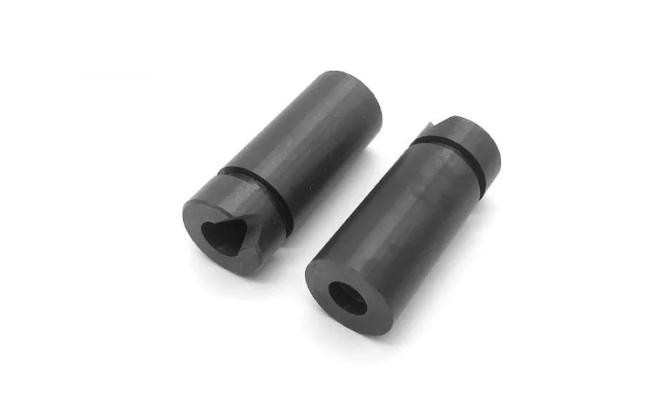
Custom Processing Si3N4 High Temperature Resistant Silicon Nitride Ceramic Rod Parts
Due to their excellent wear resistance, corrosion resistance, high temperature resistance, and low density properties, ceramic materials are recognized as one of the most vibrant new materials in the 21st century. They are classified alongside metal materials, polymer materials, and composite materials as the four contemporary engineering materials.
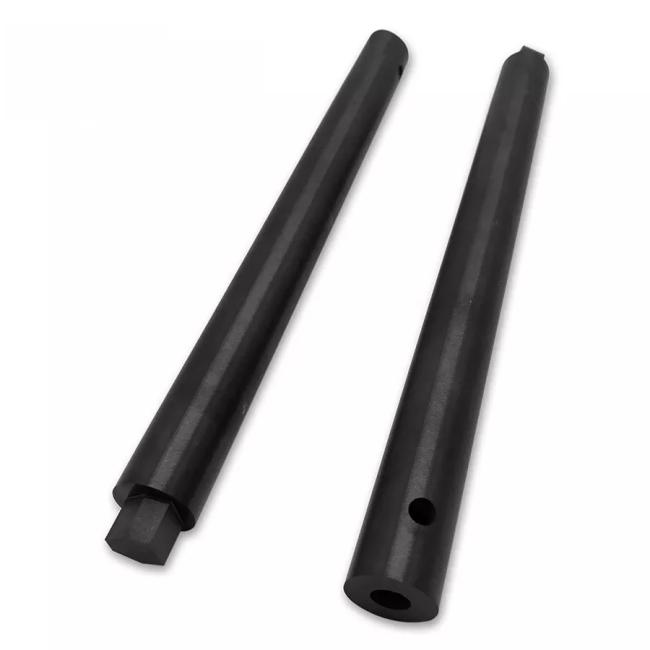
Ceramic materials are divided into traditional ceramics and advanced ceramics based on performance and use. Advanced ceramics differ significantly from traditional ceramics in terms of raw materials, structure, and preparation techniques. Their performance also varies considerably, with advanced ceramic materials surpassing modern high-quality alloys and polymer materials in certain properties.
Silicon nitride (Si3N4) contains three crystal forms, with two being common: α-Si3N4 (needle-like crystals, white or off-white) and β-Si3N4 (darker colored, dense granular polyhedron or short prism). Both are hexagonal structures.
| Property | Item | 99% Alumina | 99.8% Alumina | Zirconia Ceramics | Silicon Nitride | Silicon Carbide | Unit |
|---|---|---|---|---|---|---|---|
| Mechanical Characteristics | Color | light yellow | White | Ivory | Black Grey | Black | - |
| Bulk Density | 3.85 | 3.93 | 6.02 | 3.2 | 3.16 | g/cm³ | |
| Water Absorption | 0 | 0 | 0 | 0 | 0 | % | |
| Bending Strength | 310 | 370 | 800 | 750 | 450 | MPa | |
| Compressive Strength | 2,400 | 2500 | 3000 | 3800 | 3900 | MPa | |
| Elastic Modulus | 340 | 390 | 200 | 290 | 420 | GPa | |
| Vickers Hardness | 1,600 | 1850 | 1200 | 1700 | 2800 | HV 0.5 | |
| Thermal Characteristics | Coefficient of Thermal Expansion | 7~8 | 7~8 | 10 | 2 | 3.7 | 10⁻⁶ K⁻¹ |
| Thermal Conductivity | 29 | 32 | 3 | 20 | 160 | W/mK | |
| Max Working Temperature | 1,600 | 1700 | 1000 | 1300 | 1950 | °C |
- Thermal properties: High-temperature refractory substance with no melting point, decomposes at about 1900°C under normal pressure
- Strong creep resistance under high pressure
- Softening point of reaction sintered silicon nitride without binder can reach 1800°C
- Good thermal conductivity
- Small thermal expansion coefficient
- Excellent electrical insulation performance with small dielectric coefficient and high breakdown voltage
- Oxidation resistance: Does not react with oxygen in dry atmosphere below 800°C
- Molten metal corrosion resistance: Resists infiltration and corrosion from elemental metal melts (except copper)
- Resistance to acid, alkali and salt corrosion: Soluble in hydrofluoric acid, but resistant to dilute acids
- Excellent high temperature strength with minimal attenuation at 1200°C compared to room temperature strength
- Very low high temperature creep rate due to strong covalent bonds
- High hardness, second only to superhard materials like diamond, cubic BN, and B4C
- Low friction coefficient with self-lubricating properties similar to oiled metal surfaces

Sintered silicon nitride is primarily used in the automotive industry as engine component material. Applications include lower wear rocker pads in spark ignition engines, turbochargers for reduced inertia and engine lag, and waste gas control valves for improved acceleration.
Silicon nitride ceramics offer excellent impact resistance compared to other ceramics. Silicon nitride ball bearings are used in performance applications including NASA space shuttle main engines, high-end automotive bearings, industrial bearings, wind turbines, and various sports equipment.
Bulk monolithic silicon nitride serves as cutting tool material due to its hardness, thermal stability, and wear resistance. Particularly recommended for high-speed machining of cast iron, hard steel, and nickel-based alloys.
Used as insulators and chemical barriers in integrated circuit manufacturing, providing electrical isolation and serving as etch masks. Superior to silicon dioxide as a passivation layer for microchips due to better diffusion barrier properties against water molecules and sodium ions.


Get in Touch
Have questions about our products or want to discuss a custom order? Our team is ready to help you.