
Laminar Flow Ss304 Pharmaceutical Sterility Test Isolator
Laminar flow ss304 isolators for pharmaceutical applications hydrogen peroxide vapor for cosmetic
Parameter
| Model | size of machine | Size of operation | Air lock chamber size | description |
| YT-R1500 | 1500*750*2100 | 1500*650*800 | NO | Single-sided hard cabin turbulence isolator 3 gloves |
| YT-DR1500A | 2100*1100*2100 | 1500*1000*800 | 500*600*500 | Double-sided hard cabin turbulence isolator 3+3 gloves |
| YT-R1800 | 1800*750*2100 | 1800*650*800 | NO | Single-sided hard cabin turbulence isolator 4 gloves |
| YT-DR1800A | 2400*1100*2100 | 1800*1000*800 | 500*600*500 | Double-sided hard cabin turbulence isolator 4+4 gloves |
Sterile isolator features
The advantages of sterile isolators compared to traditional clean technology:
1. Automatic gas sterilization saves time and effort, uniform gas distribution, good effect and easy verification.
2, completely isolated from the outside world, only through HEPA gas exchange and constant cabin pressure, to prevent external pollution.
3, double door express delivery system, to ensure delivery in a sterile environment, a high degree of sterility assurance.
4. The umbrella coefficient is high, the running noise is low, and the protection efficiency for operators is very good.
5. The risk of aseptic environmental pollution caused by misuse is very small.
6. The operating energy consumption is lower than that of the traditional clean room.
7, small footprint, does not affect other equipment, and can be flexibly designed according to customer requirements.
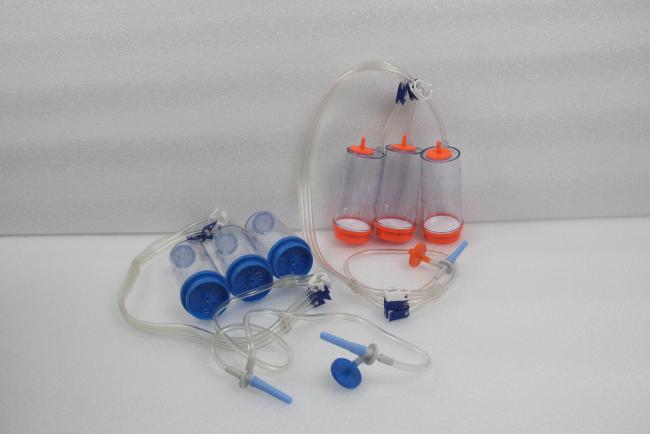
Sterile isolator
Development trend of sterile isolators
According to the actual production needs, the future sterile isolator technology for pharmaceuticals will mainly develop in two aspects: one is to continuously improve production capacity; the other is to further improve the quality of products and the safety of operators and the environment.
Development history of sterile isolators
Isolation technology has been widely used around the world since the 1980s, and the laboratory sterility inspection industry, which was the first to introduce isolation technology in the pharmaceutical industry, has undergone several generations of changes in the international market.
- The first generation: soft materials such as PVC as the main structural material, the air treatment system is designed as a turbulent structure; the operating parts are mainly gloves/sleeve components, half-length suits, and controlled by ozone or peracetic acid. The mainstream means of microbes.
- The second generation: With the development of aseptic isolation technology and sterilization technology, the aseptic isolator developed into a stainless steel material as the main structural material, but the structure still retains the turbulent flow design in the cabin. The sterilization method is mainly based on a hydrogen peroxide device connected to an external vaporization or spray.
- The third generation: In order to strengthen the risk control during the use of the sterile isolator and based on the occupational health considerations of the operators, the aseptic isolator develops into a stainless steel-based material, a unidirectional flow design, an integrated online environmental monitoring device, and vaporization. The hydrogen peroxide sterilization system is integrated with the isolator. With electronic signature and electronic record requirements, it achieves regulatory requirements for data integrity such as disaster recovery and audit trails.
Get in Touch
Have questions about our products or want to discuss a custom order? Our team is ready to help you.