
Food Grade 304 Stainless Steel Chain Link Spiral Wire Mesh Conveyor Belt 1.2m 1.5m 1.8m Width
Food Grade 304 1.2m wide 1.5m wide 1.8m wide Stainless Steel Chain Link Spiral Wire Mesh Conveyor Belt
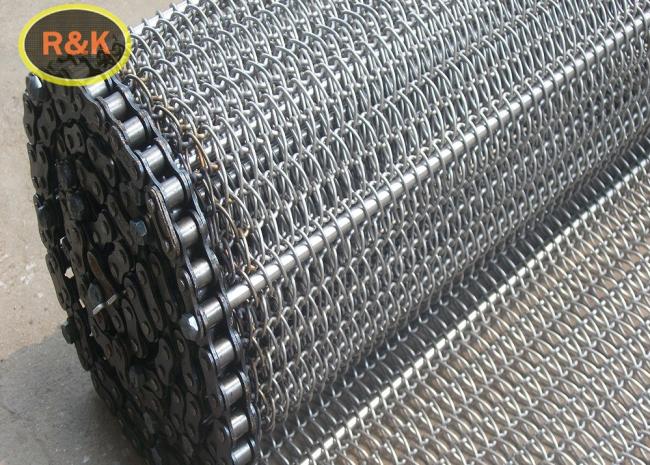
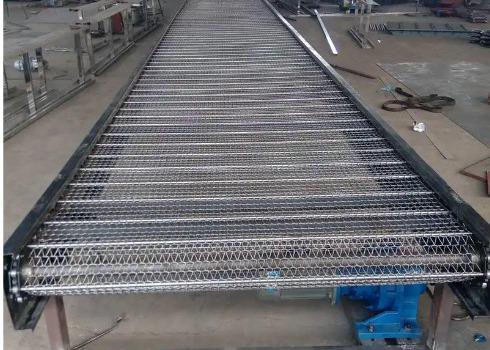
Stainless steel chain conveyor is a robust material handling system designed to transport products, components, or materials along a defined path. It consists of interlinked stainless steel chains (often roller chains, flat-top chains, or modular plastic belts on stainless frames) that form a continuous loop driven by sprockets. The chains run on stainless steel tracks or guides, supported by a rigid stainless steel frame. Key features include high strength, corrosion resistance, and suitability for demanding environments.
| Material | SS304, SS316, SS316L, SS430, Galvanized wire, customized |
| Spiral wire diameter | 0.5mm - 3mm, customized |
| Rod wire diameter | 0.5mm - 4mm, customized |
| Spiral pitch | 5-50mm, customized |
| Rod pitch | 5-50mm, customized |
| Wide | Mesh belt wide (without chain)/ Conveyor belt wide ( with chain ) |
| Length | 1m - 10m, customized |
Advantages:
1. Superior Corrosion Resistance: Resists rust, chemicals, water, steam, and cleaning agents, making it ideal for wet, humid, or corrosive environments (food, chemical, marine).
2. High Hygiene & Cleanability: Smooth, non-porous surfaces prevent bacterial growth and allow for easy. Essential for food, beverage, pharmaceutical, and medical applications.
3. High Temperature Resistance: Maintains strength and integrity under significant heat (e.g., ovens, washers, sterilizers, foundries).
4. Strength & Durability: Withstands heavy loads, impacts, and abrasive materials better than many alternatives. Long service life.
5. Sanitary Design: Minimizes areas where debris can accumulate, meeting strict sanitary regulations (FDA, USDA, 3-A).
6. Aesthetic Appeal: Maintains a clean, professional appearance over time.
7. Resistance to Oxidation & Staining: Performs well outdoors or in atmospheres prone to oxidation.
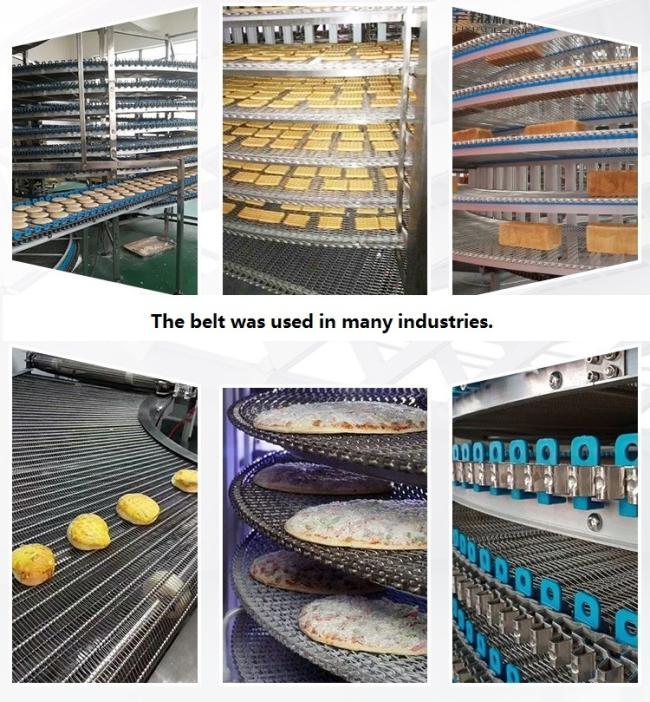
How to use it:
1. Installation: Securely mount the rigid frame, ensuring proper alignment and leveling. Install drive unit (motor, gearbox) and tail/take-up section.
2. Chain Tensioning:Correctly tension the chain using the take-up mechanism – not too tight (excessive wear) or too loose (slippage, derailment).
3. Loading:Products are typically loaded onto the chain surface manually, via feeders, or from preceding equipment. Ensure load is within capacity and evenly distributed.
4. Operation: Start the drive system. Chains move continuously or index (start/stop) along the track, carrying the product. Speed is controlled via the drive.
5. Unloading: Products are offloaded at the end (or intermediate points via pushers/diversions) manually, by gravity, or onto another conveyor.
Cleaning & Maintenance:
Regular Cleaning: Use water, steam, or approved sanitizers. High-pressure wash is common. Ensure proper drainage.
Lubrication: Use food-grade or compatible lubricants sparingly if required (some designs use self-lubricating chains or run dry). Avoid contamination.
Inspection: Regularly check for chain wear (stretch), damaged links, worn sprockets, proper tension, bearing condition, and frame integrity.
Component Replacement: Replace worn chains, sprockets, guides, and bearings promptly to prevent failures.

Get in Touch
Have questions about our products or want to discuss a custom order? Our team is ready to help you.