
X7Ni9 9% Nickel Alloy Steel Plate for Cryogenic LNG Storage Tanks (-196℃)
Price:
Negotiable
MOQ:
Negotiable
Delivery Time:
5-10 week day
Brand:
GNEE
Product Description
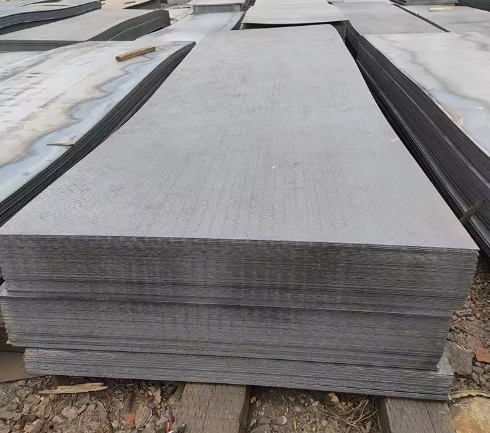
X7Ni9 Nickel Alloy Steel Plate for Cryogenic Storage Tanks
Technical Specifications: Understanding X7Ni9 Standards
As the global demand for LNG continues to surge, the integrity of storage and transportation infrastructure becomes paramount. X7Ni9 steel plate, commonly known as 9% Nickel steel, stands as the industry standard for ultra-low temperature applications. Designed specifically to maintain exceptional toughness at 196 degrees Celsius, this material is the backbone of modern cryogenic engineering.
X7Ni9 also known as 9% Nickel Steel or 1.5663 according to EN 10028-4 is a specialized low-bon nickel alloy steel designed specifically for cryogenic applications, including the storage and transportation of LNG at temperatures down to -196°C. This high-strength steel is renowned for its excellent fracture toughness and ductility at ultra-low temperatures, preventing brittle failure in cryogenic pressure vessels.

- Standard Compliance: EN 10028-4 (European), ASTM A553 / ASME SA553 Type I
- Thickness Range: 6mm - 50mm
- Width: 1,500mm - 4,000mm
- Delivery Condition: Quenched and Tempered (QT). This heat treatment is critical to refining the grain structure and achieving the required cryogenic impact propertie.
Chemical Composition
| Element | C (max) | Si (max) | Mn | P (max) | S (max) | Ni (Nickel) |
|---|---|---|---|---|---|---|
| Value | 0.10 | 0.35 | 0.30 - 0.80 | 0.010 | 0.005 | 8.50 - 9.50 |
Mechanical Properties
| Property | Value (Typical) | Remarks |
|---|---|---|
| Yield Strength (MPa) | ≥ 585 | High load-bearing capacity |
| Tensile Strength (MPa) | 680 - 820 | Structural integrity |
| Elongation (%) | ≥ 18 | Ductility for fabrication |
| Impact Energy (-196°C) | ≥ 70 J | Charpy V-Notch Test (Critical) |
Why X7Ni9 is the Standard for LNG Storage?
The choice of X7Ni9 over other materials like stainless steel or aluminum is driven by a unique balance of physics and economics:
- Exceptional Brittle Fracture Resistance: Unlike bon steel, which becomes brittle as temperatures drop, the 9% nickel content in X7Ni9 prevents crack propagation even at the boiling point of liquid nitrogen
- Low Thermal Expansion: In large LNG tanks, thermal contraction during cooling can cause massive structural stress. X7Ni9 has a low coefficient of thermal expansion, ensuring dimensional stability
- High Strength-to-Weight Ratio: The high yield strength allows for thinner tank walls compared to other cryogenic materials, reducing the overall weight of LNG riers and the cost of onshore tanks
- Superior Weldability: Despite its alloy content, X7Ni9 is engineered for excellent weldability using specialized nickel-based consumables, maintaining joint integrity at cryogenic temperatures
Why Choose GNEE for Your X7Ni9 Steel Supply?
As a leading global supplier of high-performance alloy steels, GNEE provides more than just raw materials; we provide project-ready solutions.
- Class Society Certification: Our X7Ni9 plates are certified by major international bodies, including DNV, ABS, LR, and BV, specifically for marine and offshore cryogenic applications
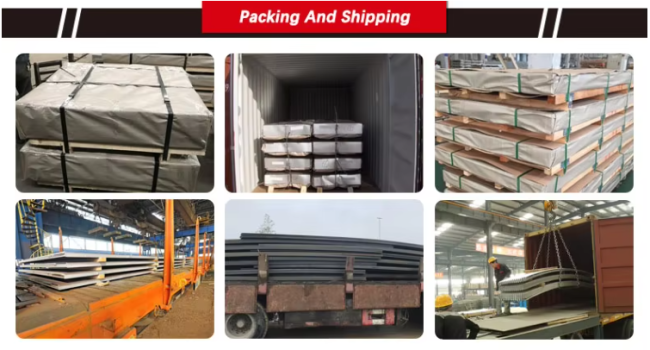
- Global Logistics Expertise: We understand the complexities of shipping large-format plates to LNG terminal sites in the Middle East, Southeast Asia, and beyond
- Precision Processing: From laser cutting to beveling, we provide pre-processed plates that are ready for immediate welding upon arrival at the project site
- Full Documentation: Every shipment is accompanied by a 3.1 or 3.2 MTC (Mill Test Certificate), detailing the -196°C impact test results and chemical heat analysis
Frequently Asked Questions
Can X7Ni9 steel be used for Liquid Hydrogen storage?
Generally, no. Liquid Hydrogen is stored at -253°C. While X7Ni9 is excellent for LNG (-162°C) and Liquid Nitrogen (-196°C), it reaches its safety limit at -196°C. For Liquid Hydrogen applications, austenitic stainless steels (like 304L) or specialized aluminum alloys are typically required to handle the even more extreme cold.
What is "Magnetic Arc Blow" and why is it a problem for 9% Ni steel?
9% nickel steel is highly susceptible to residual magnetism. During welding, this magnetism causes the electric arc to deflect , leading to weld defects, lack of fusion, or slag inclusions.
What makes X7Ni9 suitable for cryogenic environments?
X7Ni9 contains 9% nickel, which dramatically improves its low-temperature toughness and resistance to brittle fracture, even at the extreme -196°C temperatures of LNG operations.
What welding consumables are recommended for X7Ni9 plates?
X7Ni9 cannot be welded with matching 9% Ni fillers. Instead, Nickel-based alloys (such as Inconel-type consumables) or Hastelloy-type fillers are used. These fillers remain austenitic and provide excellent toughness at cryogenic temperatures, ensuring the weld joint is as strong and ductile as the base metal.
Similar Products
Get in Touch
Have questions about our products or want to discuss a custom order? Our team is ready to help you.
Company
Gnee Steel (tianjin) Co., Ltd.
Location
FLAT/RM 1512 15/F LUCKY CENTRE NO.165-171 WAN CHAI ROAD WAN CHAI HK
Contact Person
Kelly Zhang