
Y81T-315 Hydraulic Scrap Metal Baler 3150kN 3000x2000x1200mm Chamber
Y81T-315 Hydraulic Scrap Metal Baler
Product Overview
The Y81T-315 hydraulic scrap metal baler is designed to compress loose metal scrap into dense bales for easier storage, loading, and transportation. Based on the specification sheet, the machine combines a 3150 kN main compression force, dual side pressure cylinders, a 3000 × 2000 × 1200 mm compression chamber, and PLC automatic control with remote controller, making it suitable for structured scrap baling operations rather than light-duty compaction work.
The PDF also lists a bale density of not less than 2000 kg/m³, an empty-load cycle time of about 130 seconds, and a production efficiency of about 6–10 tons/hour for steel scrap. These figures give the machine a clear technical profile for B2B buyers comparing scrap baling equipment.
Applications
This machine is best suited for scrap processing environments where loose steel scrap needs to be compressed into more regular and manageable bales before transfer, storage, or downstream handling. The throughput figure in the source document is specifically stated for steel scrap, so steel scrap processing is the clearest supported application.
Typical application scenarios may include scrap yards, steel scrap collection stations, metal recycling facilities, and operations that need denser bale output for more efficient loading and transport. These use cases are consistent with the machine type, chamber size, bale density, and loading images shown in the PDF.
Core Advantages
Measurable compression capacity
The main compression cylinder is rated at 3150 kN, supported by 1600 kN × 2 side pressure cylinders and a 1250 kN cover door cylinder. This multi-cylinder arrangement provides a more complete compression structure than a single-force reference alone.
Defined bale density for handling efficiency
The listed bale density of ≥2000 kg/m³ is a useful operational indicator because it relates directly to bale compactness, loading efficiency, and storage organization.
Documented operating rhythm
With an empty-load cycle time of about 130 seconds and steel scrap throughput of about 6–10 tons/hour, the machine can be described with measurable operating data instead of broad efficiency claims.
Hydraulic and control configuration
The machine uses two A4V-200 hydraulic pumps, each rated at 31.5 MPa, plus a 3500 L oil tank and 12 m² water cooling effect. It also uses PLC automatic control with remote controller and side push-out bale discharge. These are practical specification points for technical buyers.
How It Works
Loose metal scrap is fed into the compression chamber measuring 3000 × 2000 × 1200 mm. The hydraulic system then uses the main cylinder, side pressure cylinders, and cover door cylinder to compress the material into a denser form. After compression, the finished bale is discharged through the side push-out method. The control system is listed as PLC automatic control with remote controller, which supports more standardized machine operation.
The final bale size is specified as (600–1000) × 600 × 600 mm, which means the machine forms bales with a fixed cross-section and variable length within the stated range.
Specifications
- Main cylinder model: YG400/280
- Main cylinder stroke: 1250 mm
- Main cylinder nominal thrust: 3150 kN
- Side pressure cylinder model: YG280/200
- Side pressure cylinder stroke: 1600 mm
- Side pressure cylinder nominal thrust: 1600 kN × 2
- Cover door cylinder model: YG240/160
- Cover door cylinder stroke: 1350 mm
- Cover door cylinder nominal thrust: 1250 kN
- Compression chamber size: 3000 × 2000 × 1200 mm
- Bale size: (600–1000) × 600 × 600 mm
- Bale density: ≥2000 kg/m³
- Empty-load cycle time: about 130 seconds
- Production efficiency: about 6–10 tons/hour for steel scrap
- Power supply: 380V / 50Hz / 3-phase or customized
- Total equipment power: 74 kW
- Electric motor: YX3-225M-4, 37 kW, 1470 rpm, 2 sets
- Hydraulic pump: A4V-200, 31.5 MPa, 200 ml/r, 2 sets
- Oil tank capacity: 3500 L with 3000 L hydraulic oil
- Water cooling effect: 12 m²
- Control method: PLC automatic control with remote controller
- Bale discharge method: Side push-out
How To Choose
This model is more suitable when you need a baler with a clearly defined 315-ton class compression level, a large chamber, and measurable bale density rather than an entry-level compaction solution. Buyers comparing scrap balers can use the 3150 kN main force, ≥2000 kg/m³ bale density, 130-second cycle time, and 6–10 tons/hour steel scrap output as the main evaluation points.
It is also worth checking whether your site power supply, material type, bale size target, and required operating rhythm match the listed configuration of 74 kW total power, 380V / 50Hz / 3-phase, and the specified bale format.
What Problem It Solves
This machine addresses a common problem in scrap handling: loose steel scrap takes up space, is harder to stack, and is less efficient to load and transport. By compressing material into bales with a specified density of not less than 2000 kg/m³, the baler helps turn irregular scrap into a more manageable output format.
It also helps buyers looking for a machine that can be described with real parameters rather than vague claims. The PDF provides force, density, chamber size, cycle time, throughput, hydraulic pressure, and cooling data, which are the kinds of values buyers actually use when evaluating industrial equipment.
FAQ
What material is clearly supported in the PDF?
The production efficiency figure is specifically listed as about 6–10 tons/hour for steel scrap, so steel scrap is the clearest supported material in the source document.
What is the main compression force?
The main cylinder nominal thrust is 3150 kN, corresponding to a 315-ton class scrap baler.
What bale density does the machine provide?
The PDF lists a bale density of not less than 2000 kg/m³.
What control system does it use?
The machine is specified with PLC automatic control with remote controller.
What is the discharge method?
The bale discharge method is listed as side push-out bale discharge.
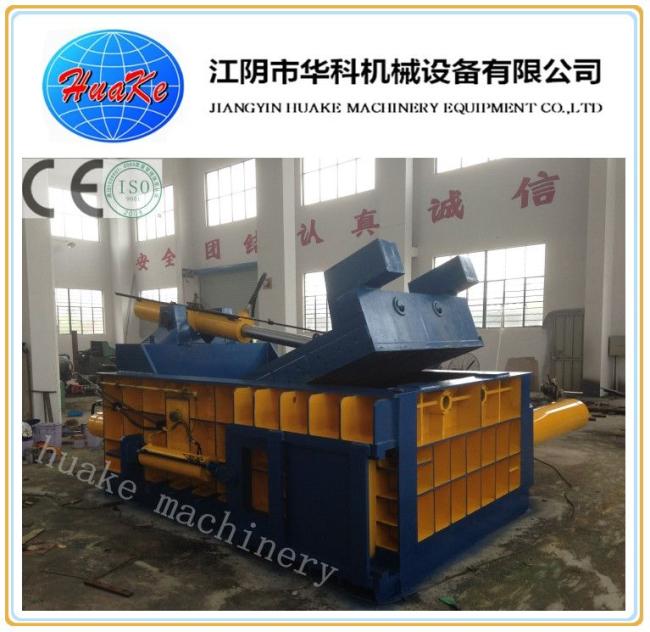
machine pictures


bale pictures:

How to choose your baler correctly?
We will ask you to offer some details
Like what material you need to bale. Pictures best,
How many tons per hour output is needed.
And bale size restrictions
Bale ejection ways preference.
Other machines on sites .etc
Then we will give a most suitable solution for you.
we will also offer similar user sites vedio for your reference, maybe in your same country we have users also.
Watch The Video:
Youtube: https://www.youtube.com/watch?v=QHD1xZvVTQY
Get in Touch
Have questions about our products or want to discuss a custom order? Our team is ready to help you.