
Local Beekeeping Bleached Beeswax
Beeswax and Honey Sourced from local Beekeeping Farm Bleached Beeswax
Origin of Honey Beesax:
Beeswax is a natural wax derived from honeybees. Typically ten (10) pounds of honey yields one (1) pound of beeswax. When originally formed, wax in the honeycomb is nearly white, but yellows with the addition of natural oilsintroduced by pollen from flowers. Beeswax is collected directly from the honeycombs of a beehive and can be found in different forms.
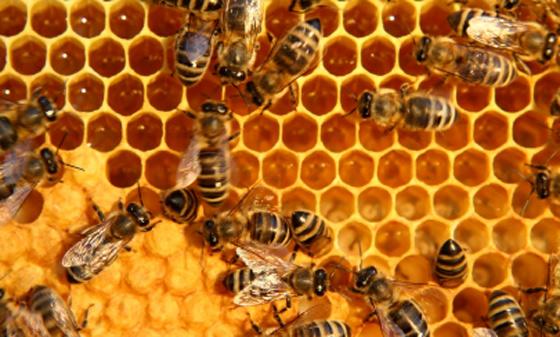
Process of Bleaching White Beeswax:
1. Select the raw material
Collect raw beeswax by uncapping knife from top cappings of honeycomb.
Quality inspection of the raw beeswax, including impurities, melting point, Acid value, hydrocarbon, Saponification value, Selected good quality raw material which the inspection result meet the requirement of GB/T 24314-2009.
2. Melting the selected raw beeswax.
Put the raw beeswax into wax melting pot, open the steam valve, melt the beeswax with 140℃ high temperature through steam. It takes at least one hour until all of the raw beeswax melt.
3. Bleaching beeswax.
Lower the temperature to 93-95℃, put active carbon into melting beeswax within 5-10 mins, starting stirring process with 60-70r/min lasting 25-30mins.
4. Precipitation:
Put the melting beeswax liquid into sedimentation pot, Heat preservation, precipitation. It takes about 90 min.
5. Remove the impurities.
Open the bottom valve of the sedimentation pot and release the impurities slowly until the beeswax liquid become totally transparent.
6. Cooling
Pour the high refined beeswax liquid into clean stainless steel mould, cooling.
7. Package:
According to the customer’s requirements, packing the qualified beeswax.
8. Storage
Store the qualified beeswax with the temperature below 30℃.
All of above process is carried out in continuous system.
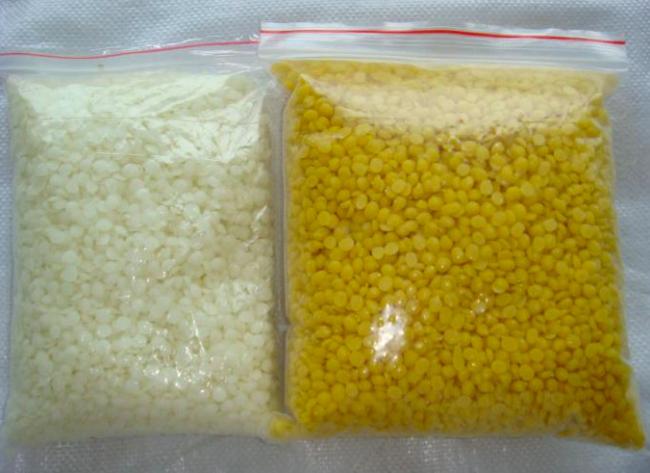
Specification:
| Melting point | 61.0℃-67.0℃ |
| Acid value | 16.0 mg/g-24.0 mg/g |
| Saponification value | 75.0mg/g-110mg/g |
| Ester value | 70mg/g-80mg/g |
| Shape | Slab, pellet |
| Color | White, Yellow |
| Smell | Natural Aroma |
| CAS No. | 8012-89-3 |
| HS/Tariff code | 1521 9010 |
| Animal test | Not tested on animals |
| Allergen Fragrances | Not present |
Applications:
Food;
Pharmaceutical;
Cosmetics;
Candles;
Polishing;
Beekeepings
...........................
Advantage:
BENEFITS: Beeswax forms a protective barrier that helps protect it from environmental assaults, while also holding in moisture and reducing dryness. Beeswax has antibacterial properties, helping keep skin clean and reducing the risks of contamination in the formula itself. Some ingredients "attract" water, and beeswax is one of them. When you put it on, you attract water molecules, helping to keep skin hydrated over time.Because of its anti-inflammatory properties, beeswax has been found to help encourage the healing of wounds. Beeswax has an unlimited shelf life.
Used in various cosmetic formulations, beeswax makes an excellent emulsifier. Can be used in candle, and bar soap recipes to assist with a harder finished product. Used in body creams and salves it will lend its healing benefits and create a smooth, thick consistency. Practically insoluble in water, it forms a protective barrier between your skin and the environment.
Get in Touch
Have questions about our products or want to discuss a custom order? Our team is ready to help you.