
Electrical Insulation Al2O3 Ceramic For LED PCB Microelectronics
Price:
$1.00/Pieces >=1 Pieces
MOQ:
50 Pieces
Delivery Time:
Negotiable
Brand:
HaoRui
Product Description
99% 95% 96% Al2O3 Alumina Ceramic Substrate For LED Pcb Microelectronics 3.93g Cm3
Why is aluminum oxide used in ceramics?
It is used to stiffen the glaze and prevent it from running off. It also prevents crystallisation in the glazes, but in high quantities makes the glaze matt. Increases the temperature of the glaze and its wear resistance. In ceramics, Al2O3 comes up when technicians talk about glaze chemistry.
It is used to stiffen the glaze and prevent it from running off. It also prevents crystallisation in the glazes, but in high quantities makes the glaze matt. Increases the temperature of the glaze and its wear resistance. In ceramics, Al2O3 comes up when technicians talk about glaze chemistry.
Product Name
Refractory Industrial electrical insulation alumina ceramic tubes
Material
99.5%/99% /96%/95% Alumina ceramic
Color
White
Size
Customized
OEM,ODM,OBM
Support
Price
Factory Price
Certificates
ISO9001,LFGB,FDA,ROSH
Used
Industry
Refractory Industrial electrical insulation alumina ceramic tubes
Material
99.5%/99% /96%/95% Alumina ceramic
Color
White
Size
Customized
OEM,ODM,OBM
Support
Price
Factory Price
Certificates
ISO9001,LFGB,FDA,ROSH
Used
Industry
|
Alumina ceramic performance table
|
|||||
|
Property
|
Item
|
Data
|
Unit
|
||
| 99.8% | 99% | 95% | |||
|
Mechanical Characteristics
|
color | Ivory | light yellow | White | - |
| density | 3.93 | 3.85 | 3.7 | g/cm3 | |
| Bending Strength | 370 | 310 | 300 | MPa | |
| Compressive trength | 2,500 | 2,400 | 2,300 | MPa | |
| Elastic Modulus | 390 | 340 | 320 | GPa | |
| Fracture Toughness | 4 | 3~4 | 3~4 |
MPa m^1/2
|
|
| Weber Coefficient | 12 | 12 | 12 | m | |
| Vickers Hardness | 1,850 | 1,600 | 1,400 | HV 0.5 | |
|
Thermal Characterics
|
Coefficient of Line Thermal
Expansion
|
7~8 | 7~8 | 7~8 |
10^-6 K^-1
|
|
Thermal Conductivity
|
32 | 29 | 20 |
W/mK
|
|
|
Thermal Shock Resistance
(Put in Water)
|
280 | 200 | 250 | ΔT °C | |
|
Max Working Temperature
|
1,700 | 1,600 | 1,500 | °C | |
|
Electrical Characteristics
|
Volume Resistance at 20°C
|
>10^14 | >10^14 | >10^14 | Ωcm |
|
Dielectric Strength
|
15×10^6
|
15×10^6
|
15×10^6
|
V/m
|
|
| Dielectric Constant | 10 | 10 | 10 | εr | |
|
One MHZ Dielectric Loss Angle
at 20°C
|
0.0001 |
0.0002
|
0.0004 |
tanδ
|
|
|
Chemical Characteristics
|
Nitric Acid (60%) 90°C
|
0.05 | 0.1 | 0.1 |
WT Loss mg/cm^2/day
|
| Sulphuric Acid (95%) 95°C | 0.22 | 0.34 | 0.3 | ||
|
Caustic Soda (30%) 80°C
|
0.04 | 0.95 | 0.9 | ||
We can provide a variety of high-performance engineering ceramics.
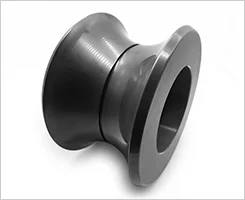
Silicon Nitride Ceramics (Si3N4)
Silicon nitride exceeds other ceramics in thermal shock resistance. Its strength does not deteriorate at elevated temperatures, hence it is most appropriate for engine and gas turbine parts, including turbo charger rotors, diesel engine glow plugs and hot plugs.
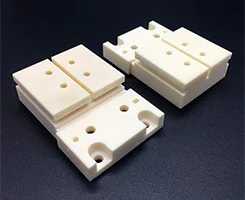
Alumina Ceramics (Al2O3)
Alumina is the most widely used type of ceramic. Its high dielectric properties are beneficial in electrical products, Alumina offers corrosion and wear resistance and high strength. It is widely used for industrial machine parts.
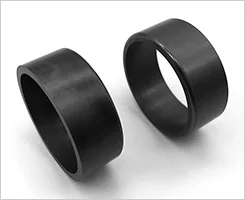
Silicon Carbide Ceramic (SiC)
Silicon carbide retains its strength at elevated temperatures as high as 1400℃. It has the highest corrosion resistance of all fine ceramic materials. Applications include mechanical seals and pump parts.
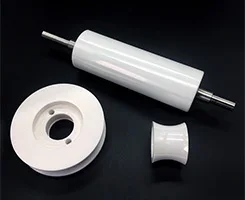
Zirconia Ceramics (ZrO2)
Zirconia ceramic has the highest strength and toughness at room temperature of all engineering ceramics. Before zirconia, ceramics were considered impractical for scissor or knife applications. With its excellent surface smoothness, zirconia is also used for pump parts.
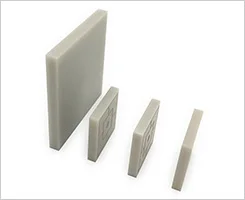
Aluminum Nitride Ceramics(AIN)
Aluminum nitride ceramics are usually gray or off-white. It has a low thermal expansion coefficient, excellent insulation performance, heat resistance, and a thermal conductivity of more than 180W/(m.k). It is an ideal package heat dissipation material for large integrated circuits.
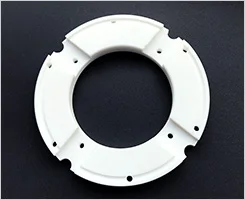
Machinable Glass Ceramic
Machinable glass ceramics are fluorophlogopite mica glass ceramics with synthetic mica as the main crystal phase. The main components are fluorophlogopite and glass with silica as the main component. Contains 55% fluorophlogopite and 45% borosilicate glass matrix.
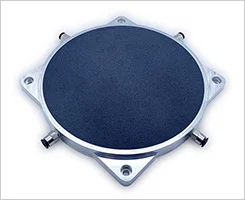
Microporous Ceramic Plate
Microporous ceramics refer to ceramic bodies containing a large number of open or closed tiny pores. The material is mainly alumina or carbonized. The surface is firm, the pores are uniform, the porosity is 35-40%, and the pore size ranges from 1 to 100 microns.
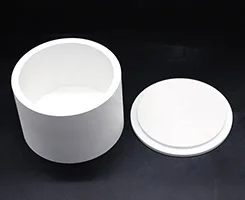
Boron Nitride(h-BN)
Boron nitride material has the characteristics of resistance to high temperature and heat cycle. It will not react with many metals, ceramic rare earths and other materials, nor will it contaminate the product. Will not break in hot and cold environments.
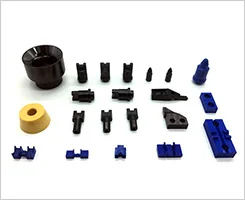
Other Ceramics
Our company can process a variety of ceramic materials and cemented carbide. We are currently processing experimental splines for many research institutes and schools. You can provide materials and we can process them according to drawings.
We can provide products according to your drawings or samples and performance requirements.
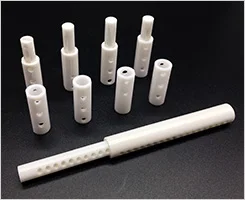
Ceramic shaft and sleeve
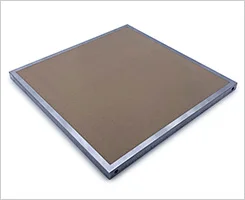
Plane processing
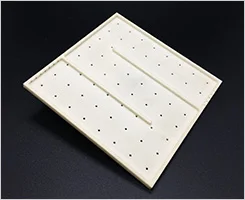
Ceramic micro hole machining
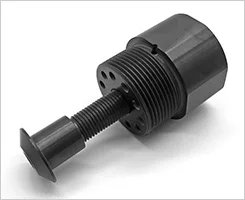
Ceramic processing thread
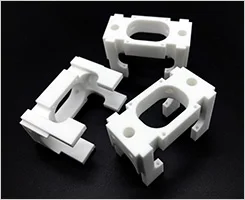
Ceramic complex shaped parts
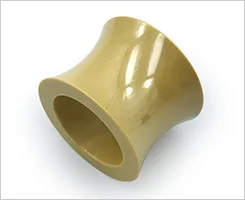
Ceramic parts polishing

Similar Products
Get in Touch
Have questions about our products or want to discuss a custom order? Our team is ready to help you.
Company
Jiangsu BPT Precision Ceramics Co., LTD
Location
Yixing Industrial Park, Jiangsu Province
Contact Person
Wu