
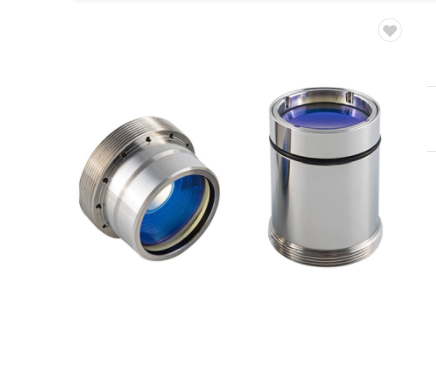
Corning 7980 T Optical Aspheric Lens 37mm Laser Collimator Lens
Corning 7980 T>99.98% Dia 30mm 37mm Fiber Laser Focus Lens Laser Collimator Lens
Features
- Focus or Collimate Light without Introducing Spherical Aberration
- Ø4.00 mm, Ø5.00 mm, or Ø7.60 mm Unmounted Clear Aperture
- AR Coated for 1.8 - 3 µm (-D), 3 - 5 µm (-E), or 8 - 12 µm (-F)
- Available Unmounted or Mounted in a Threaded, Engraved Stainless Steel Housing
- Black Diamond Substrate Provides Stable Operation up to 130 °C
Spherical aberration often prevents a spherical lens from achieving diffraction-limited design. The surfaces of an aspheric lens are designed to minimize spherical aberration, thereby providing a robust single element solution for many applications, such as collimating the output of a fiber or laser diode, coupling light into a fiber, spatial filtering, or imaging light onto a detector. In particular, our IR aspheric lenses are ideal for collimating light from mid-wavelength infrared (MWIR) and long-wavelength infrared (LWIR) sources, includinuantum Cascade Lasers g Q(QCLs).
Black Diamond
Black Diamond-2 (BD-2), a chalcogenide made of an amorphous mixture of germanium (28%), antimony (12%), and selenium (60%), has several advantages over germanium, which is traditionally used to fabricate IR optics. BD-2's thermally stable refractive index (see the Refractive Index tab) and low coefficient of thermal expansion (13.5 x 10⁻⁶ / °C) result in a smaller change in focal length as a function of temperature than for germanium. Additionally, germanium suffers from transmission loss as temperature increases, while BD-2 aspheric lenses can be used in environments up to 130 °C. This material performs particularly well over the 1.7 - 2.2 µm spectral range, providing >99% transmission and a flat dispersion curve. Click here to download a pdf of the MSDS for BD-2.
Map Optical offers non-coated and coated anti-reflection lenses with aspheric surfaces.
Antireflection membrane options include IR1, NIR2.
Zinc selenide based sheets are suitable for infrared applications.
Aspheric lens can well correct spherical aberration and chromatic aberration, and it is often used in barcode scanning, laser collimation, optical imaging and other fields.
Aspheric lenses are designed with a single element, which helps to minimize the number of lenses in multi-lens optical fittings.
Conventional parameters
Pictures show
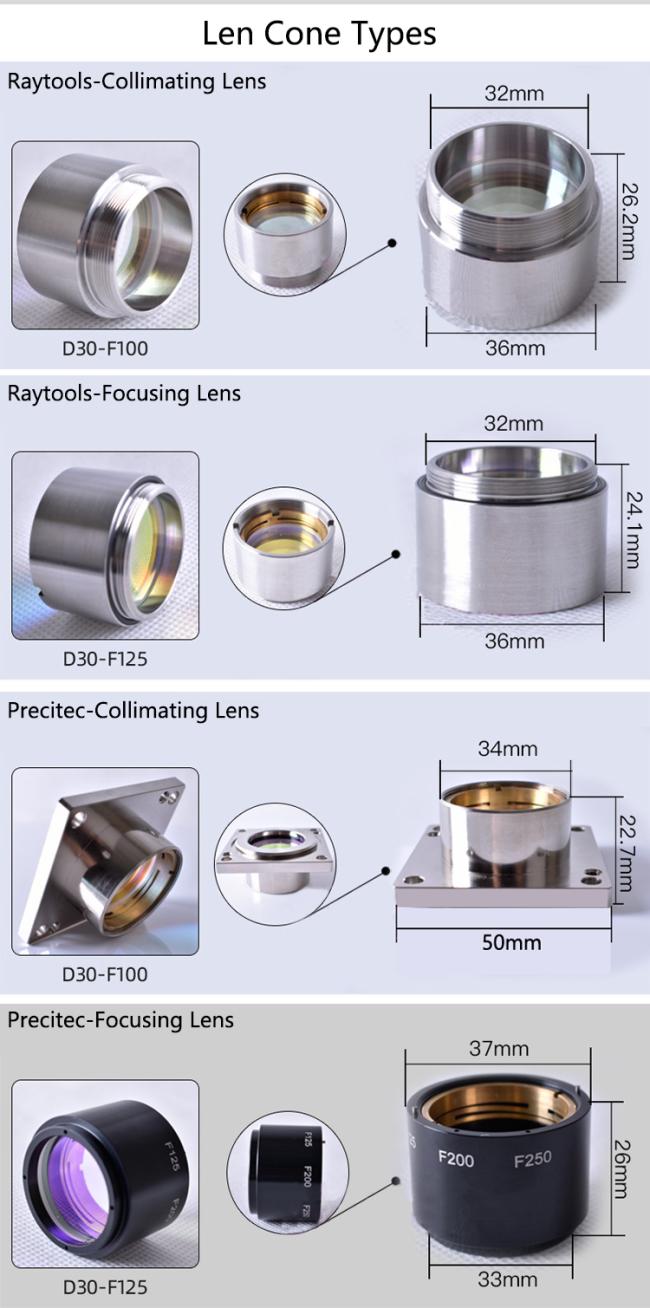
Packing Details :Use Good and Strong Cartons to pack

We offer more transportation options

FAQ
Q: What are your main products?
A: Optical lens,mirrors,windows,filters,prisms
Q: How long is your delivery time?
A: In general delivery time is about one month for custom produced optics.except stock ones or some special optics.
Q: Do you provide samples ? is it free or extra ?
A: We can provide free samples if we have stock optics as your request,while custom produced samples are not free.
Q:What is your MOQ ?
MOQ is 10pcs for most of the optics, while MOQ could be only one piece if you need a element in big dimention.
Q: What is your terms of payment ?
T/T,L/C,VISA,Paypal,Alipay or Negotiation.
Get in Touch
Have questions about our products or want to discuss a custom order? Our team is ready to help you.