
Ferrovanadium FeV for Heat-Treatable Alloy Production with 60-80% Vanadium Content and Excellent Thermal Stability
Ferrovanadium, a ferroalloy composed primarily of iron and vanadium (typically 40–80% V), is a cornerstone additive in the steel industry, prized for its ability to enhance thermal stability —a critical property for heat-treatable alloys. These alloys, which derive their strength and hardness from controlled heating, quenching, and tempering processes, rely on ferrovanadium to maintain structural integrity at elevated temperatures and resist degradation over time.
Heat-treatable alloys (e.g., high-strength low-alloy steels, tool steels, stainless steels) are engineered to achieve specific microstructures—such as martensite, bainite, or tempered sorbite—through heat treatment. Thermal stability ensures these microstructures retain their properties (e.g., hardness, toughness, creep resistance) during service, even under cyclic heating or high-temperature exposure. Without it, alloys may soften, crack, or lose dimensional accuracy, compromising performance in applications like automotive components, aerospace parts, and industrial tools.
Ferrovanadium's contribution to thermal stability stems from vanadium's unique metallurgical behavior:
- Stable Carbide Formation: Vanadium has a strong affinity for carbon, forming fine, thermally resistant vanadium carbides (VC) during solidification and heat treatment. Unlike softer carbides (e.g., iron carbide, Fe₃C), VC resists coarsening at high temperatures, acting as permanent obstacles to dislocation movement. This "pinning effect" preserves strength and hardness during tempering, preventing the "temper softening" common in plain carbon steels.
- Grain Refinement: Vanadium inhibits austenite grain growth during heating, resulting in a finer microstructure. Smaller grains reduce the likelihood of grain boundary sliding at high temperatures, enhancing creep resistance and delaying recrystallization.
- Solid Solution Strengthening: Vanadium atoms dissolved in the ferrite matrix distort the crystal lattice, increasing resistance to plastic deformation. This effect persists at elevated temperatures, contributing to sustained strength.
- Tool Steels: Ferrovanadium (e.g., FeV80) is added to high-speed steels (e.g., M2, M42) to form dense VC networks, enabling red hardness (retained hardness at 600–650°C) for cutting tools.
- High-Strength Low-Alloy (HSLA) Steels: FeV60 or FeV70 improves hardenability and temper resistance in structural steels, allowing thinner sections to achieve target strength without quenching cracks.
- Stainless Steels: In martensitic stainless steels (e.g., 410, 420), vanadium refines carbides and enhances high-temperature strength for valve and turbine components.
Compared to alternatives like molybdenum or tungsten, ferrovanadium offers a cost-effective balance of carbide stability and grain refinement. Its lower density and higher solubility in steel also simplify processing, reducing segregation risks during melting.
| Parameter | Typical Range |
|---|---|
| Vanadium Content | 60–80% (FeV60–FeV80 for optimal thermal stability) |
| Impurities | S ≤ 0.05%, P ≤ 0.04%, C ≤ 0.15% (low levels ensure clean steel and consistent properties) |
| Form | Lumps, powder, or briquettes (powder preferred for uniform distribution in critical alloys) |
| Key Benefits | Enhanced temper resistance, reduced grain growth, stable carbide precipitation |
| Grade | V | Al | P | Si | C |
|---|---|---|---|---|---|
| FeV40-A | 38-45 | 1.5 | 0.09 | 2.00 | 0.60 |
| FeV40-B | 38-45 | 2.0 | 0.15 | 3.00 | 0.80 |
| FeV50-A | 48-55 | 1.5 | 0.07 | 2.00 | 0.40 |
| FeV50-B | 48-55 | 2.0 | 0.10 | 2.50 | 0.60 |
| FeV60-A | 58-65 | 1.5 | 0.06 | 2.00 | 0.40 |
| FeV60-B | 58-65 | 2.0 | 0.10 | 2.50 | 0.60 |
| FeV80-A | 78-82 | 1.5 | 0.05 | 1.50 | 0.15 |
| FeV80-B | 78-82 | 2.0 | 0.06 | 1.50 | 0.20 |


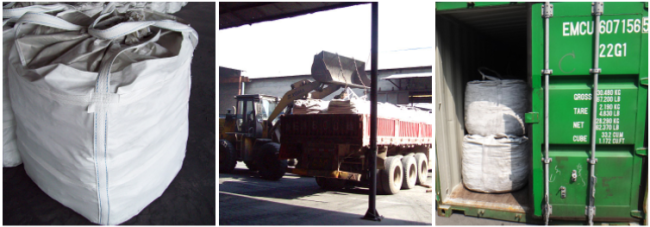
Packing: 1 ton big bag, 20-25mt in 20' container
Fe Vanadium 60 grade briquette thus provides a practical solution for producing durable rail steels and heavy machinery parts that withstand demanding mechanical and environmental conditions.
Ferrovanadium's ability to impart excellent thermal stability makes it indispensable in heat-treatable alloy production. By forming stable carbides, refining grains, and strengthening the matrix, it enables steels to withstand extreme conditions while maintaining the mechanical properties required for modern engineering applications. As demand grows for lighter, stronger, and more durable materials, ferrovanadium will remain a key enabler of innovation in the steel industry.
Get in Touch
Have questions about our products or want to discuss a custom order? Our team is ready to help you.