
1.37m Width Abrasion Resistant Coated Microfiber Fabric For Sofas
Price:
3USD/SF
MOQ:
5SF
Delivery Time:
5-28Days according to order
Brand:
TGKELL
Product Description
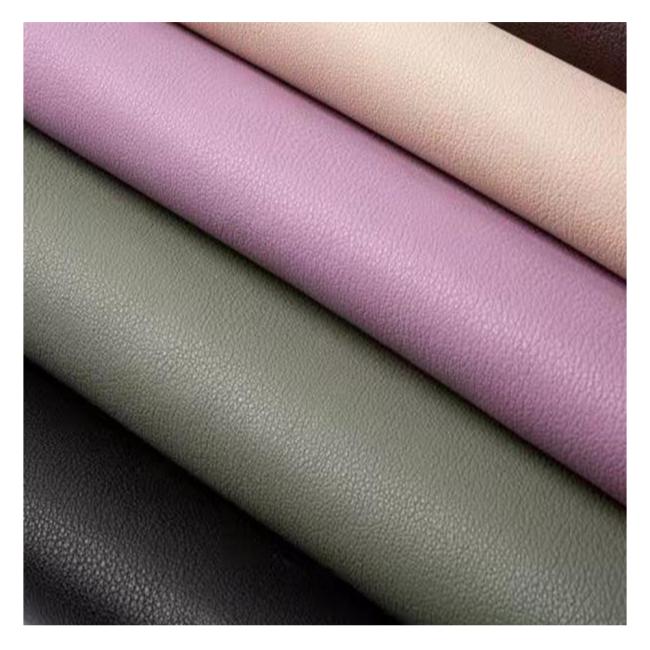
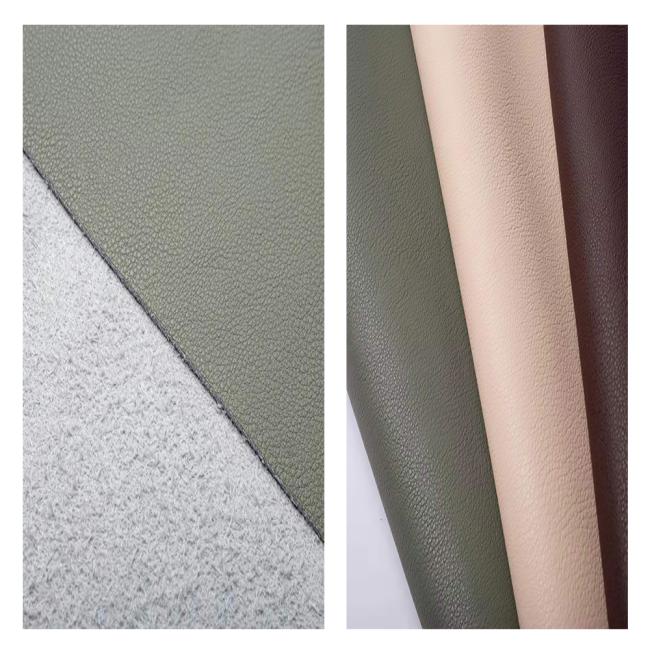
First Collection Fabric Coated Microfiber Fabric Abrasion-Resistant For Sofas Leather Fabric
Mechanical bonding
Splittable bicomponent (Bico) fibres
- The formation of microfibres in situ by splitting segmented-pie bicomponent fibres within fabrics during hydroentanglement is particularly well established in the Far East. Synthetic leather coating substrates, upholstery fabrics, high-performance wipes for applications such as optical glass cleaning are produced in this way. Carded and cross-lapped batts containing segmented-pie bicomponent fibres are hydroentangled to produce microfibres by splitting. Afterwards, fabric density can be increased by inducing thermal shrinkage of additional thermoplastic fibres blended with the bicomponent fibres in the web. The elimination of conventional leather production steps such as shrinking, splitting and grinding, leads to a significant saving in raw materials. Synthetic leather fabrics have excellent strength and durability and depending on polymer composition can be dyed and finished to develop attractive softness and handle characteristics.
| Thickness | 01.0-1.2mm |
| Width | 137-140cm |
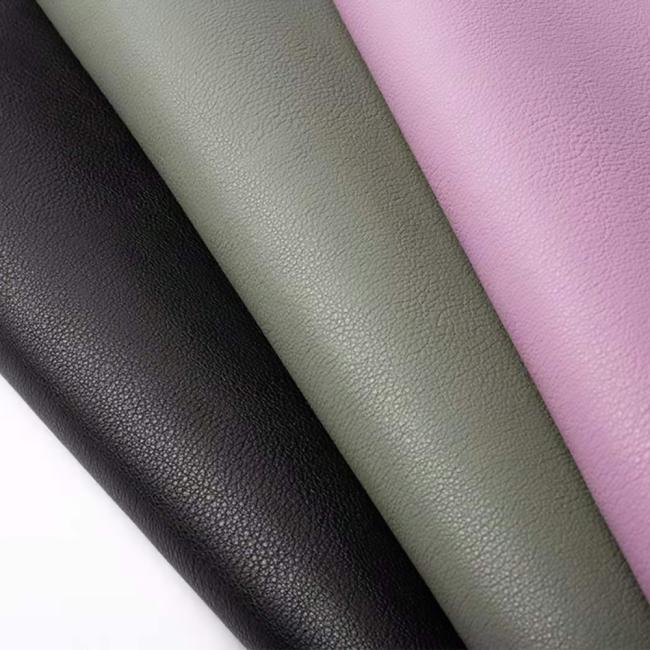
| Color | By your requests |
| Pattern | Embossed |
| Usage | Sofa,Decorative, Furniuture, Belt, Chair, Car,Car Seat, Notebook ect |
| Feature | Abrasion-Resistant, Anti-Mildew, Elastic,Waterproof, Eco- friendly etc |
| Packing details | By your requirements |
| Other | Anti-yellow, Anti-fire, Anti-bacterium, Hydrolysis resistance, Low Temperature Flexibility, Tear Strength, Weathering Resistance and Long Lived Deal ect can be tailor-made |
|
MATERIAL
|
PVC |
|---|---|
|
THICKNESS
|
Can be customized by customers |
|
COLOR
|
Various color available,can be customized |
|
TOUCH FEELING
|
Soft or hard,as your requirement |
|
CHARACTER
|
Abrasion-Resistant,Anti-Mildew,Anti-scratch,etc |
|
USAGE
|
Bags,Totes,Belt,Bagspurses,Other,etc |
- The cross-sectional configuration of splittable bicomponent fibres and filaments varies and the choice affects splitting efficiency and fabric properties. Rather than separating the embedded filaments in the bicomponent using solvents, which is the traditional practice in the manufacture of synthetic leather, or by differential thermal shrinkage of the two components, splitting during hydroentanglement relies on the low interfacial adhesion between the two polymers and the impact and shear forces delivered by the incident water jets.
- The splitting efficiency of segmented-pie cross-sections improves if there is a hollow core. Rectangular striped fibre cross-sections also increase splitting efficiency because of the aspect ratio. The impact force generated by the jet is a function of the pressure and jet diameter and these must be selected to obtain uniform splitting throughout the fabric. At a fixed pressure, web weight and number of injectors, the splitting efficiency increases with jet diameter. Partial separation of some splittable bicomponent fibres can occur during high-speed carding and this can limit the production rate of both the card and hydroentanglement process. The critical pressure at which splitting is induced ranges from 50–100 bar, but varies depending on the stored strain in the individual fibres and their geometric position within the web cross-section. To achieve high splitting efficiency, water pressures up to 250–400 bar can be necessary partly because in heavyweight webs the degree of splitting varies through the cross-section. It is necessary to ensure, at least initially, that fibres are properly entangled through the fabric cross-section before splitting is complete. For these reasons, the water pressure in the first few injectors must not induce excessive splitting but rather should entangle the fibres to introduce satisfactory bonding through the cross-section.
- The fineness of the fibres or filaments after splitting depends on the number of segments in the bicomponent cross-section. Typically, after splitting the fineness ranges from about 0.05–0.3 denier depending on the type of bicomponent. Experimentally, island in the sea filaments have been produced with 600–1120 individual PP filaments embedded in a soluble PVA matrix within the cross-section. While at present only segmented fibres are intended for splitting in hydroentanglement, hydroentangled nanofibre fabrics produced from splittable bicomponents is technically feasible and hydroentanglement of nanofibre filaments has been demonstrated.
Similar Products
Get in Touch
Have questions about our products or want to discuss a custom order? Our team is ready to help you.
Company
Guangzhou Tegao Leather goods Co.,Ltd
Location
Room 302-308,43 Fuhua East Street,Tangdong,Tianhe District,Guangzhou
Contact Person
PAN