
DGP85 Wet Type dog food extruder machine Wet-type Twin screw floating fish feed pellet extruder machine for Farm Use
Wet-type Twin screw floating fish feed making machine
--Customers can choose the most suitable model based on theiractual production demands
What is the working principle of a wet-type twin screw floating fish food extruder machine?
The MIKIM Wet-type Twin screw fish feed pellet maker machine operates on the high-efficiency HTST (High Temperature Short Time) principle. This ensures superior feed quality through the following precision-controlled phases:
-
Co-rotating Shear Technology: High-torque, co-rotating twin screws provide intense mixing and self-cleaning action. This ensures a homogeneous melt and consistent energy input within the high-wear bimetallic barrel.
-
Efficient Cooking & Gelatinization: Under precision-monitored conditions (120-140°C, 5-10MPa), the material undergoes rapid transformation. This achieves 90%+ starch gelatinization and protein denaturation, significantly improving the Feed Conversion Ratio (FCR) and neutralizing anti-nutritional factors.
-
Pathogen Elimination: The thermal environment acts as a biological barrier, effectively eliminating Salmonella and E. coli, ensuring your products meet stringent global bio-safety standards.
-
Precision Expansion (Flash-Evaporation): As the melt exits the die plate, the sudden pressure drop triggers instantaneous flash-evaporation. This creates the uniform, micro-cellular structure required for high-stability floating feed with exceptional oil absorption capacity.
What Are the Main Components of a Wet-type Twin screw fish feed extruder machine?
① High-Torque Drive System
-
Power Unit: Equipped with motors , providing consistent torque even at low frequencies.
-
Dynamic Distribution: Precision synchronous torque distributor ensures perfect twin-screw phasing, preventing mechanical interference.
-
Safety Integration: Dual-layer protection—Mechanical Shear Pin for instantaneous physical disconnect + Electronic Torque Sensor for real-time PLC load monitoring.
② Intelligent Feeding Module
-
Anti-Bridging Technology: Features a forced-feeding screw with an anti-bridging agitator, specifically designed for oily or high-moisture raw material blends.
-
VFD Precision: Feed rate is controlled via Variable Frequency Drive (VFD), allowing linear adjustment from 0-100% to match extruder load.
-
Monitoring: Integrated tempered sight glass for visual inspection of material flow and level sensors for automated batching.
③ Hydro-Thermal Conditioning System (Core of Wet-Type)
-
Differential Pre-conditioner: A dual-shaft differential design ensures a material residence time of ≥120s, achieving up to 90% starch gelatinization before extrusion.
-
Steam & Liquid Management: Multi-point direct steam injection and liquid addition ports for precisely controlling moisture (up to 25-30%) and adding nutritional oils or molasses.
-
Thermal Control: Real-time PT100 temperature sensors at the discharge point for closed-loop quality control.
④ High-Wear Extrusion & Processing Unit
-
Modular Barrel: 7-segment interchangeable barrel design with Bimetallic Liners (Centrifugal casting, hardness HRC 62-65) for maximum abrasion resistance.
-
Screw Geometry: Segmented 38CrMoAlA screw elements (Nitriding depth 0.5-0.8mm). Modular configuration allows for adjustable shear, mixing, and pressure zones.
-
Thermal Management: Cast-in Aluminum heating elements (50,000h+ lifespan) paired with spiral water-cooling jackets for precise ±1°C temperature zone control.
⑤ High-Precision Pelletizing System
-
Micron-Level Adjustment: Gap-adjustable cutter with a blade-to-die clearance of ≤0.1mm, ensuring clean cuts and minimizing "tails" on floating feed.
-
Variable Geometry: Speed-controlled via VFD to produce pellets with a length-to-diameter ratio of 1:1 to 5:1.
-
Dynamic Protection: Flexible blade tensioning system prevents die-face scarring and extends the service life of the manganese steel blades.
⑥ PLC Control Architecture
-
Centralized Logic:PLC manages all interlocks, ensuring the machine cannot start without oil pressure or cooling water.
-
HMI Experience: 10-inch Industrial Touchscreen with multi-language support, real-time trend graphing, and one-touch start/stop sequences.
-
Industry 4.0 Ready: Optional IoT Gateway for remote cloud-based diagnostics and production data synchronization (ERP compatible).
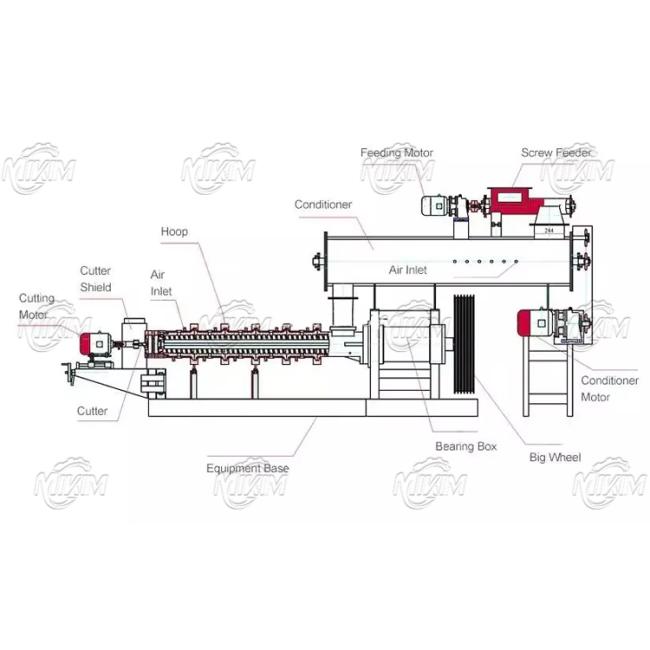
Wet-type Twin-Screw floating fish feed extruder Features
---Fish feed pellet machine adopting international advanced technology, the pellets are very even. ---We can get the different size and length of pellet diameter( fish feed diameter is from 1 mm to 8 mm)
---The electric heating device improve the feed expansion tate.
---High temperature and high pressure can kill the salmonellosis and bacterial infections.
---Fish feed machine can get the higher-protein animal feed and easy to digest.
1.Flexible-blade cutter with stepless speed regulation, ow burr rate, freely adjustable
2.Compact & unique structure, easy to assemble, disassemble and operate
3.PLC touch-screen intelligent control, simple and quick operation.
4. Wear-resistant & high-temp alloy steel screw and barrel, long service life.
5.Built-in pressurized die-punching & electric heating system for stable output andhigh puffing rate.
6.Variable-frequency feeding ensures uniform feeding and avoids blockage.
7. Variable-frequency cutting, quick replacement of die plates for different pellet size
8. Floating feed stays stable on water for ≥12 hours, easy digestion, saves 8%-15%feed, kills harmful bacteria effectively.
9.Supports sinking feed production, eliminates anti-nutritional factors to improvenutrient utilization.
Product Parameters
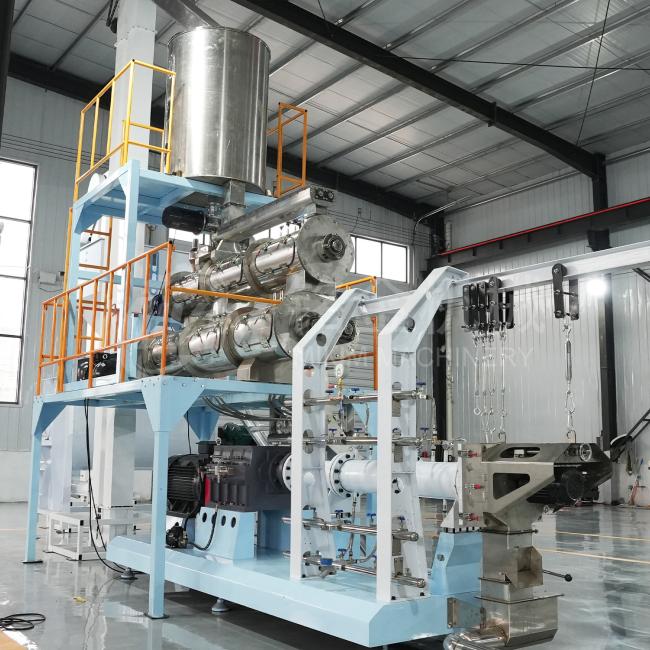
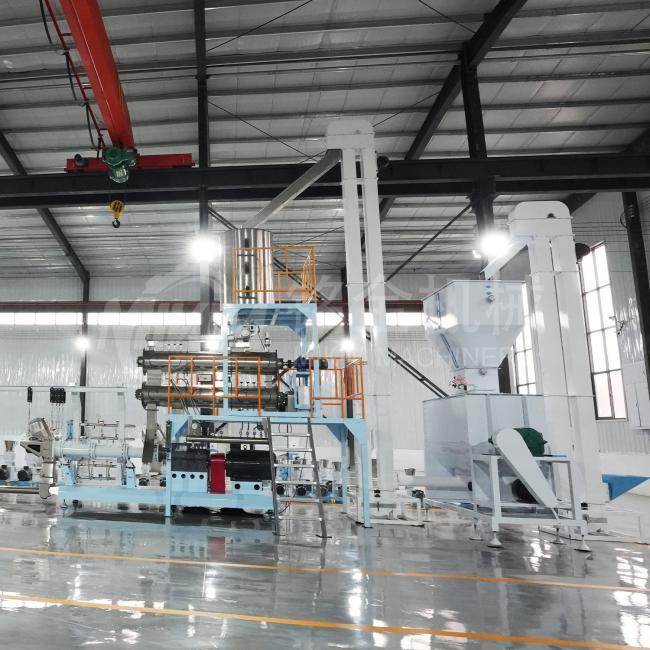
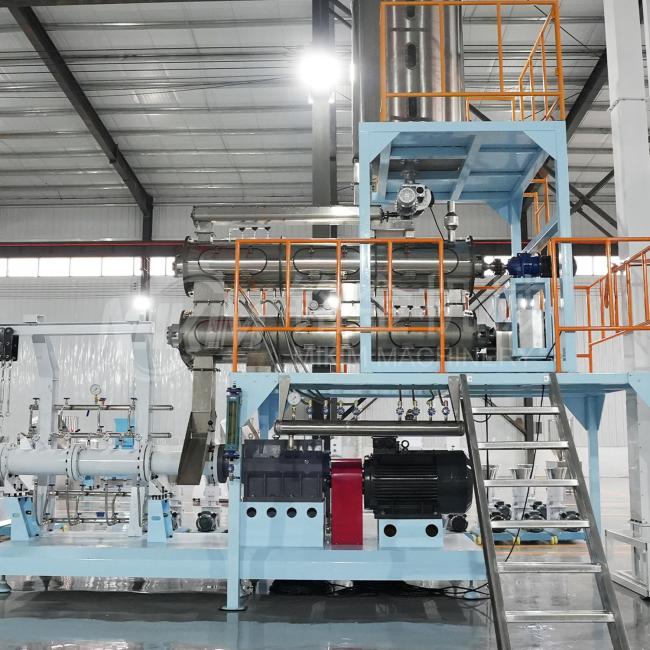
Wet-type twin-screw floating fish feed pellet extruder machine vs.Dry-type single-screw fish feed extruder machine
1.Core Technologies and Performance Comparison
| Technical Parameters | Wet Type dog food extruder machine | Dry Type single screw floating fish feed pellet machine | Competitive Advantage |
| Operating Principle | Co-rotating twin-screw + Steam conditioning + HTST | Mechanical friction heat + Single-screw compression | Twin-screw ensures superior homogenization and forced material transport. |
| Starch Gelatinization | 85% - 95% | 60% - 75% | 20-30% higher cooking degree significantly improves digestibility and growth rates. |
| Lipid (Oil) Capacity | 25% - 30% | 5% - 8% | Mandatory for High-Energy formulations (e.g., Salmon, Sea Bass, Trout). |
| Density Control | 0.4 - 1.1 g/cm³ (Fully Adjustable) | 0.6 - 0.8 g/cm³ (Narrow range) | One line produces Floating, Sinking, and Slow-sinking feed. |
| Pellet Uniformity | ≥ 98% (Fines rate ≤ 1%) | 80% - 85% (Fines rate 8% - 12%) | Minimizes dust and nutrient leaching; improves pond water quality. |
| Water Stability | 12 - 36 Hours (Shape retention) | 2 - 6 Hours | Reduces feed waste; essential for slow-feeding species like shrimp and crab. |
| Buoyancy (Floating) | ≥ 98% (Consistently stable) | 85% - 95% (Fluctuates) | Stable floating performance regardless of raw material or ambient weather. |
| Biosecurity | 120 - 140°C; Sterilization ≥ 99% | 80 - 110°C; Inconsistent | Effectively eliminates Salmonella and E. coli for intensive farming. |
2. Ingredient Versatility and Operational ROI
Moisture of raw materials: 20%-25%
Oil content: below 10 %
Starch content: over 30%
Raw materials: Power
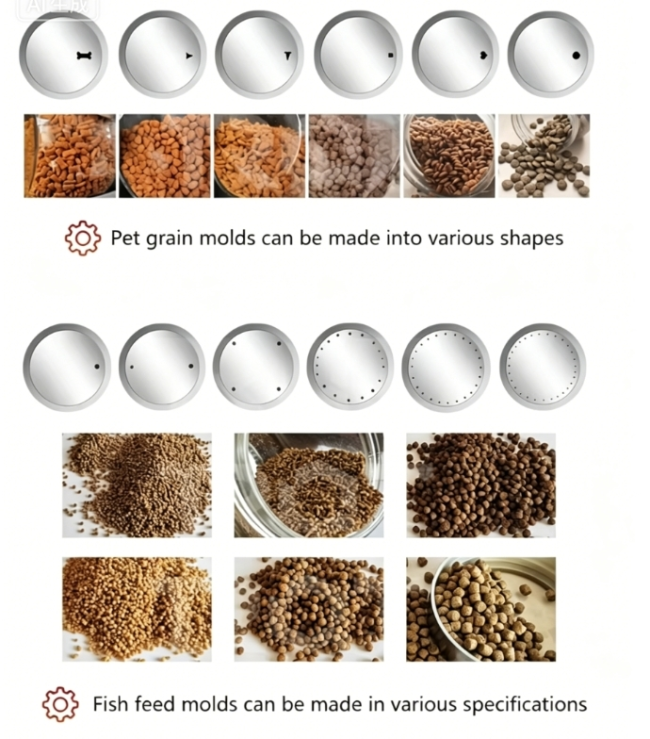
Fish Feed Pellet Formulations for Different Fish Growth Stages
Final Products:
FAQ
A: Yes, with over 95% compatibility. Our Twin screw floating fish feed extruder machines feature standardized modular interfaces. We provide customizable height adjustments and inlet/outlet orientations to ensure a seamless connection with your current conveyors, dryers, and coolers. Our engineers provide on-site measurements to guarantee a perfect mechanical fit.
Q2: Will my operators require extensive retraining for the new system?
A: The learning curve is minimal. The upgraded system utilizes an intuitive HMI (Human-Machine Interface) touchscreen powered by a PLC, making operation more visual and straightforward than legacy manual controls. We provide 1-2 days of intensive on-site training, after which a standard operator can achieve full proficiency.
Q3: Is the Twin-Screw floating fish feed extruder machine more energy-intensive than a Dry Type single screw floating fish feed machine?
A: Actually, the Specific Energy Consumption (SEC) is significantly lower. While the twin-screw has a higher installed power, its throughput is 2-3 times higher. The twin-screw consumes approximately 80 kWh/ton compared to 110 kWh/ton for single-screw—a 27% reduction in energy costs per unit of finished product.
Q4: Can I use my existing die plates and cutter assemblies?
A: While the physical fittings are different, we provide custom-engineered die plates that match your original pellet specifications exactly. Your customers will receive the same pellet geometry and size they are accustomed to, ensuring a transparent transition in product quality.
Q5: How much production downtime should I expect during installation?
A: We typically execute a "Weekend Transition" to minimize impact. We coordinate the decommissioning of old gear on Friday, followed by the installation and commissioning of the new system over Saturday and Sunday. Most plants are back to full production by Monday morning.
Q6: Is it possible to conduct a material trial before finalizing the contract?
A: Absolutely. We highly encourage a Factory Acceptance Test (FAT). You can ship your specific raw material mix to our facility for a live trial run. This allows you to verify pellet density, water stability, and expansion rates firsthand before making any capital commitment.
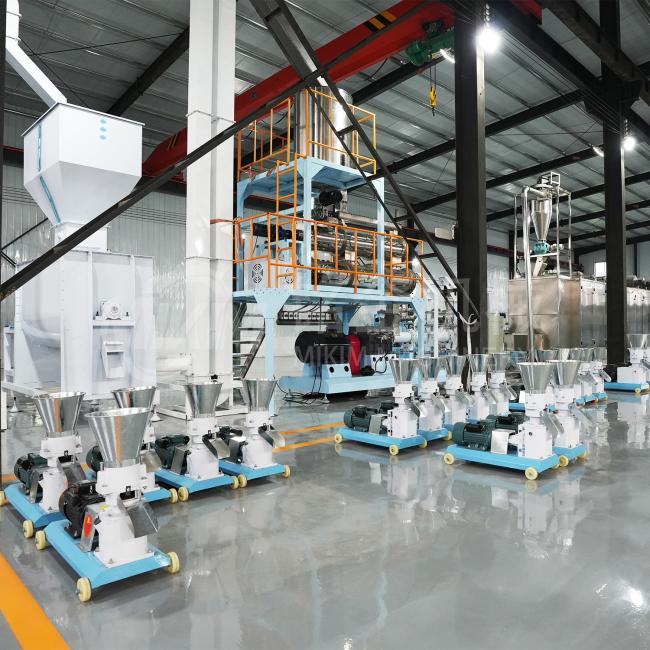
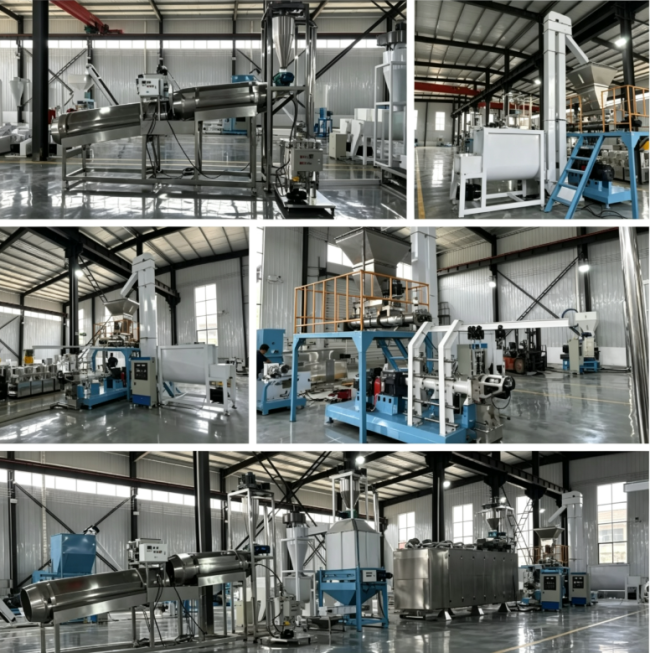
Our factory showcase

Get in Touch
Have questions about our products or want to discuss a custom order? Our team is ready to help you.