
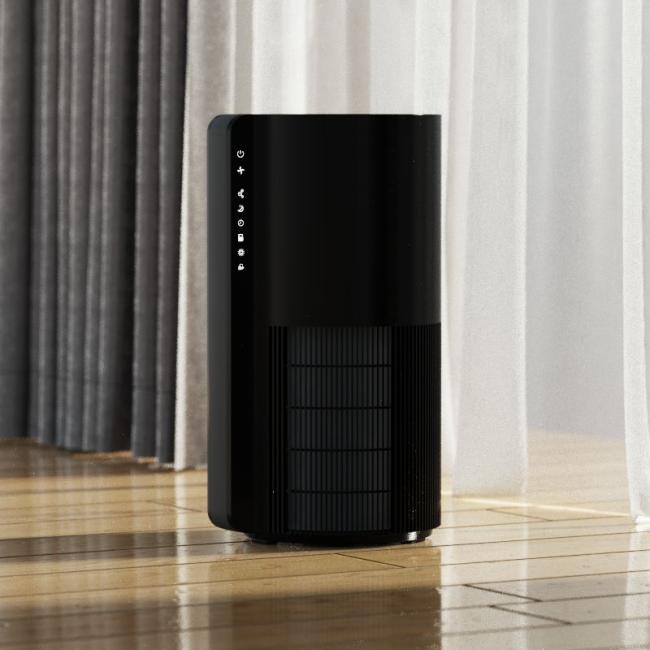
Tuya WiFi Control Hepa UV Air Purifier For Smoke Dust 40W
Tuya WiFi Control Hepa Filter Home UV Air Purifier For Smoke Dust
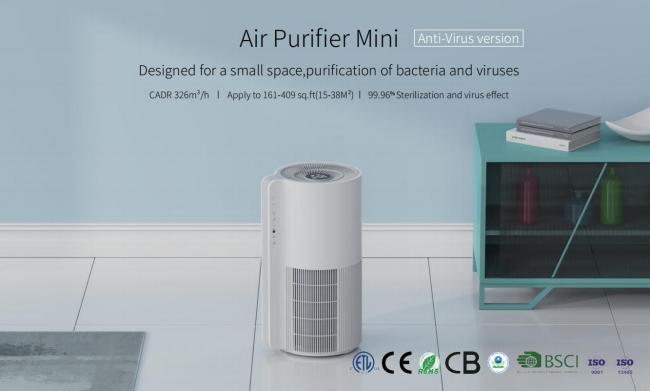
Hepa UV Air Purifier Description
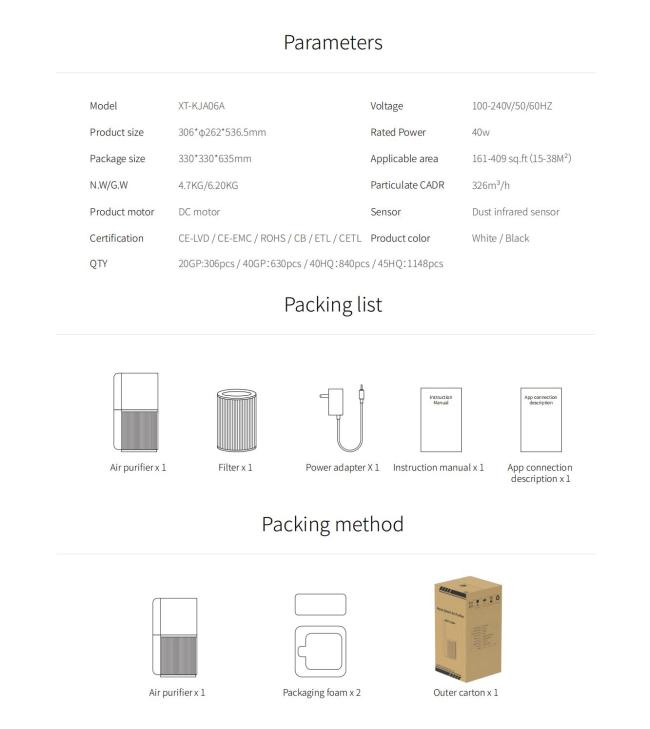
| Product Name | Hepa UV Air Purifier |
| Product Model | XT-KJA06 |
| Sensor | Dust Infrared Sensor |
| Motor | DC Motor |
| Voltage | 100-240V |
| Power | 40W |
| Product Size | 306*262*536.5MM |
| Packing Size | 330*330*635MM |
Hepa UV Air Purifier Function
1. Support air purification PM2.5 particle plasma purification UVC sterilization
2. Support filter replacement reminder
3. Support 3 speed adjustment
4. Support PM2.5 digital real-time monitoring display
5. Support intelligent automatic mode
6. Support display mode /LED touchscreen display
7. Support sleep mode/silent mode
8. Support child lock function
Hepa UV Air Purifier Parameters
1.Rated power: 40W
2.Voltage: 100-240V/50/60Hz
3.Wind speed: three speed
4.Applicable area: 38m³
5.Particulate clean air CADR: 326m³/h
6.Staphylococcus albus removal rate: 99.9%
7.Air natural bacteria removal rate: 99.35%
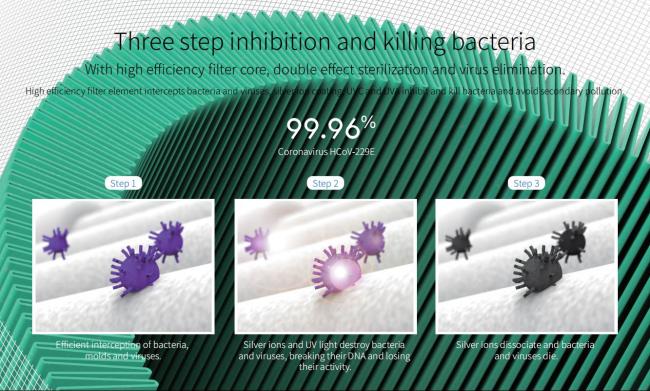
8.Coronavirus HCOV-229E removal rate: 99.96%
9.Color: Ivory white (customizable color)
10.Sensor type: Dust infrared sensor
About Hepa UV Air Purifier
Types of Air Purifiers
Different types of air purifiers use different technology to clean the air.
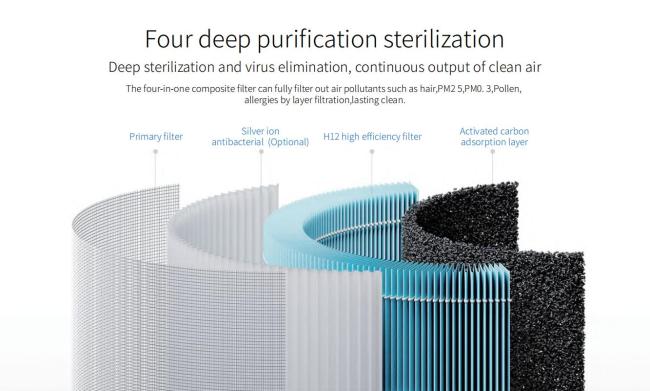
HEPA: HEPA stands for “high efficiency particulate air.” A HEPA filter is a multi-layered filter that captures particles down to 0.3 microns in size. The filter is pleated and held together with a metal frame.
Activated Carbon Technology: Air purifiers that use activated carbon technology in their filters have special properties that remove volatile organic compounds (VOCs), odors, and gas pollutants.
UV Technology: Air purifiers that use ultraviolet (UV) light use short-wave ultraviolet light (UV-C light) to deactivate pathogens like mold, bacteria, and viruses.
Negative Ion: Also known as an ionizer air purifier, these types of air purifiers use a high voltage electrical charge to attract particles to each other and clean the air. Depending on the air purifier, some use a fan, while others don’t and leave the charged particles to end up on the floor or curtains.
Ozone: Ozone can be harmful and, according to the EPA, ozone being labeled and sold as a type of air purifier isn’t truthful. Small doses of ozone that are inhaled can cause throat irritation, shortness of breath, coughing, and chest pains.
While UV air purifiers usually have a quiet operation and may be effective at removing bacteria from the air if a person uses them with HEPA filters, these devices can emit ozone. Additionally, unlike HEPA filters, UV air purifiers cannot effectively remove VOCs or other gases from the air.
However, the Environmental Protection Agency states that some UV air purifiers emit ozone gas. This can cause breathing difficulties, especially in people who have asthma.
This article discusses what a UV air purifier is and whether it is effective in providing a cleaner home environment. It also explores some HEPA air purifiers that a person may consider purchasing.
What is a UV air purifier, and how does it work?
UV air purifiers are devices that use UV light technology to capture air and pass it through a filter. The air then goes through a small internal chamber where it becomes exposed to UV-C light. Some air purifiers then filter the air again before releasing it back into the room.
However, UV air purifiers do not effectively remove volatile organic compounds (VOCs) from the air.
How effective are UV air purifiers?
A 2021 systematic review suggests that UV air purifiers that also use a HEPA filter may be effective at removing bacteria from the air. However, the researchers also point out that there is not enough evidence investigating whether UV and HEPA air purifiers can protect against respiratory illnesses.
The Environmental Protection Agency (EPA) states that people should not buy air purifiers that emit ozone. These can include UV air purifiers, electrostatic precipitators, ionizers, and plasma air purifiers.
Get in Touch
Have questions about our products or want to discuss a custom order? Our team is ready to help you.