
Customizable Pac Coagulant Basicity Industrial Liquid Oilfield Wastewater Treatment
Product Description:
Poly aluminum chloride, also known by its code name PAC, is a water-soluble inorganic polymer that is formed by the combination of ALCL3 and AL (OH) 3. The chemical formula for this compound is [AL2 (OH) NCL6 NLm], where m represents the degree of polymerization and n represents the degree of neutrality of the PAC product.
This product is commonly referred to as a water purifier or coagulant, due to its ability to treat water and remove impurities. It is available in different colors such as yellow, light yellow, dark brown, or dark gray, and has a resin-like solid form. Its strong bridging adsorption performance is due to the physical and chemical processes that occur during its hydrolysis, including coagulation, adsorption, and precipitation.
Polyaluminum chloride differs from traditional inorganic coagulants in that it is not made up of low molecular crystalline salts. Instead, it has a complex structure made up of various multi-carboxyl complexes. This allows it to have a fast flocculation and precipitation speed, and a wide range of applicable pH values. It is also non-corrosive to pipeline equipment and has a significant water purification effect.
This product is highly effective in removing heavy metal ions such as SS, COD, BOD, arsenic, and mercury from water. As a result, it is widely used in different fields, including drinking water, industrial water, and sewage treatment. Its versatility and effectiveness make it a popular choice for water treatment applications.
Applications:
2. Industrial water use
3. Industrial wastewater
4. Mine wastewater (organic pollutants such as cyanide and volatile organic compounds, pac can undergo electrostatic and chemical adsorption with organic compounds, oil pollutants, acid-base pollutants, and sediment particles. pac combines suspended particles into larger particles through polymerization and removes them. Mine wastewater contains a large amount of heavy metals, such as copper, lead, zinc, nickel, etc. pac can chelate with heavy metal ions to precipitate them.)
5. Oilfield reinjection water (oilfield wastewater)
6. Metallurgy (cooling water, pickling wastewater, dust removal wastewater, slag flushing water containing multiple metal ions)
7. Coal washing (The main components of wastewater are micro coal powder, sand, clay, shale, etc. Wastewater treatment methods generally use coagulation sedimentation or air flotation. The treated effluent can be reused for production.)
8. Leather wastewater (tannery wastewater is composed of strong alkaline liming and dehairing wastewater and weak acidic tannery wastewater, which contains high concentrations of pollutants such as tannins, chlorides, sulfides, surfactants, chemical additives, oils, proteins, and SS; mixed wastewater is alkaline, appears cloudy, has an unpleasant odor, and the water quality changes greatly over time.
9. Industrial production applications: papermaking, printing and dyeing, casting
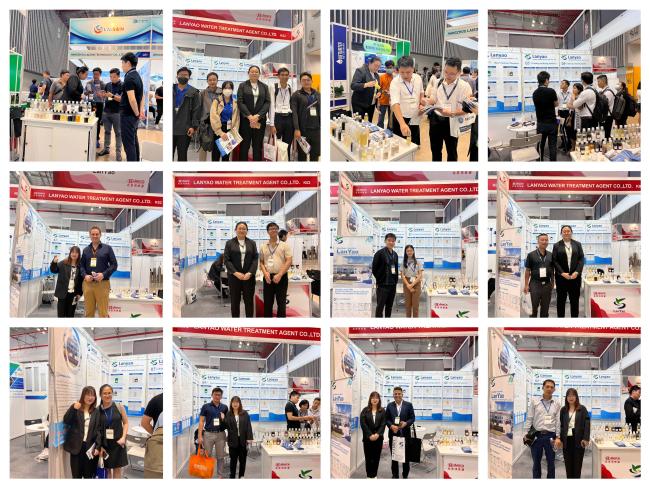
Exhibition:
Company:
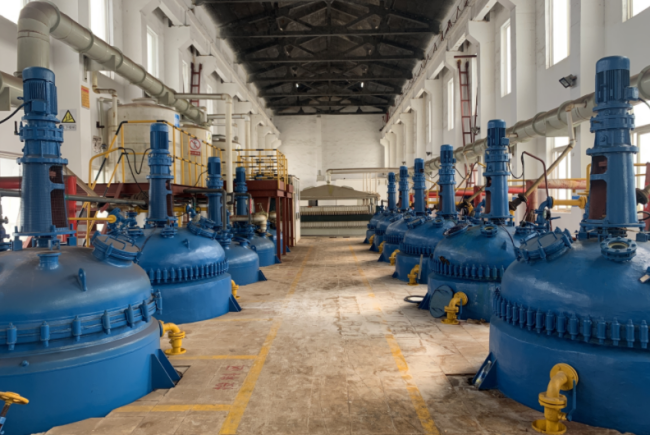 Lanyao Water Treatment Agent Co,Ltd. was founded in the early 1990s with a capital of 30 million RMB. It is an enterprise specializing in the research, production of wastewater treatment such as poly aluminum chloride, polyacrylamide, poly ferric sulphate, polyaluminium ferric chloride and other chemical agents. Lanyao is now located in the Chemical industry Zone in Jiangsu Province, we have branch offices in Hong Kong, Shanghai, Guangxi and Henan Province all with convenient transportation which ensure just-in-time global delivery.
We are ISO 9001,ISO 14001,CE and SGS certified. Our strict and complete set of Production Quality and Environmental Management System enhances our ability to research, manufacture and deliver chemicals that comply with customer demands as well as regulatory and legal requirements.
FAQ:
Get in Touch
Have questions about our products or want to discuss a custom order? Our team is ready to help you.