
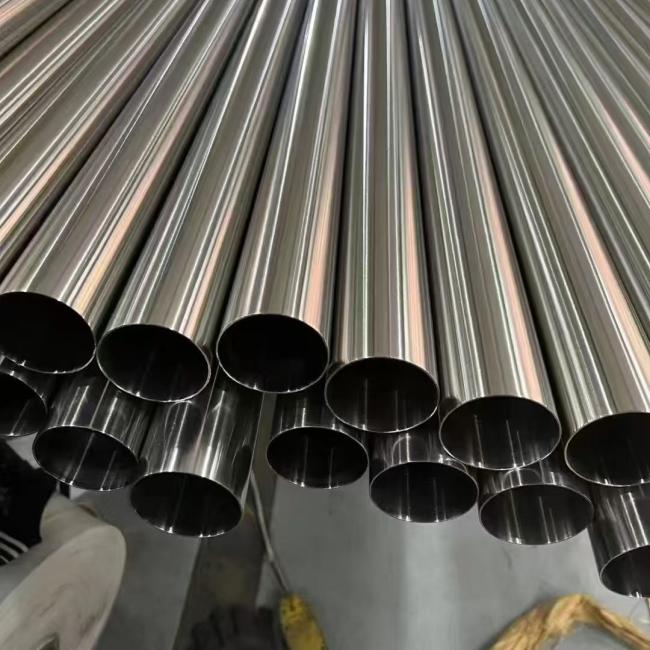
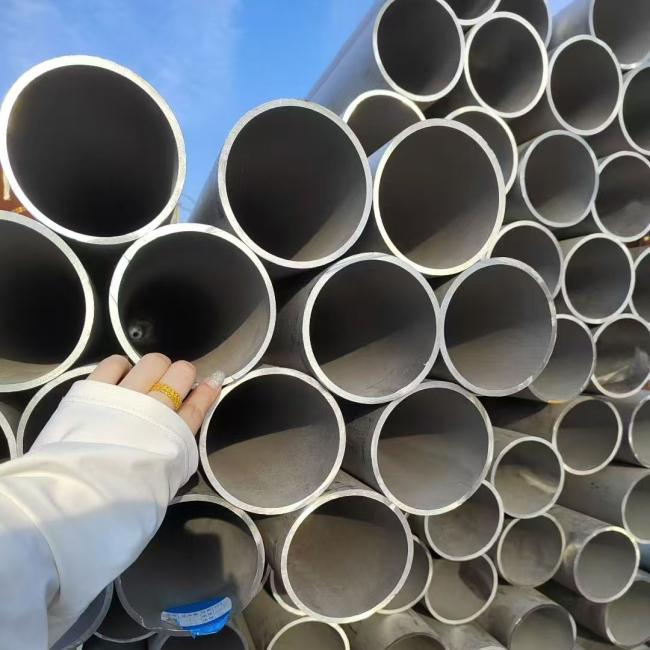
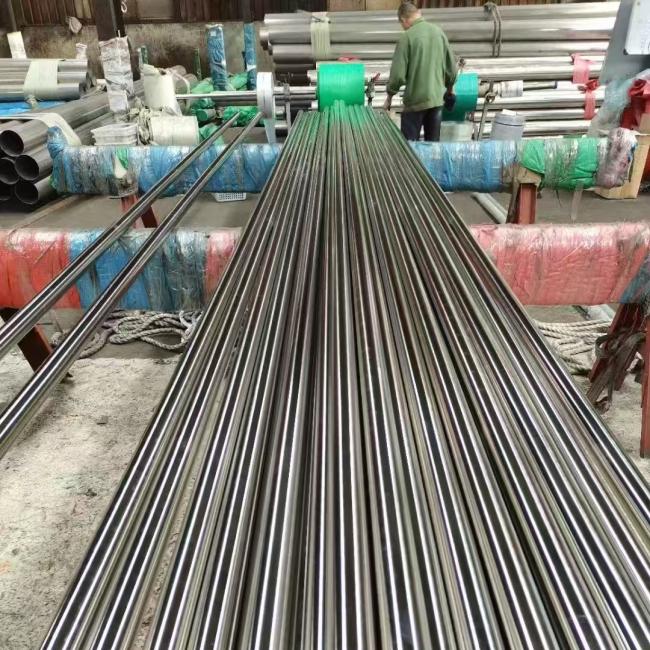
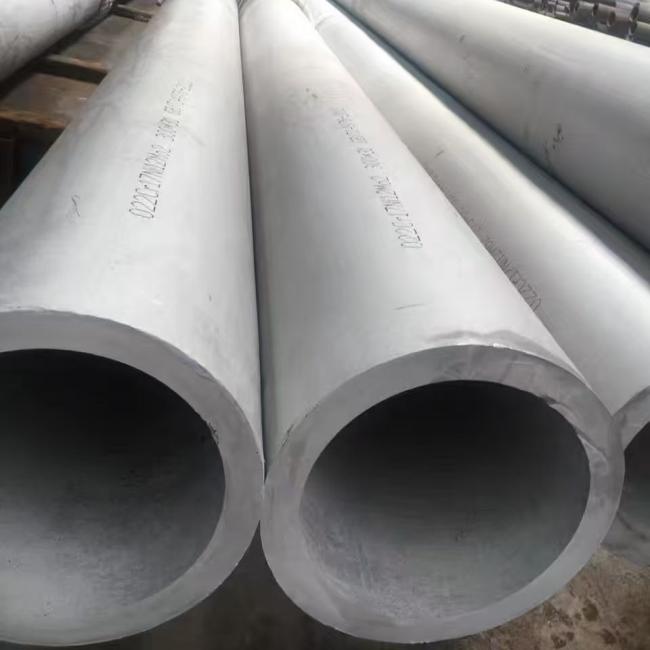
SCH40S TP304L Stainless Steel Seamless Pipe DN100 DN150 DN200 Custom Cutting Any Length
SCH40S TP304L Stainless Steel Seamless Pipe DN100 DN150 DN200 Custom Cutting Any Length
Products Specification
| Products Name | 304L Stainless Steel Seamless Pipe |
Grade: |
304 304L 309S 310S 314 316L 316Ti 321 329 347H 410 2205 2507 S32760 904L 254SMO and equal grade in GB JIS EN DIN Standard |
| Standards: | ASTM A213M-94b ASTM A249M-94a ASTM A269-94a ASTM A312M-94b,ect. |
| DIN 17456-85 DIN 17458-85 DIN 17459-92.ect | |
| JIS G3446-1994 JIS G3448-1997 JIS G3459-1997 JIS G3463-1994,ect. | |
| GB13296-1991 GB14975-2002 GB14976-2002,ect. | |
| Size: | ND5 - DN400 |
| Length: | 6m length or cutting any length as request |
| Applications: | fluid and gas transport, structure , boiler, heat exchanger, super heater |
304L stainless steel tubing is a versatile and widely used austenitic chromium-nickel stainless steel. Its defining characteristic is its low carbon content (typically ≤ 0.03%), designated by the "L" suffix. This significantly enhances its resistance to sensitization (carbide precipitation) during welding and exposure to high temperatures (425-860°C / 800-1580°F), thereby maintaining excellent corrosion resistance in welded structures and applications prone to intergranular corrosion.
Key Parameters & Properties
-
Chemical Composition (Typical wt%, ASTM A213/A269/A312):
-
Carbon (C): ≤ 0.030% (Key differentiator from 304)
-
Chromium (Cr): 18.00 - 20.00%
-
Nickel (Ni): 8.00 - 12.00%
-
Manganese (Mn): ≤ 2.00%
-
Silicon (Si): ≤ 0.75%
-
Phosphorus (P): ≤ 0.045%
-
Sulfur (S): ≤ 0.030%
-
Nitrogen (N): ≤ 0.10%
-
Iron (Fe): Balance
-
-
Mechanical Properties (Typical Annealed Condition - ASTM A213/A269):
-
Tensile Strength: ≥ 485 MPa (70 ksi)
-
Yield Strength (0.2% Offset): ≥ 170 MPa (25 ksi)
-
Elongation (% in 50mm / 2in): ≥ 40%
-
Hardness (Rockwell B): ≤ 92 HRB
-
Note: Cold working (e.g., for seamless tubing) can significantly increase strength and hardness.
-
-
Physical Properties:
-
Density: 8.0 g/cm³ (0.289 lb/in³)
-
Melting Range: 1400 - 1450 °C (2550 - 2650 °F)
-
Electrical Resistivity: 72 μΩ·cm
-
Thermal Conductivity: 16.2 W/m·K (at 100°C)
-
Coefficient of Thermal Expansion: 17.3 µm/m·°C (20-100°C)
-
-
Corrosion Resistance:
-
Excellent resistance to a wide range of atmospheric environments, many corrosive chemicals, foodstuffs, and sterilizing solutions.
-
Good resistance to oxidizing acids (e.g., nitric acid).
-
Resists corrosion in potable water and many organic acids.
-
Susceptible to pitting and crevice corrosion in chloride environments (seawater, de-icing salts); not as resistant as 316/L.
-
Subject to stress corrosion cracking (SCC) above approx. 60°C (140°F) in chloride environments.
-
Key Standards
304L tubing is manufactured to meet various international standards specifying dimensions, tolerances, testing, and certification requirements:
-
ASTM (American Society for Testing and Materials):
-
Seamless Tube: ASTM A213 (Boiler, Superheater, Heat Exchanger), ASTM A269 (General Service)
-
Welded Tube: ASTM A249 (Boiler, Superheater, Heat Exchanger), ASTM A312 (General Corrosion Resistant & High-Temp Service), ASTM A358 (EFW - Electric Fusion Welded, higher pressure)
-
Pipe: ASTM A790 / A999 (Seamless & Welded Ferritic/Austenitic SS Pipe)
-
-
ASME (American Society of Mechanical Engineers): SA213, SA249, SA312, SA358 (Often identical to ASTM specs but adopted for ASME Boiler & Pressure Vessel Code use).
-
EN (European Norm):
-
EN 10216-5 (Seamless pressure tubes)
-
EN 10217-7 (Welded pressure tubes)
-
EN 10357 (Austenitic welded tubes for general purposes)
-
Material Designation: 1.4306 or 1.4307 (X2CrNi19-11 or X2CrNi18-10)
-
-
Other: DIN, JIS (Japanese Industrial Standards - SUS 304L), GB/T (Chinese National Standards - 00Cr19Ni10), ISO.
Closest Grades / Equivalent Designations
-
304 (1.4301 / SUS 304): The standard version with higher carbon (≤ 0.08%). Offers slightly higher strength but is more susceptible to sensitization during welding. 304L is preferred for welded components where corrosion resistance is critical.
-
316L (1.4404 / SUS 316L): Contains Molybdenum (2-3%), offering significantly improved resistance to pitting/crevice corrosion in chloride environments and higher strength at elevated temperatures. More expensive.
-
321 (1.4541 / SUS 321): Stabilized with Titanium (Ti) to prevent sensitization during high-temperature exposure (above sensitization range). Used where welding followed by high-temp service occurs. Slightly less formable than 304L.
-
347 (1.4550 / SUS 347): Stabilized with Niobium (Nb) for similar reasons as 321.
Common International Equivalents:
-
UNS: S30403
-
EN: 1.4306, 1.4307 (X2CrNi19-11, X2CrNi18-10)
-
JIS: SUS 304L
-
GB: 00Cr19Ni10 (022Cr19Ni10)
-
DIN: X2CrNi19-11
-
AFNOR: Z3 CN 18-10
-
SS: 2352
Typical Packaging
Packaging aims to protect the tubing surface from damage, contamination, and corrosion during transport and storage. Common methods include:
-
Bundling: Tubes are securely strapped (plastic or steel bands) into bundles of uniform length.
-
End Protection: Plastic caps or plugs are often used to protect tube ends from dents and prevent ingress of dirt/moisture.
-
Wrapping: Bundles are frequently wrapped in:
-
Plastic Film: Clear or opaque polyethylene stretch film provides basic protection against dust, dirt, and minor moisture.
-
VCI Paper/Plastic: (Volatile Corrosion Inhibitor) Releases protective vapors to prevent surface rust during transit/storage, especially in humid environments. Often used inside plastic wrap.
-
Waterproof Paper: Heavy-duty coated paper.
-
-
Wooden Crates/Pallets: Larger bundles or valuable/high-precision tubes may be packed on wooden pallets or within sturdy wooden crates for maximum protection and ease of handling with forklifts.
-
Marking: Bundles/crates are clearly marked with material grade (304L), size (OD x WT x Length), standard, heat number, quantity, manufacturer ID, and often weight.
Primary Applications
304L tubing's excellent corrosion resistance, formability, weldability, hygiene, and strength make it suitable for a vast array of industries:
-
Chemical & Petrochemical Processing: Transfer lines, instrument tubing, heat exchanger tubes, reactor components (handling organic acids, solvents, nitric acid).
-
Food & Beverage Processing & Equipment: Brewing, dairy, juice lines, processing equipment, sanitary fittings (due to ease of cleaning, corrosion resistance, non-contamination).
-
Pharmaceutical & Biotechnology: Process piping, transfer lines, bioreactors, filtration systems, high-purity water systems (hygiene, corrosion resistance, cleanability).
-
Architecture & Construction: Handrails, structural applications (exposed to mild atmospheres), aesthetic trim.
-
Heat Exchangers & Condensers: Tubing in shell-and-tube heat exchangers, condensers (for compatible fluids).
-
Automotive: Exhaust components (manifolds, catalytic converter housings - though 409 is more common for main exhaust), fuel lines (older systems), trim.
-
Water Treatment & Distribution: Potable water pipes, distribution systems, wastewater treatment components.
-
Medical Devices: Instrumentation, implants (often requiring higher grades like 316L VM), surgical tools.
-
Pulp & Paper Industry: Bleaching equipment, digesters (specific sections).
-
General Engineering: Hydraulic lines, instrumentation tubes, pneumatic systems, general fabrication.
Key Advantages
-
Excellent corrosion resistance in a wide range of environments.
-
Superior weldability without sensitization concerns (vs. 304).
-
Excellent formability and ductility.
-
Good low-temperature toughness.
-
Ease of cleaning and maintenance.
-
Hygienic properties.
-
Non-magnetic in the annealed condition (magnetic response can increase with cold work).
-
Readily available and cost-effective (compared to higher alloys like 316L).
Get in Touch
Have questions about our products or want to discuss a custom order? Our team is ready to help you.