
48V Carpet Cleaner Motor 45000RPM 650W Brushless DC Motor KG-6586DC48
Vacuum Cleaner Motor 48V 45000RPM 650W Brushless DC Motor KG-6586DC48
Lead time:
| Quantity | 1-1000 | 1001-10000 | ≥10000 |
| Lead days | 15 | 30 | To be negotation |
Product Description
|
Rated Voltage |
48V |
Rated Speed |
45000RPM |
|
Rated Power |
650W |
Torque |
Customizable |
Essential details
Commutation: Brushless
Application: Vacuum Cleaner
Rated Voltage: 48V
Rated Speed: 45000RPM
Rated Power: 650W
Max. vacuum eyapressure: 20.2kPa
Max. air flow: 2.53m3/min
Weight: 0.75kg
Torque: Customizable
Key Word: BLDC Motor
Efficiency: 43%
Model Number: KG-6586DC48
Warranty: 3 Years
Place of Origin: Guangdong, China
Drawing
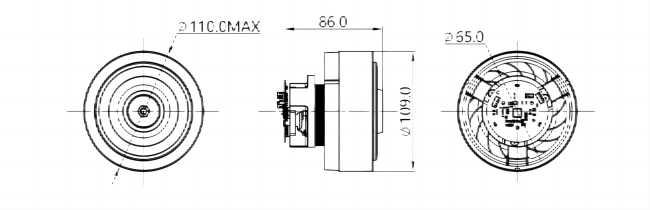
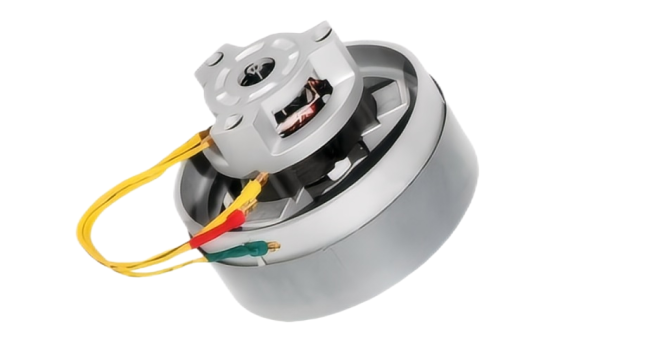
Sample
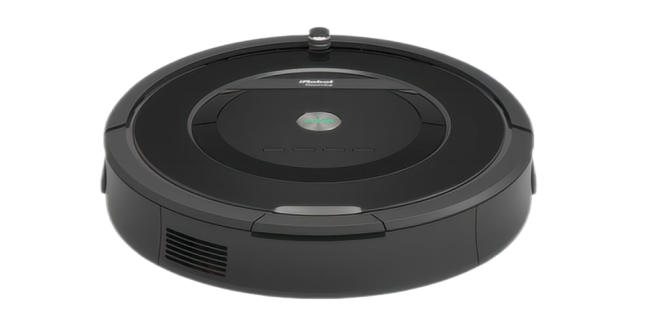
Application
Motor Advantages
- Linear speed-torque characteristics, bettercontrollability: nternal feedback. Pemanent magnet design with feedback gives Brushless DC Motor slinear characteristics when compared to open-loop AC-induction motors or brush DCmotors. Series DC motors have exponentially decreasing characteristics
- High starting torque: nternal feedback gives higher starting torque. The torque produced at any instant ina BLDC is twice the torque produced in brush DC motor of the same rating, as twophases are on in every commutation step.
- Adjustable speed: Smooth speed control ispossible.
- Higher efficiency: A permanent magnet in the rotor reduces efficiency loss and increases theefficiency.
- Better heat removal: The heat generated in the stator is dissipated easily as it is outside of the rotorunlike the brush DC motor.
- Noiseless: Because of the absence of brushes the operation is noiseless.
Brushless DC Motor is easily controlled with position feedback sensors and generally performs well, especially in speed/torque. With these advantages, BLDC motor will spread to more applications. Moreover, with the development of sensorless technology, BLDC motor will become convenient or indispensable in applications with environmental limitations.
Working of the BLDC Motor
The starting-current setup in the circuit through the stator windings sets up a magnetomotive force (mmf) which is perpendicular to the main mmf set up by the permanent magnet. According to Fleming’s left-hand rule, a force is experienced by the armature conductors. As the armature conductors are in the stator, a reactive force develops a torque in the rotor. When this torque is more than the load torque and frictional torque, the motor begins rotating.
The process of removing current from one circuit and giving it to another circuit is known as commutation.
The phase current and developed torque in the Brushless DC Motor. In every case there are two phases that are contributing to positive torque and one phase contributing to zero torque. If the torque of each commutation interval is combined, the total torque is a contribution of two torques from two phases that are perfectly flat.
Get in Touch
Have questions about our products or want to discuss a custom order? Our team is ready to help you.