
Electric Curtains Motor 0.12-0.17A 3-24V 3507-4842RP DC Brush Motor Go-Gold
Electric Curtains Motor 0.12-0.17A 3-24V 3507-4842RP Go-Gold
Lead Time
| Quantity(pieces) | 1-1000 | 1001-10000 | >10000 |
| Lead time (days) | 15 | 30 | To be negotiated |
Essential Details
Warranty: 3 Years
Model Number: KG-2531DC24
Rated Voltage: 3-24V
Rated Speed: 3507-4842RPM
Continuous Current: 0.12-0.17A
Place of Origin: Guangdong, China
Type: Brush DC Motor
Application: Electric Curtain
Rated Torque: 186g.cm
Performance Specification
| Continuous Current | 0.12-0.17A | Rated Torque | 25.19g.cm |
| Rated Voltage | 3-24V | Torque | 186g.cm |
Drawings
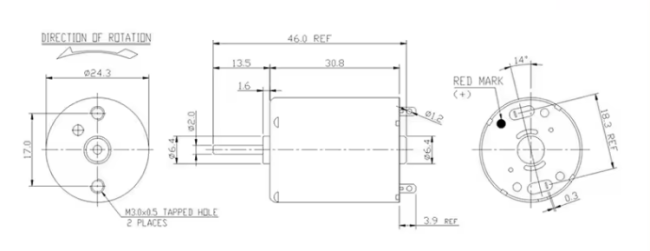
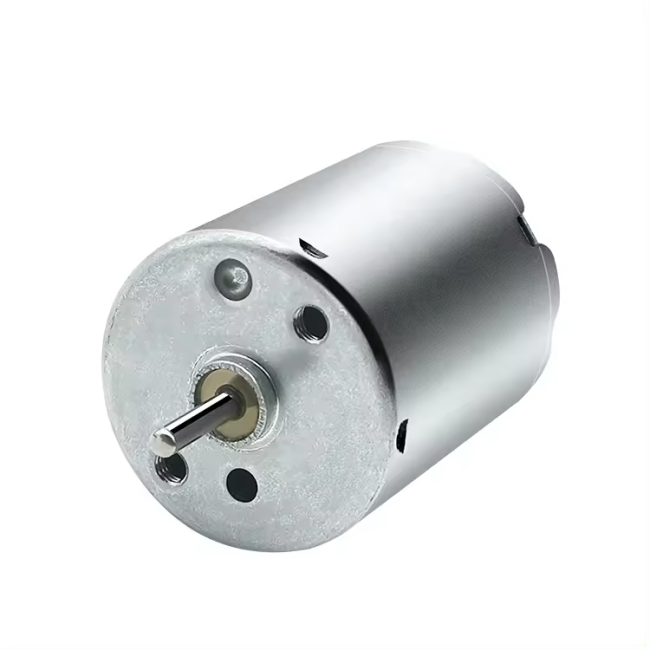
Motor Picture
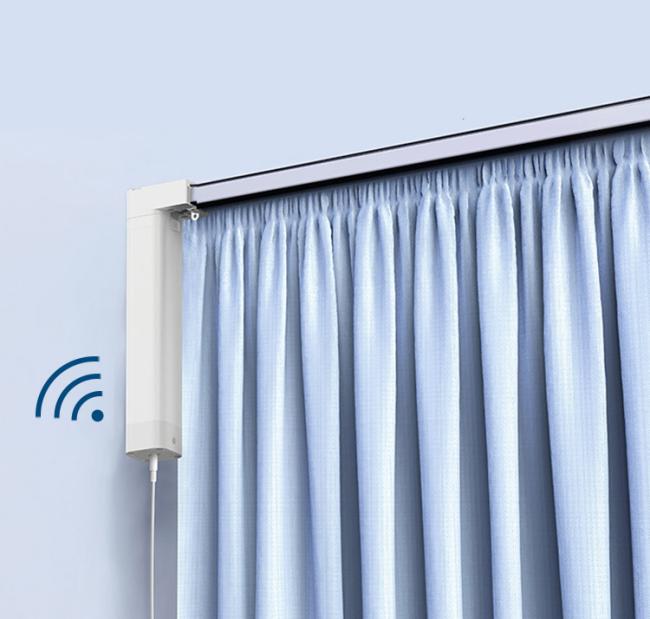
Motor Application
Brush DC Motor Basics
Portescap's Brush DC technology originates from a design based on an ironless rotor (self-supporting coil) combined with a precious metal or carbon copper commutation system and a rare earth or Alnico magnet. It offers distinct advantages for high-performance drive and servo systems: low friction, low starting voltage, absence of iron losses, high efficiency, good thermal dissipation, linear torque-speed function. All these factors facilitate use and simplify the servo loop. For incremental motion systems where the low rotor inertia allows for exceptional acceleration, and for all battery-powered equipment where efficiency is a major concern, brush DC motors offer optimum solutions.
The Difference Between Brush Motor and Brushless Motor
With brush motors, the stationary field (stator) is created by permanent magnets interacting with a rotating field (rotor) which contains the motor windings. Brushless motors are just the opposite - in that the stator field is the wound member and the rotating field is the permanent magnet.
In both cases, the interaction of these fields produces a torque which turns the rotor. As the rotor turns, current in the windings is switched - or commutated - to produce a continuous torque.
- The brush commutated unit typically uses brushes made of graphite that ride on metal bars [the commutator] that are connected to the rotor coils. As the rotor turns, the brushes transfer current from one set of coils to another.
- The brushless units rely on their commutation through the use of a shaft position sensor sending a signal to an external winding switching circuit.
A self supporting ironless DC motor from Portescap has many advantages over conventional iron core motors:
-
high torque to — inertia ratio
-
absence of preferred rotor positions
-
very low torque and back EMF variation with armature positions
-
essentially zero hysteresis and eddy current losses
-
negligible electrical time constant
-
almost no risk of demagnetization, thus fast acceleration
-
negligible voltage drop at the brushes (with multi wire type brushes)
-
lower viscous damping
-
linear characteristics
Get in Touch
Have questions about our products or want to discuss a custom order? Our team is ready to help you.