
980nm 1470nm Dual Wavelength Diode Laser Machine For Endovenous Vein Laser Treatment EVLT, Leg Vein Therapy Device, Medical Fiber Optic Laser System For Clinic And Hospital Use
980nm 1470nm Dual Wavelength Diode Laser Machine For Endovenous Vein Laser Treatment EVLT, Leg Vein Therapy Device, Medical Fiber Optic Laser System For Clinic And Hospital Use
1) Working Principle
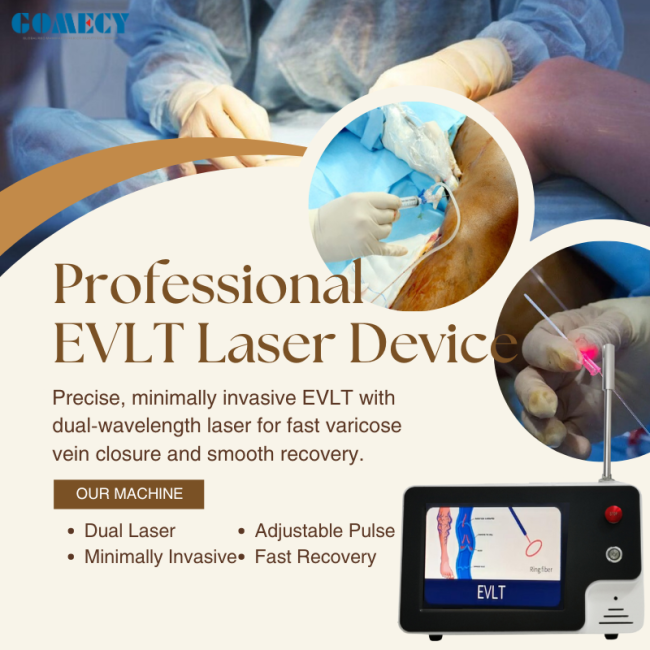
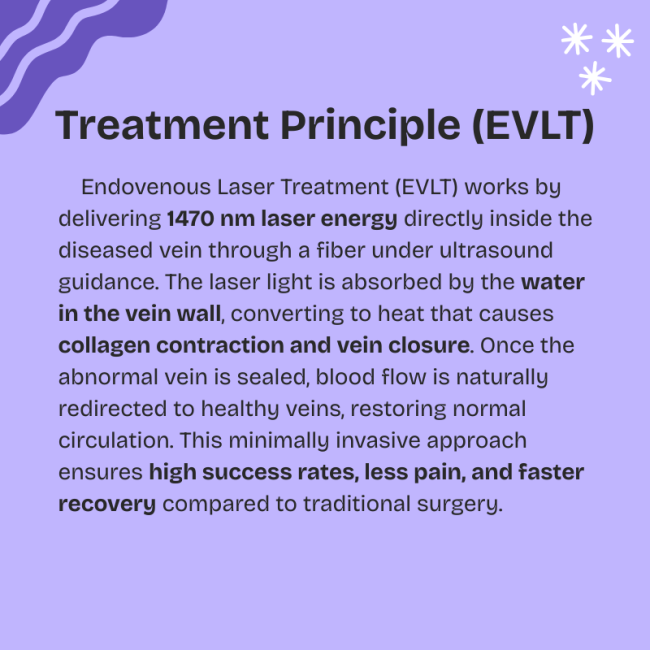
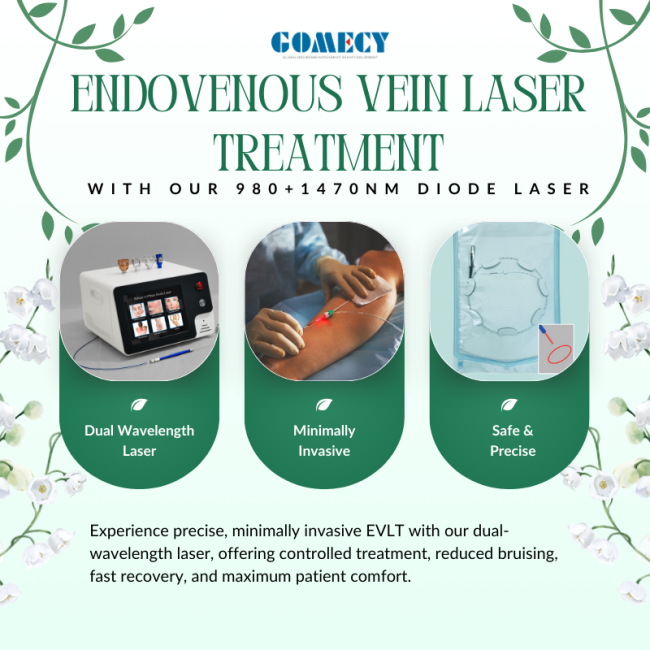
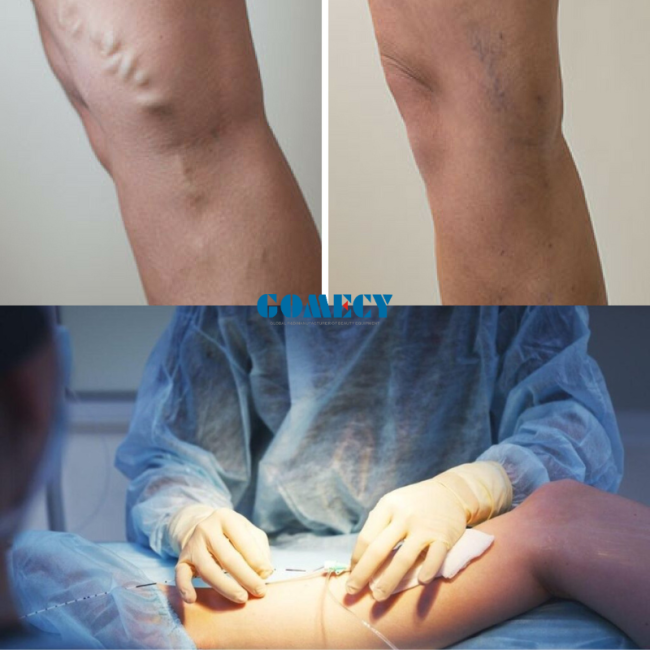
Endovenous Vein Laser Therapy (EVLT) is a modern alternative to open surgery for varicose veins. It works by delivering controlled laser energy inside the vein through a fine optical fiber:
-
1470nm wavelength (water absorption): Strongly absorbed by water in the venous wall, producing uniform thermal injury to endothelium and collagen structures, leading to contraction and vein occlusion.
-
980nm wavelength (hemoglobin absorption): Targets intraluminal blood, supports coagulation and hemostasis during the procedure, improving precision and reducing bleeding.
-
Combined effect: The synergy of both wavelengths ensures efficient closure with minimal side effects, faster recovery, and better cosmetic outcomes compared to traditional vein stripping.
The treatment relies on fiber pullback under ultrasound guidance, ensuring every centimeter of the incompetent vein is treated without damaging adjacent tissues.
2) Application Scope
Clinical Indications
-
Treatment of great saphenous vein (GSV) insufficiency
-
Closure of small saphenous vein (SSV)
-
Recurrent varicosities after conventional surgery or foam therapy
-
Symptomatic venous reflux causing swelling, leg heaviness, pain, or skin changes
Clinical Benefits
-
Performed under local anesthesia with minimal discomfort
-
No surgical incisions, only micro-puncture access
-
Outpatient procedure with short downtime
-
High success rate with long-term durability
-
Aesthetic advantages: no large scars, minimal bruising, natural leg contour
3) Product Attributes (Technical Data)
| Feature | Specification |
|---|---|
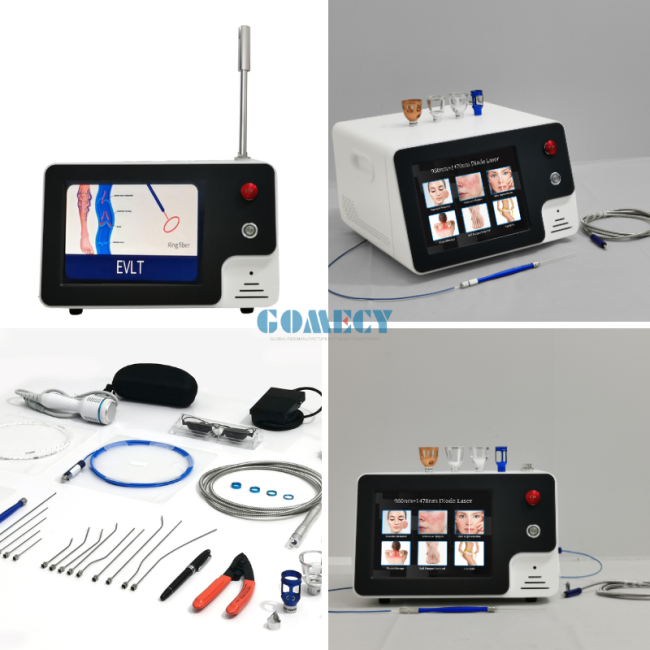
| Laser Transmission | Biquartz optical fiber |
| Aiming Beam | 650nm diode light, <5mW |
| Wavelengths | 980nm + 1470nm |
| Power Output | Standard: 20W (980nm), 3W (1470nm) |
| Optional Power | 30W (980nm), 9W (1470nm) |
| Modes | Continuous, Pulsed, Single pulse |
| Pulse Duration | 15–100ms adjustable |
| Frequency | 1–20Hz |
| User Interface | 10.4-inch color touchscreen |
| Input Voltage | AC 100–240V, 50/60Hz |
| Dimensions | 36 × 37 × 24 cm |
| Fiber Options | Bare fiber or radial fiber (200–600µm) |
4) Product Details
4.1 Optical Fiber System
-
Radial fiber: Emits circumferential laser light (360°), ensuring complete wall contact and safer heating.
-
Bare fiber: Forward emission, effective for smaller vessels but requires greater operator precision.
4.2 Procedure Steps
-
Mapping: Duplex ultrasound to identify vein diameter and reflux source.
-
Access: Puncture and sheath insertion under ultrasound control.
-
Fiber Placement: Position fiber tip close to the junction, ensuring accuracy.
-
Tumescent Anesthesia: Infiltrate around vein for anesthesia, compression, and heat protection.
-
Energy Delivery: Activate laser while slowly pulling back the fiber for controlled vein closure.
-
Verification: Confirm occlusion by ultrasound.
-
Post-care: Apply compression and encourage walking.
4.3 Operator Advantages
-
User-friendly touchscreen interface with quick settings adjustment
-
Real-time pilot beam for precise fiber localization
-
Stable power delivery across both wavelengths
-
Compact design suitable for outpatient centers
5) Pre- and Post-Treatment Care
Pre-Treatment
-
Complete clinical and duplex ultrasound assessment.
-
Patient should avoid anticoagulants if possible (per physician approval).
-
Exclude patients with deep venous thrombosis or severe arterial disease.
Post-Treatment
-
Apply compression stockings for 7–14 days depending on case severity.
-
Patient encouraged to walk immediately and maintain normal activity.
-
Avoid hot baths, heavy exercise, or long immobility for at least 48 hours.
-
Follow-up duplex ultrasound to confirm vein closure and rule out complications.
6) Contraindications
-
Current pregnancy or breastfeeding
-
Acute deep vein thrombosis or pulmonary embolism history
-
Severe peripheral arterial disease
-
Active local infection or skin ulcer at puncture site
-
Known photosensitivity disorders
-
Patients unable to walk post-procedure
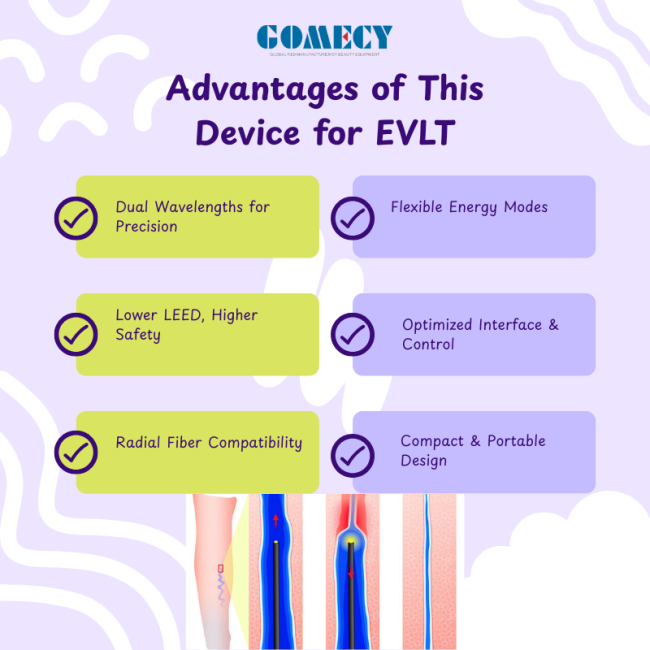
7) Why Choose Dual Wavelength EVLT
-
Better energy absorption balance: Water + hemoglobin targeting for safer closure
-
Less thermal spread: 1470nm reduces postoperative pain and bruising
-
Customizable: Pulsed settings minimize carbonization risk
-
High closure rates: Comparable or superior to single wavelength systems
-
Flexible fiber compatibility: Adaptable to different vein diameters and techniques
Get in Touch
Have questions about our products or want to discuss a custom order? Our team is ready to help you.