
980nm 1470nm Diode Laser for Endovenous Laser Treatment EVLT Vascular Removal Onychomycosis and Laser Lipolysis Surgery Device
980nm 1470nm Diode Laser for Endovenous Laser Treatment EVLT Vascular Removal Onychomycosis and Laser Lipolysis Surgery Device
The 980nm + 1470nm diode laser system is a versatile medical platform designed for vascular treatment, nail fungus therapy, laser lipolysis, and physiotherapy applications. By combining two highly effective wavelengths in a single device, the system delivers precise energy absorption, improved treatment efficiency, and enhanced safety across multiple clinical indications.
With fiber-optic energy delivery, adjustable pulse parameters, and real-time control, this laser enables practitioners to perform minimally invasive procedures with greater accuracy, reduced recovery time, and predictable clinical outcomes. It is suitable for use in dermatology clinics, aesthetic centers, rehabilitation departments, and outpatient surgical settings.
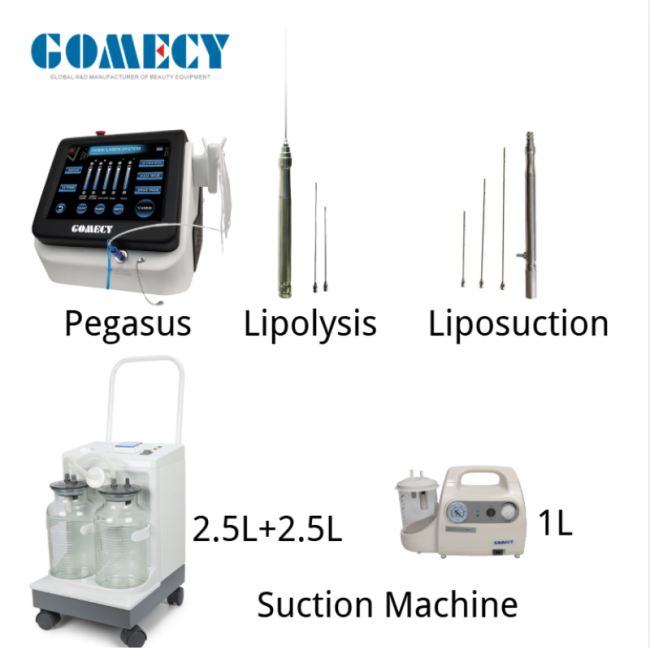
1. Technical Principle
Dual-Wavelength Laser Technology
This system combines 980nm and 1470nm diode laser wavelengths to deliver precise and selective energy absorption in different biological tissues. The laser is transmitted through a bi-quartz optical fiber, ensuring stable energy delivery and minimal energy loss.
Nail Fungus Removal
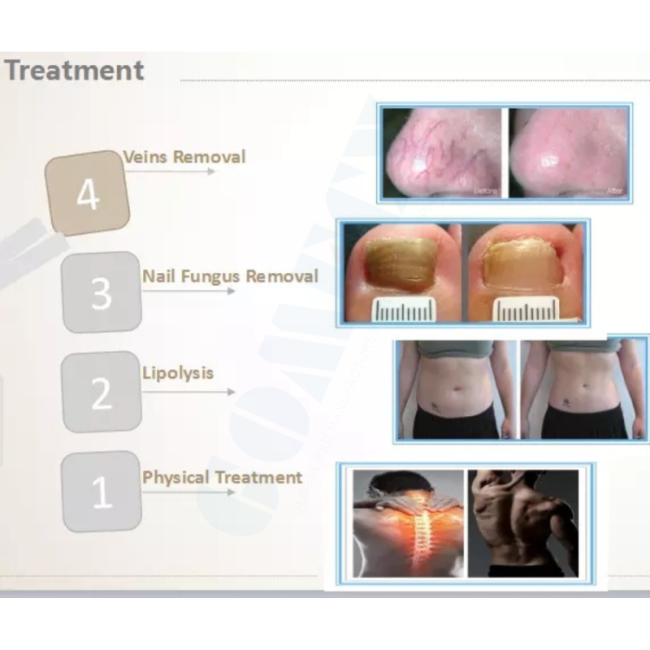
The 980nm wavelength penetrates the nail plate and is absorbed by the infected nail bed. The thermal effect destroys fungal cells and sterilizes the affected tissue. After the fungus is eliminated, the nail matrix gradually regenerates, promoting the growth of a clear and healthy nail.
Vascular Treatment
The 980nm wavelength is strongly absorbed by hemoglobin and porphyrin in vascular tissues. The absorbed laser energy converts into heat, leading to coagulation and collapse of abnormal vessels. Meanwhile, the laser stimulates collagen regeneration, increasing dermal density and improving skin elasticity, which helps prevent recurrence.
Physiotherapy and Pain Relief
Near-infrared light in the 600–1000nm spectrum produces biostimulation effects in biological tissues. Laser irradiation:
- promotes cellular metabolism
- improves local blood circulation
- reduces inflammation
- relieves pain
- accelerates tissue repair
This therapy is non-invasive, safe, and suitable for rehabilitation applications.
Laser Lipolysis
Using optical fiber-guided energy, laser heat liquefies adipocytes through a photothermal and plasma effect. The liquefied fat is then naturally removed through the body's metabolic system. At the same time, thermal stimulation promotes collagen contraction and remodeling, helping tighten skin after fat reduction.
2. Applications
This device is designed for multi-department use in dermatology, aesthetic medicine, and physiotherapy clinics.
Dermatology and Aesthetic Applications
- Vascular lesion removal
- Spider veins and telangiectasia treatment
- Nail fungus therapy
- Skin rejuvenation and collagen stimulation
Body Contouring
- Localized fat reduction
- Skin tightening after lipolysis
Physiotherapy and Rehabilitation
- Pain management
- Soft tissue recovery
- Inflammation reduction
- Sports injury rehabilitation
3. Technical Specifications
| Parameter | Specification |
|---|---|
| Laser Type | Diode Laser |
| Wavelength | 980nm + 1470nm |
| Transmission | Bi-quartz optical fiber |
| Aiming Beam | 650nm red light |
| Working Modes | Continuous (CW), Pulse, Single |
| Output Power | 30 W |
| Pulse Width | 0–999 ms |
| Pulse Interval | 0–999 ms |
| Frequency | 1–10 Hz |
| Standard Fiber | 400 μm direct fiber |
| Display | 10-inch color touch screen |
4. Product Details
Precision Fiber Delivery
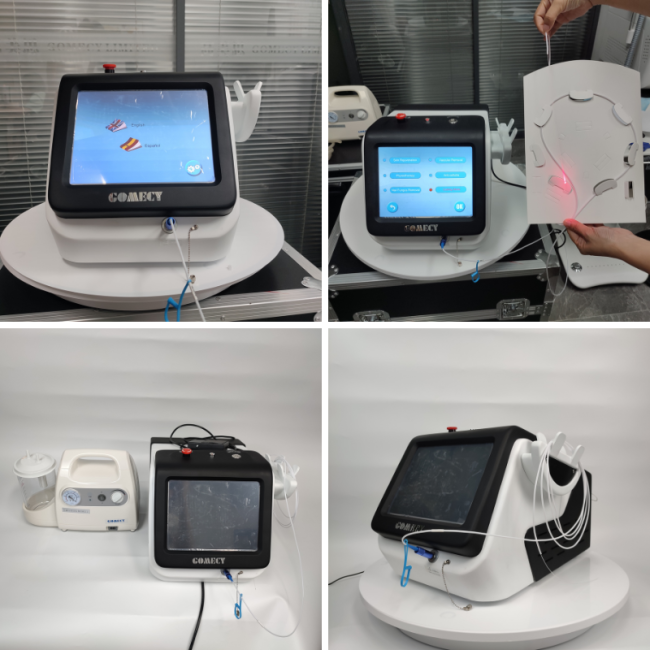
The 400μm optical fiber allows precise targeting of small vascular structures and infected nail beds while minimizing damage to surrounding tissue.
Dual-Wavelength Flexibility
The combination of 980nm and 1470nm enables clinicians to select optimal absorption characteristics for:
- vascular tissues
- adipose tissue
- infected nail matrix
- soft tissue therapy
Intelligent Control System
The integrated computer control system manages:
- energy output
- pulse timing
- safety interlocks
- real-time treatment monitoring
Class 4 Medical Laser Safety
The device is designed according to Class IV laser safety standards and supports:
- key switch protection
- emergency stop
- safety shutter
- external warning light interface
5. Pre-Treatment and Post-Treatment Care
Before Treatment
- Clean and disinfect the treatment area
- Apply topical anesthesia if necessary (20–30 minutes)
- Cool the skin before vascular procedures to reduce thermal sensitivity
During Treatment
- Begin with low energy settings (10–30%)
- Gradually increase power depending on tissue response
- Avoid prolonged irradiation on one spot to prevent burns
After Treatment
- Immediate cooling for 20–45 minutes is essential
- Ice packs or cooling rollers are recommended
- Patients should avoid heat exposure and direct sunlight after treatment
Proper cooling significantly reduces the risk of edema, blistering, or pigmentation changes.
6. Contraindications
This device should not be used in the following cases:
- Patients with skin cancer
- Photosensitive patients or those taking photosensitizing drugs
- Patients with coagulation disorders or using anticoagulants
- Pregnant women
- Patients with severe cardiovascular disease or hypertension
- Active skin infections or acute dermatological conditions
- Individuals with unrealistic treatment expectations
Frequently Asked Questions
Q1: What are the advantages of combining 980nm and 1470nm wavelengths?
The dual-wavelength configuration allows the laser to target different tissue types more effectively. The 980nm wavelength is highly absorbed by hemoglobin and is ideal for vascular treatments, while the 1470nm wavelength has stronger absorption in water and adipose tissue, making it suitable for lipolysis and soft tissue procedures.
Q2: Is the treatment painful for patients?
Most treatments performed with this diode laser are minimally invasive and well tolerated. Depending on the procedure and patient sensitivity, topical anesthesia or local cooling may be applied to enhance comfort during treatment.
Q3: How long does a typical treatment session take?
Treatment time varies depending on the indication and treatment area. Nail fungus therapy and vascular treatments typically take 15–30 minutes, while lipolysis procedures may require slightly longer due to the treatment area size.
Q4: How soon can patients see results after treatment?
For vascular lesions, results may be visible immediately or within several days as the treated vessels gradually fade. Nail fungus treatment requires new nail growth, so visible improvement usually appears over several weeks to months. Lipolysis results develop gradually as the body metabolizes liquefied fat.
Q5: Is there any downtime after the procedure?
Most procedures performed with this system require little to no downtime. Patients may experience temporary redness or mild swelling, but they can generally resume daily activities shortly after treatment.
Q6: What safety features are included in the device?
The system is designed as a Class IV medical laser and includes multiple safety mechanisms such as a key switch, emergency stop, safety shutter, and compatibility with external warning lights to ensure safe clinical operation.
Q7: What type of training is required to operate this laser system?
Because this is a high-power medical laser, operators should receive professional training in laser safety, parameter adjustment, and treatment protocols before performing clinical procedures.
Get in Touch
Have questions about our products or want to discuss a custom order? Our team is ready to help you.