
Industrial Circular Carbide Slitter Blades For Paper Processing Paper Slitting 10pcs
Carbide Material Blade Industrial Circular For Paper Processing Paper Slitting 10pcs
Description:
Carbide-tipped industrial paper cutting circular blades have several distinctive characteristics that make them a preferred choice for many paper and materials processing applications:
1,Exceptional Hardness:
- Carbide materials, such as tungsten carbide, exhibit extremely high hardness, typically ranging from 86 to 92 on the Rockwell C scale.
- This exceptional hardness allows carbide-tipped paper cutting blades to maintain a sharp cutting edge for an extended period, even when cutting abrasive or dense materials.
2,Wear Resistance:
- The inherent wear resistance of carbide materials ensures that carbide-tipped paper cutting blades have a significantly longer lifespan compared to high-speed steel or other tool steel blades.
- This translates to reduced downtime and maintenance requirements, as well as lower overall operating costs.
3,Thermal Conductivity:
- Carbide materials have better thermal conductivity compared to tool steels, which helps dissipate heat buildup during the cutting process.
- This improved heat dissipation can contribute to enhanced cutting performance and reduced risk of blade warping or premature failure.
4,Compressive Strength:
- Carbide-based cutting edges possess high compressive strength, enabling them to withstand the high forces and stresses encountered during paper cutting and shredding operations.
- This robust construction helps prevent chipping, cracking, or premature dulling of the blade edge.
5,Precision Cutting:
- The inherent dimensional stability and sharpness retention of carbide-tipped paper cutting blades allow for more precise and consistent cuts, resulting in improved quality and finish of the processed materials.
6,Versatility:
- Carbide-tipped paper cutting blades can be designed with various tooth geometries and edge profiles to optimize performance for different paper types, thicknesses, and cutting applications.
- This versatility makes them suitable for a wide range of paper processing tasks, from high-volume cutting to intricate specialty applications.
Industrial Blade Specifications:
| Product name | Blade Industrial Circular For Paper Processing Paper Slitting 10pcs |
| Material | Carbide |
| Hardness | HRC60-62 |
| Precision | ±50 Micron |
| Cylindrical | 118mm |
| Hole | 80mm |
| Thickness | 1mm |
| Applicable Industries | Manufacturing Plant |
The manufacturing process and quality control of tungsten carbide-tipped industrial circular blades involve several critical factors:
1,Carbide Substrate Preparation:
- The production of the carbide substrate is a crucial step, as the quality and consistency of the tungsten carbide material directly impact the performance and lifespan of the blades.
- This includes careful control of the carbide powder composition, sintering, and hot isostatic pressing (HIP) to ensure the desired microstructure and mechanical properties.
2,Blade Shaping and Grinding:
- Precise shaping and grinding of the carbide-tipped circular blades are essential for achieving the desired edge geometry, thickness, and concentricity.
- Advanced CNC (Computer Numerical Control) machining and grinding techniques are employed to maintain tight dimensional tolerances and a consistent cutting edge.
3,Brazing/Welding of Carbide Tips:
- The attachment of the tungsten carbide tips to the steel blade body is typically done through high-temperature brazing or welding processes.
- Careful control of the brazing/welding parameters, such as temperature, time, and pressure, is crucial to ensure a strong, durable, and defect-free bond between the carbide and the steel.
4,Heat Treatment:
- Appropriate heat treatment, such as tempering and cryogenic processing, is applied to the blades to optimize their hardness, toughness, and wear resistance.
- The heat treatment regime must be precisely controlled to achieve the desired mechanical properties and performance characteristics.
5,Coating and Surface Finishing:
- In some cases, the circular blades may undergo additional surface treatments, such as the application of hard, wear-resistant coatings or anti-adhesive surface finishes.
- These coatings and treatments can further enhance the blade's performance and lifespan in demanding cutting applications.
6,Rigorous Quality Control:
- Comprehensive quality control measures are implemented throughout the manufacturing process, including:
- Dimensional inspections
- Edge profile and surface finish evaluations
- Hardness testing
- Metallurgical analysis
- Functional testing under simulated cutting conditions
- These quality control checks help ensure the blades meet or exceed the specified performance requirements.
7,Traceability and Documentation:
- Detailed manufacturing records and quality control documentation are maintained to ensure full traceability of the circular blades, from the raw materials to the final product.
- This traceability is crucial for addressing any performance-related issues and for continuous improvement of the manufacturing processes.
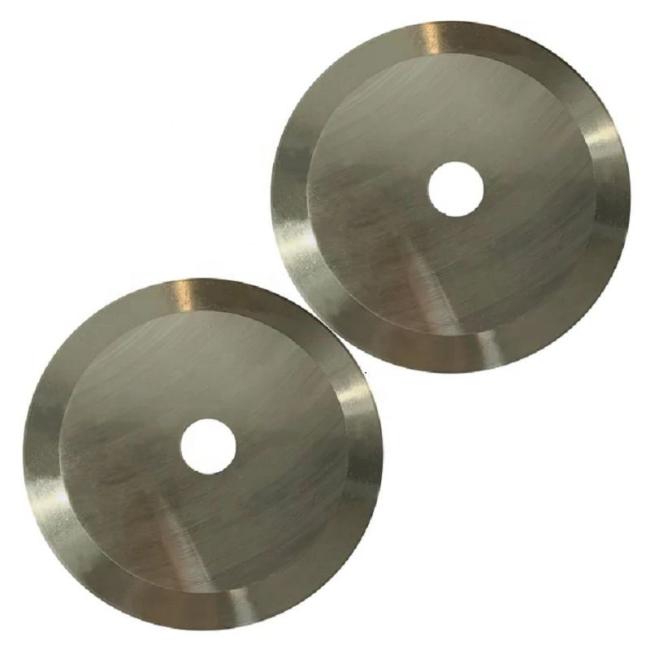
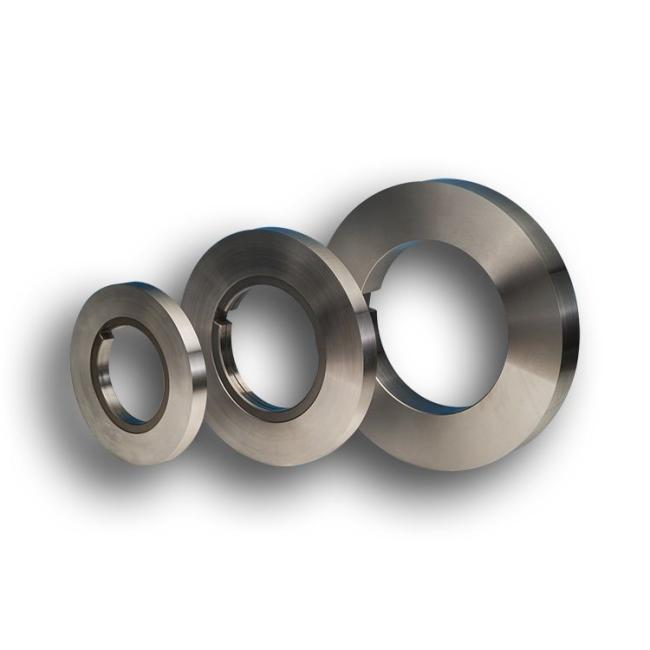
Picture:
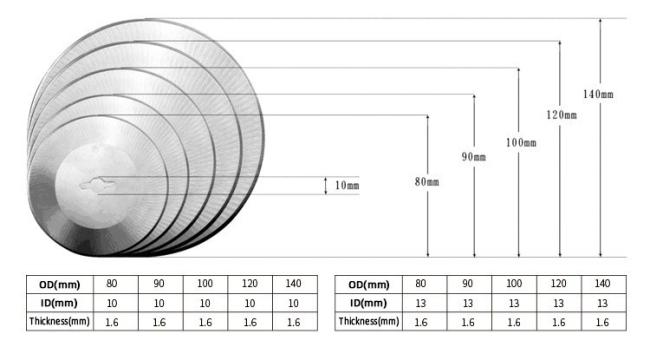
Size:
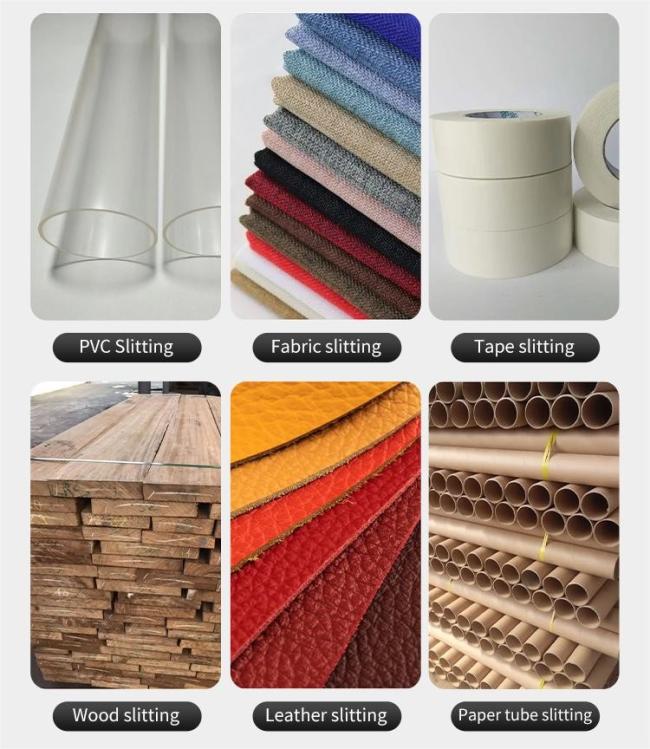
Applications:
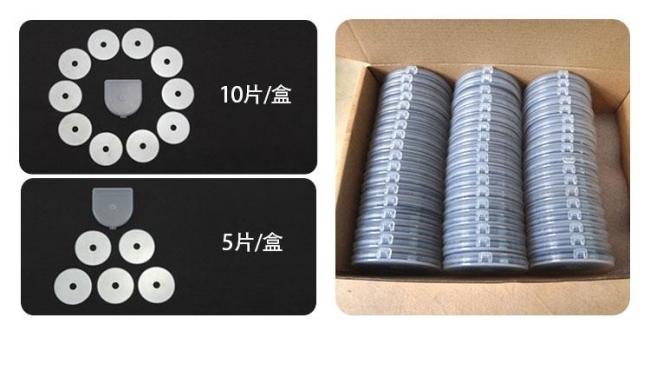
Packing:
Get in Touch
Have questions about our products or want to discuss a custom order? Our team is ready to help you.