
High Performance Heat Transfer Sondex Plates in 316 / Hastelloy C276 0.5mm and 0.6mm Thickness
Product Description
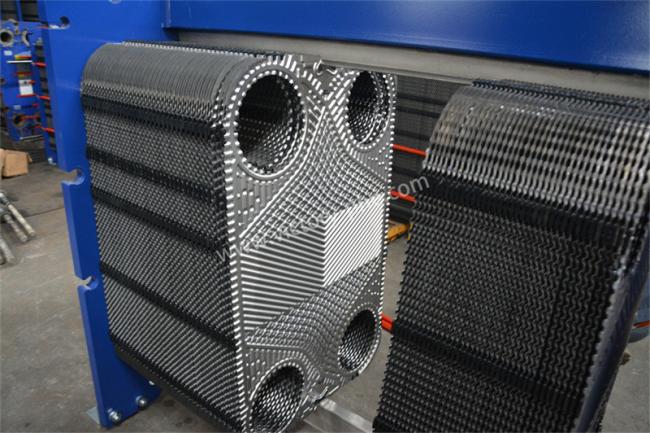
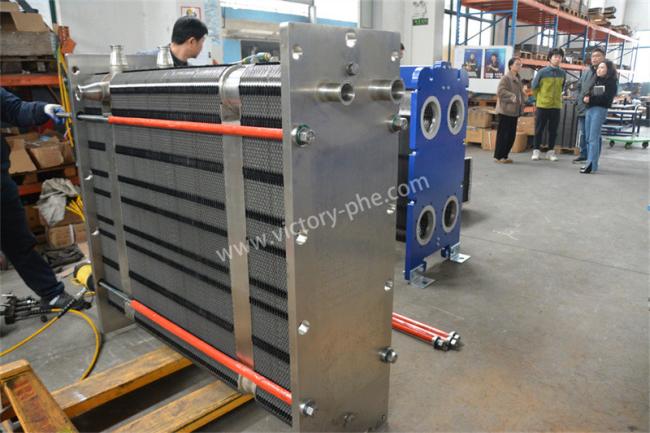
Water Oil heat Exchange Sondex Heat Exchanger Plates S100 S121 S4A Types
Sondex Heat Exchanger Plates
Sondex heat exchanger plates work based on the principles of heat transfer through the interaction of two separate fluid streams. The design of Sondex heat exchanger plates allows for efficient heat exchange between the fluids while keeping them physically separated. Here's an overview of how Sondex heat exchanger plates work:
Sondex Plate Heat Exchanger: Efficient Heat Transfer through Innovative Design
Sondex plate heat exchangers leverage a carefully engineered flow configuration to facilitate effective heat transfer between two fluid streams. The plates feature distinct channels, with one fluid flowing on each side in a counterflow arrangement. This counterflow principle maximizes the temperature difference between the fluids, enabling efficient heat exchange.
The plate design also induces turbulent flow in the fluid streams, which enhances heat transfer by preventing boundary layer formation and promoting thorough mixing. Together with the large surface area of the thin metal plates, this turbulent flow ensures optimal thermal efficiency, minimizing pressure drop and maximizing the overall heat transfer coefficient.
Underpinning the performance of Sondex plate heat exchangers is a commitment to innovative design and engineering. The plates are meticulously crafted to deliver reliable, high-efficiency heat transfer, making Sondex solutions suitable for a diverse range of industrial, commercial, and residential applications. Whether for heating, cooling, or process requirements, Sondex plate heat exchangers provide a robust and flexible means of managing thermal energy transfer.
| Brand | Model |
|
Sondex |
S1,S4,S4A,S7A,S8,S8A,S9A,S14,S14A,S17,S19A,S20A,S21A S22A,S31A,S22,SW26,S37,SW40A,S41,S41A,S42,S42A,S62,S43 S47,SN51,S52,S64,S65,S81,S100,S121,SF123,SF160 |
| Material | Specification |
| Stainless Steel |
SUS304 316 316L 310S 904 |
| Titanium and titanium-palladium alloy | TAi TAi-Pd |
| Hastelloy |
C276 D205 B2G |
| Nickel | Ni200 Ni201 |
| Molybdenum | 254 |
Heat Exchanger Plate Material Choose:
- Common tap water:For pure water applications, stainless steel 304 is commonly chosen. However, for well water, river water, closed-loop circulating water, and other complex media, stainless steel 316 is preferred due to its better corrosion resistance compared to 304. In the case of seawater, pure titanium (GR1) is the preferred choice due to the high concentration of chloride ions. Alternatively, for a cost-effective option, super stainless steel 254SMO can be used in chloride ion environments, surpassing the performance of 316 stainless steel.
- Acid:For dilute sulfuric acid with a concentration below 10% and a temperature below 50℃, stainless steel 316 can be used. However, if the concentration is higher, materials such as stainless steel 904L, 254SMO, or Hastelloy alloy C276 are required. The same principle applies to phosphoric acid and hydrochloric acid.
- Steam:Steam conditions are commonly encountered. In the southern regions, stainless steel 316L is typically chosen since steam temperatures are generally above 120℃. In the northern regions, considering cost factors, some customers may opt for stainless steel 304. However, over time, there is a possibility of deformation in the plate heat exchanger.
- Oil:For general equipment lubricating oil and hydraulic oil applications, stainless steel 304 is suitable. For high-temperature heat transfer oil, considering the requirement for high-temperature resistance, stainless steel 316 is recommended.
Applacations
| Plate material | Suitable for fluids |
| Stainless steel (SUS304.316, etc.) | Purified water, river water, edible oil, mineral oil |
| Titanium and titanium palladium (Ti, Ti-Pd) | Sea water, salt water, salt compounds |
| 20Cr,18Ni,6Mo(254SMO) | Dilute sulfuric acid, dilute salt aqueous solution, inorganic aqueous solution |
| Nickel (Ni) | High temperature, high concentration caustic soda |
| HASTELLOY alloy (C276, D205, B2G) | Concentrated sulfuric acid, hydrochloric acid, phosphoric acid |
Get in Touch
Have questions about our products or want to discuss a custom order? Our team is ready to help you.