
M20B、MX25B、MX25M Customizable Heat Exchanger Plate for Diverse Industrial Applications
Product Description
M20B,MX25B,MX25M Customizable Heat Exchanger Plate for Diverse Industrial Applications
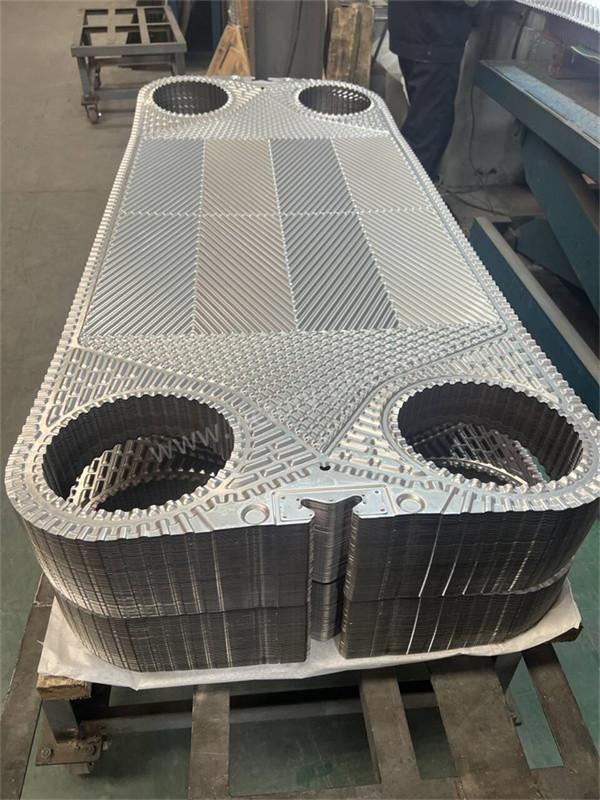
Heat Exchanger Plates
Our M20B, MX25B, and MX25M customizable heat exchanger plates are specifically designed to cater to a wide range of industrial applications, offering adaptability and efficiency for various thermal needs.
Key Features:
-
Modularity: These plates are designed to fit into a variety of heat exchanger configurations, offering a modular approach for industrial operations.
-
Adaptability: With the capability to be customized, these plates can be tailored to suit specific industrial requirements, making them ideal for diverse applications.
-
High Thermal Conductivity: Engineered with high-grade materials, these plates offer excellent thermal conductivity, ensuring effective heat transfer across a range of operating conditions.
-
Corrosion Resistance: Built from corrosion-resistant alloys, the plates can withstand harsh industrial environments, ensuring longevity and reliability.
-
Optimized Performance: Their design promotes efficient heat transfer, providing enhanced performance and reducing fouling.
-
Customizable Configurations: These plates can be configured to accommodate various flow rates, temperatures, and pressure differentials, making them suitable for a wide array of industrial processes.
| Brand | Model |
|
|
M3,M6,M6-D,M6M,M6MC,M10B,M10M,M15B,M15M,M15MC,M20M M20B,MX25B,MX25M,M30,TS6,TL6B,TS20,TL10B,TL10P,T20B,T20M,T20P,TL35B P16,P26,P36,AK20,JWP26,JWP36,M6MW,M10BW,MK15BW |
| Material | Specification |
| Stainless Steel |
SUS304 316 316L 310S 904 |
| Titanium and titanium-palladium alloy | TAi TAi-Pd |
| Hastelloy |
C276 D205 B2G |
| Nickel | Ni200 Ni201 |
| Molybdenum | 254 |
Products are mainly suitable for ACCESSEN/GEA (Kelvion)/ APV/ Sondex/ Tranter/ Hisaka/ API/ Funke/ Vicarb/ Mueller/ SWEP/ Fischer/ AGC/ Thermalwave/ ITT/ LHE/ DHP, etc.
Applacations
| Plate material | Suitable for fluids |
| Stainless steel (SUS304.316, etc.) | Purified water, river water, edible oil, mineral oil |
| Titanium and titanium palladium (Ti, Ti-Pd) | Sea water, salt water, salt compounds |
| 20Cr,18Ni,6Mo(254SMO) | Dilute sulfuric acid, dilute salt aqueous solution, inorganic aqueous solution |
| Nickel (Ni) | High temperature, high concentration caustic soda |
| HASTELLOY alloy (C276, D205, B2G) | Concentrated sulfuric acid, hydrochloric acid, phosphoric acid |
Plate heat exchanger plate thickness configuration
- AISI 304 is usually 0.4 or 0.5 mm thickness
- AISI 316 is always 0.5 and 0.6 mm
- 254 SMO (high alloy) typically 0.6 mm
- Titanium plates are always 0.5 and 0.6 mm
- Some have thicker plates (for high pressure applications)
- Some PHEs have 0.4 mm (low pressure operation)
- Hastelloy C-276 (nickel alloy) typically 0.6 mm
Production Process:
- Raw material preparation: High-quality stainless steel plates are selected as raw materials due to their excellent corrosion resistance and thermal conductivity. The plate thickness is determined based on product specifications and design requirements.
- Cutting and leveling: The stainless steel plates are accurately cut using machine tools to meet the design requirements. After cutting, leveling treatment is performed to ensure a smooth and even surface.
- Stamping: The flattened plates undergo stamping using a hydraulic press to create specific herringbone patterns. The resulting plates have a high turbulence coefficient, promoting efficient heat transfer. Precise control is maintained during the stamping process to prevent plate deformation or damage.
- Surface treatment: The plates undergo surface treatment such as polishing, sandblasting, or coating to enhance corrosion resistance and heat transfer performance. The choice of treatment method depends on specific requirements.
- Assembly and inspection: The plates are assembled according to the design requirements, forming a detachable plate heat exchanger with rubber gasket seals or a fully welded plate heat exchanger through argon arc welding. Tight fitting and absence of gaps are ensured during assembly. A rigorous performance pressure test is conducted after assembly, and a factory report is issued to verify compliance with quality standards.
![]()
![]()

Get in Touch
Have questions about our products or want to discuss a custom order? Our team is ready to help you.