
Ultra-High Wear Resistance Silicon Nitride Ceramics For Precision Instruments
Ultra-High Wear Resistance Silicon Nitride Ceramics For Precision Instruments
Introduction
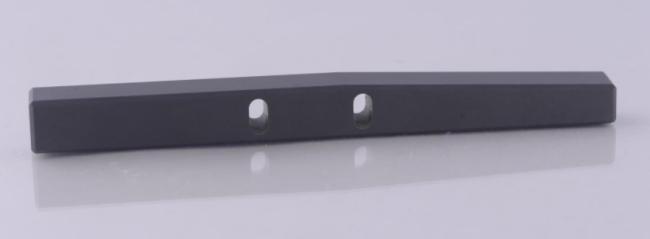
Silicon nitride ceramic guideway spacers are precision ceramic functional components made from high-purity silicon nitride (Si₃N₄) material through advanced sintering processes. This product combines the excellent mechanical properties of silicon nitride ceramic with unique self-lubricating characteristics, featuring extremely high hardness, outstanding wear resistance, and exceptional corrosion resistance. Specifically designed for high-precision guideway systems, it effectively reduces friction coefficient, minimizes wear, improves equipment positioning accuracy, and extends service life, making it an ideal choice for high-end equipment manufacturing.
Applications
Widely used in various high-precision, high-demand guideway systems:
-
CNC Machine Tools: Precision guideway sliders, feed system spacers
-
Automation Equipment: Industrial robot guideways, linear module spacers
-
Precision Instruments: Measuring equipment guideways, optical instrument positioning spacers
-
Semiconductor Equipment: Wafer transfer system guideway spacers
-
Medical Equipment: Medical imaging equipment precision moving parts
Advantages
-
Ultra-High Wear Resistance: Vickers hardness ≥1650HV, wear resistance is more than 10 times that of bearing steel
-
Self-Lubricating Properties: Friction coefficient as low as 0.1-0.2, reducing lubrication requirements
-
High Precision Maintenance: Low thermal expansion coefficient, excellent dimensional stability
-
Strong Corrosion Resistance: Resistant to various chemical media corrosion
-
Lightweight Design: Density only 3.2g/cm³, reducing movement inertia
Specifications Table
| Parameter | Technical Indicators |
|---|---|
| Material Composition | Si₃N₄ ≥ 95% |
| Bulk Density | 3.2-3.3 g/cm³ |
| Vickers Hardness | 1650-1800 HV |
| Flexural Strength | ≥ 800 MPa |
| Surface Roughness | Ra ≤ 0.1 μm |
| Coefficient of Thermal Expansion | 3.2×10⁻⁶/℃ |
| Friction Coefficient | 0.1-0.2 |
| Operating Temperature | -50℃ to 1200℃ |
Manufacturing Process
Raw material preparation → Ball milling and mixing → Spray granulation → Dry pressing → Cold isostatic pressing → Gas pressure sintering → Precision grinding → Laser processing → Non-destructive testing → Cleaning and packaging
Usage Instructions
-
Clean guideways and mounting surfaces before installation to ensure no impurities
-
Use special tools for installation, avoid impact loads
-
Recommended to install and use in clean environments
-
Regularly check wear condition, recommended inspection every 12 months
-
Use special tools during disassembly to avoid damaging ceramic surfaces
After-Sales Service
36-month quality assurance period, lifetime technical support. On-site installation guidance available, regular maintenance reminders provided. Customer usage files established, preventive maintenance solutions offered. 24-hour technical response in emergencies.
FAQ
Q1: What are the advantages compared to traditional metal spacers?
A1: Longer service life, better dimensional stability, lower friction coefficient, and no need for lubrication maintenance.
Q2: Do you support custom sizes and shapes?
A2: Support complete customized production, can provide various sizes and shape solutions according to equipment requirements.
Q3: How to detect spacer wear condition?
A3: Recommended to use precision measuring instruments to regularly check thickness changes. Consider replacement when wear exceeds 0.1mm.
Get in Touch
Have questions about our products or want to discuss a custom order? Our team is ready to help you.