
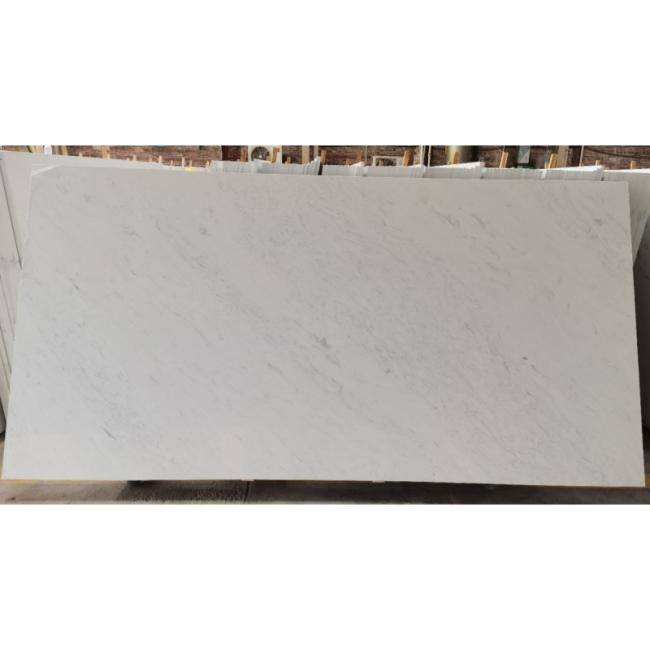
Weathering Building Quartzite Slabs 3200x1600 Polished White Quartz Countertops
OLK7140 - Quartz Counter Energy - Efficient Wheathering Building Materials Industry Certification
Description:
1. raw material blending
2. vacuum mixing
3. mold casting
4. curing and aging
5. cutting and polishing
Quick Detail:
The typical production process for engineered/man-made stone materials involves the following key steps:
- Carefully formulating a mix of mineral aggregates, such as quartz, marble, and glass.Incorporating binders, resins, and additives to achieve the desired properties.
- Placing the blended raw materials into a vacuum mixer for thorough homogenization.The vacuum process helps to remove air bubbles and increase the density of the material.
- Pouring the mixed material into custom-designed molds of the required size and shape.The molds allow for the precise fabrication of the engineered stone slabs.
- Allowing the cast slabs to undergo a controlled curing and aging process, typically in a temperature-regulated environment.The curing time can range from a few hours to several days, depending on the specific manufacturing technique.
- Cutting the cured slabs to the desired thickness.Grinding, honing, and polishing the surfaces to achieve the required flatness and glossy finish.
- Carefully inspecting the final engineered stone products to ensure they meet quality standards.Properly packaging the approved products for safe transportation and distribution.
Specification:
| Technical Specifications* | ||
| TEST PERFORMED | TEST PROCEDURE | TEST RESULTS |
| Specific Gravity | ASTM C97 | 2.45gr/cm |
| Mohs Hardness | BS 6431 | 6-7 Mohs |
| Impact Resistance | 15-25cm for 1.2cm products | |
| TS EN 14617-9 | 35-60cm for 2cm products | |
| 80-175cm for 3cm products | ||
| Flexural Strength | TS EN 14617-2 | 40-70 N/m ㎡ |
| ASTM C880 | 6301 psi | |
| Abrasion Resistance | TS EN 14617-4 | 140-175mm |
| Water Absorption | TS EN 14617-1 | 0.1% |
| BS 6431-11 | 0.1% | |
| Flame Spread | ASTM E-84 | Class A |
| Chemical Resistance | ASTM D2299 | Only strong acids amd bases may alfect |
| BS 6431-18 | ||
| Resistance to Freeze and | ASTM C1026 | No change |
| Thaw Cycling | ||
| Modulus of Rupture | BS 6431-12 | 52.4 N/mm ㎡ |
| Thermal Shock Resistance | ASTM-C484 | No visible defects |
| Wheathering | ASTM G23 | No visible changes after 100 hours |
| *Test results may vary according to product properties. | ||
Advantage:
Artificial stone refers to natural stone powder, such as marble powder, glass powder, calcite, etc., as well as resin and other materials as raw materials, mixed adhesive through extrusion curing and other processes to make artificial stone, common artificial stone are artificial quartz stone, artificial stone granite and so on.
Artificial stone can be more selective, such as resin artificial stone, acrylic artificial stone and artificial granite, acrylic is divided into composite acrylic and pure acrylic, pure acrylic quality is very good. The resin content of artificial stone is much higher than that of quartz stone, so the toughness is better, which means that it can be arbitrarily unscrambled and can make a lot of shapes.
Get in Touch
Have questions about our products or want to discuss a custom order? Our team is ready to help you.