
Precision Stainless Steel Metal Shoulder Bolts for Engineering Available in 1/2 7/16 and 1 Sizes
| Attribute | Value |
|---|---|
| Usage | Fastening |
| Style | Shoulder bolt |
| Size | Various sizes available |
| Head Style | Cap head/shoulder bolt |
| Strength | High |
| Finish | Plain |
| Manufacturer | JIA SHAN Hardward Company |
| Length | Customizable |
| Package | Small Packing+Carton Packing+Pallet |
| Standard | DIN |
| Package Quantity | 100 pieces |
| Shape | Self Tapping Screws |
| Measurement System | INCH, Metric |
| Port | Shenzhen |
| Quality | Inspection before shipment |
| Color | Customizable |
| Material | Stainless steel |

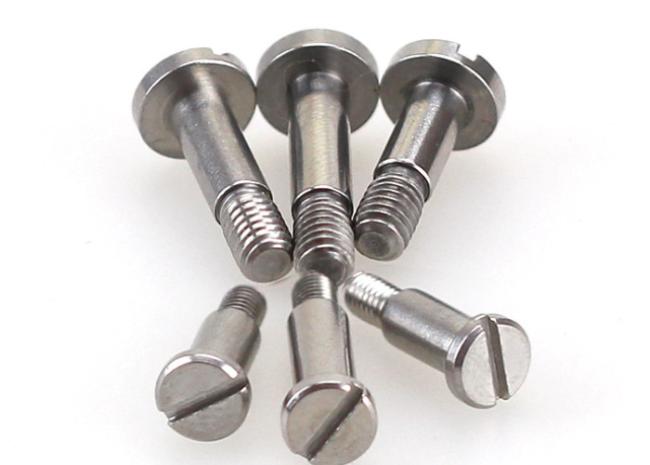
Precision stainless steel metal shoulder bolts are engineered for applications requiring exact measurements and superior strength. The shoulder design ensures precise component alignment, while the high-quality stainless steel construction provides excellent resistance to rust and corrosion in demanding environments.
Available in sizes including 1/2", 7/16", and 1", these bolts offer flexibility for various engineering projects in construction, automotive, and heavy machinery applications where both mechanical strength and long-term reliability are essential.
1. Ordinary bolts are classified into three grades: A, B, and C. The first two are precision bolts and are less commonly used. When referring to ordinary bolts in general, this typically denotes Grade C ordinary bolts.
2. Grade C ordinary bolts are frequently employed in temporary connections and those requiring disassembly. Commonly used ordinary bolts in building structures include M16, M20, and M24. Certain coarse-threaded bolts in the mechanical industry may have larger diameters and serve specialised purposes.
High-Strength Bolts
3. High-strength bolts differ in material composition from ordinary bolts. They are typically employed for permanent connections, with common sizes ranging from M16 to M30. Extra-large high-strength bolts exhibit unstable performance and should be used with caution.
4. Bolted connections in primary structural members of buildings generally utilise high-strength bolts.
5. High-strength bolts supplied ex-works are not categorised as either bearing-type or friction-type.
6. The distinction between friction-type high-strength hex bolts and bearing-type high-strength bolts lies in their design calculation methods:
(1) Friction-type high-strength bolts define the ultimate limit state as the onset of slip between plate layers.
(2) Bearing-type high-strength bolts define the normal serviceability limit state as the onset of slip between plate layers, while the ultimate limit state is defined as connection failure.
7. Friction-type high-strength bolts do not fully utilise the bolt's potential capacity. In practical applications, for critically important structures or those subjected to dynamic loads—particularly where loads induce reverse stresses—friction-type high-strength bolts should be employed. In such instances, the untapped bolt capacity can serve as a safety reserve. For all other applications, bearing-type high-strength bolt connections should be adopted to reduce costs.
- Machinery: Ensures precise alignment and smooth movement in transmission systems
- Automotive: Used in suspension systems, engines, and brakes for bearing connections
- Electronics: Maintains proper spacing between circuit boards to prevent interference
- Mold Manufacturing: Guides parts within molds for precision operation
- Furniture Hardware: Enhances durability in hinges and sliding rails
- Aerospace: Provides high precision positioning in critical components
- Industrial Automation: Supports accurate movement in robotic systems
- Medical Equipment: Enables smooth adjustment in medical devices
- Tooling & Fixtures: Maintains alignment in manufacturing jigs
- Construction: Provides reliable performance under heavy structural loads
Stainless steel is an alloy material with excellent corrosion resistance, composed primarily of iron, chromium, and nickel. These elements provide superior oxidation resistance, durability, and aesthetic appeal.
- Clean regularly with mild detergents and soft cloths
- Avoid acidic or alkaline cleaners that may damage the surface
- Use specialized stainless steel cleaners for stubborn stains
- Rinse thoroughly and dry after cleaning
| Type | C% | Cr% | Ni% | Mo% |
|---|---|---|---|---|
| 304 | 0.07 | 17.5-19.5 | 8.0-10.5 | / |
| 316 | 0.08 | 16.0-18.0 | 10.0-14.0 | 2.00-3.00 |
| 301 | 0.15 | 16.0-18.1 | 6-8 | / |
| 310 | 0.08 | 24-26 | 19-22 | / |
| 304L | 0.03 | 18-20 | 8-12 | / |
| 316L | 0.03 | 16-18 | 10-14 | 2-3 |
| 321 | 0.08 | 17-19 | 9-12 | / |
Durability: High strength and corrosion resistance ensure long service life with minimal maintenance
Environmental: Fully recyclable material with sustainable properties
Versatility: Suitable for aerospace, automotive, marine, and construction applications
Aesthetics: Shiny, reflective surface provides both functional and decorative appeal


Get in Touch
Have questions about our products or want to discuss a custom order? Our team is ready to help you.