
1.5mm 2.5mm 4mm 6mm Electrical Wire House Wire PVC Stranded for Building , Residential , Industrial use
1.5mm 2.5mm 4mm 6mm Electrical Wire House Wire PVC Stranded for Building , Residential , Industrial use
APPLICATION
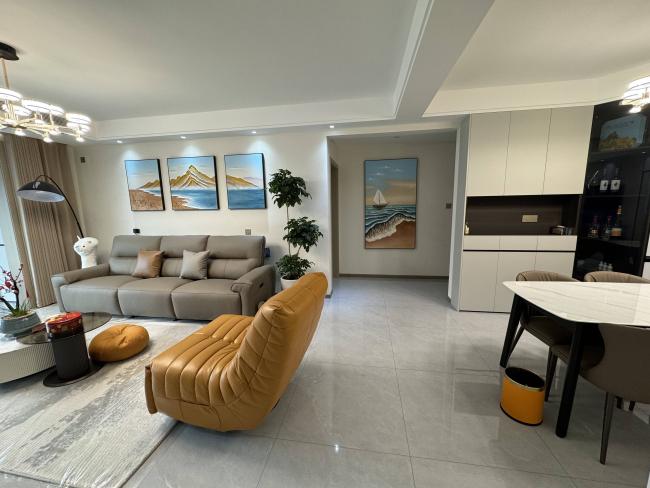
- Commonly used for indoor fixed wiring (e.g., lighting circuits, sockets, and power distribution in buildings).
- Suitable for low-voltage electrical installations (≤450/750V).
- Often used in conduit or concealed wiring due to its rigidity.
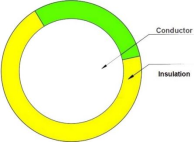
CONSTRUCTION
- Conductor: Single solid copper core, ensuring good conductivity and mechanical strength.
- Insulation: PVC (Polyvinyl Chloride) sheath, providing heat resistance, flame retardancy, and durability.
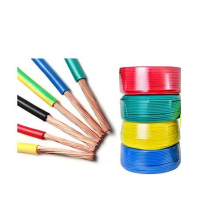
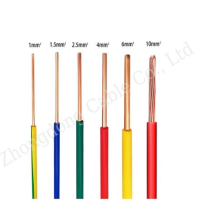
STANDARD
GB5023.1-7-1997, JB8734.1-5-1998, Q/ZEL02-2002
FEATURE
- Voltage Rating: 450/750V or 300/500V
- Temperature Rating
- Maximum operating temperature of conductor:+70℃
- Operating ambient temperature: -15℃~+40℃
- Cable laying temperature:Not less than 0℃(When the ambient temperature is below 0℃, the cable should be preheated.)
- Minimum Bending Radius
- 6D (D is the actual outer diameter of the cable)
PARAMETERS
|
Type |
Name |
Laying Site and |
Long-time Permissible |
|
227IEC01/05 |
Copper Conductor,PVC Insulated Wire |
Fixed laid in the |
70 |
|
Aluminium Conductor,PVC Insulated Wire |
|||
|
227IEC 07 |
Heat Resistant Copper Conductor, |
Fixed laid in the |
90 |
|
BVR |
Copper Conductor,PVC Insulated Flexible Wire |
Fixed laid where flexibility |
70 |
|
227-IEC10 |
Copper Conductor PVC Insulated and PVC |
Fixed laid where high |
70 |
|
BLVV |
Aluminium Conductor PVC Insulated and PVC |
||
|
BVVB |
Copper Conductor PVC Insulated and PVC |
||
|
BLVVB |
Aluminium Conductor PVC Insulated and PVC |
||
|
227IEC 02 RV227 |
Copper Conductor,PVC Insulated |
Mainly used at |
70 |
|
227IEC 42 RVB |
Copper Conductor,PVC Insulated |
||
|
RVS |
Copper Conductor,PVC Insulated |
||
|
227IEC52 RVV |
Copper Conductor PVC Insulated and PVC Sheathed Round Flexible Connector(Light and Common Type) |
FACTORY
APPLICATION


FAQ
1. What are the key applications of BV wire?
BV wire is primarily used for fixed indoor wiring (e.g., lighting, sockets, and power distribution) due to its rigidity and durability
2. Why choose BV over BVR for permanent installations?
BV’s solid copper core provides higher mechanical strength, making it better suited for concealed or conduit wiring
3. What insulation material is used in BV wire?
BV uses PVC insulation, which offers heat resistance (typically 70°C) and flame retardancy
4. What voltage ratings does BV wire support?
Common ratings include 300/500V or 450/750V, depending on regional standards
5. Is BV wire flexible?
No, BV is less flexible than BVR due to its solid core, but this makes it ideal for fixed installations
6. Can BV wire be used outdoors?
BV is designed for indoor use. Outdoor applications may require UV-resistant or armored cables
7. How does BV compare to BVR in current capacity?
For the same cross-section, BV has slightly higher current capacity because of lower resistance from the solid conductor
Get in Touch
Have questions about our products or want to discuss a custom order? Our team is ready to help you.