
11kV ATA Aluminum Wire Armored Electrical Cable Single Core AL/XLPE/AWA/CWS/PVC-FR-LS Cable
11kV ATA Aluminum Wire Armored Electrical Cable Single Core AL/XLPE/AWA/CWS/PVC-FR-LS Cable
APPLICATION
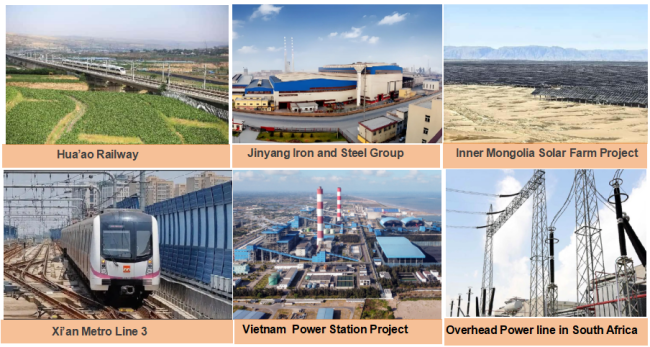
11kV ATA Aluminum Wire Armored Electrical Cable (Single Core AL/XLPE/AWA/CWS/PVC-FR-LS) is a specialized medium-voltage power cable designed for industrial and urban power distribution systems. Its key applications include:
- Underground Power Transmission.
- Industrial Facilities
- Renewable Energy Projects
- Critical Infrastructure
CONSTRUCTION
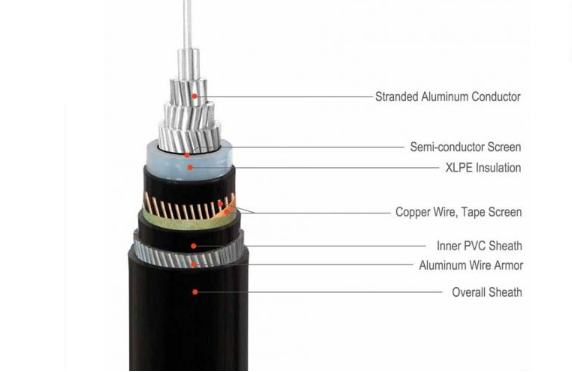
- Conductor: Plain annealed copper or aluminium wire.
- Conductor Screen: Extruded layer of semi-conducting cross-linkable compound.
- Insulation: XLPE
- Insulaton Screen: Extruded layer of semi-conducting cross-linkable compound is applied over the insulation.
- Metallic Layer: copper tapes or a concentric layer of copper wires or a combination of tapes and wires.
- Separation Sheath (for armoured cable): PVC, PE or LSZH.
- Armour (for armoured cable): round aluminium wire.
- Over Sheath: PVC or MDPE. LSZH can be offered as an option.
CHARACTERISTIC
- Voltage Rating Uo/U: 6.35/11kV
- Maximum operating temperature of conductor:+90℃
- Operating ambient temperature: -15℃~+45℃
- Cable laying temperature:Not less than 0℃(When the ambient temperature is below 0℃, the cable should be preheated.)
- Minimum Bending Radius: 12D (D is the actual outer diameter of the cable)
Specification
|
Section Area |
|
Aluminium Wire Armoured Cables |
||||||
|
Insulation Thickness |
Copper Tape Screen Area |
.Bedding Thickness |
Armour Wire Diameter |
Sheath Thickness |
Approx Overall Diameter |
Approx. Weight |
||
|
CU |
AL |
|||||||
|
mm^2 |
mm |
mm^2 |
mm |
mm |
mm |
mm |
kg/km |
|
|
25 |
3.4 |
3.8 |
1.2 |
1.6 |
1.8 |
28.1 |
1300 |
780 |
|
35 |
3.4 |
4.1 |
1.2 |
1.6 |
1.8 |
29.1 |
1400 |
1180 |
|
50 |
3.4 |
4.4 |
1.2 |
1.6 |
1.8 |
30.2 |
1600 |
1280 |
|
70 |
3.4 |
4.7 |
1.2 |
1.6 |
1.9 |
32 |
1840 |
1400 |
|
95 |
3.4 |
5.2 |
1.2 |
1.6 |
1.9 |
33.6 |
2130 |
1530 |
|
120 |
3.4 |
5.5 |
1.2 |
1.6 |
2 |
35.2 |
2430 |
1670 |
|
150 |
3.4 |
5.8 |
1.2 |
1.6 |
2.1 |
37.9 |
2870 |
1930 |
|
185 |
3.4 |
6.2 |
1.2 |
2 |
2.1 |
39.4 |
3240 |
2080 |
|
240 |
3.4 |
6.8 |
1.2 |
2 |
2.2 |
42.1 |
3490 |
2330 |
|
300 |
3.4 |
7.3 |
1.2 |
2 |
2.2 |
44.1 |
4490 |
2560 |
|
400 |
3.4 |
8 |
1.2 |
2 |
2.4 |
48.2 |
5589 |
3040 |
|
500 |
3.4 |
8.6 |
1.3 |
2.5 |
2.5 |
52 |
6780 |
3680 |
|
630 |
3.4 |
9.5 |
1.4 |
2.5 |
2.6 |
57.4 |
8230 |
4200 |
ABOUT US

PACKAGE

APPLICATION


PROJECT
![Armored STA 3 Core Electrical Cable Wire Flame Retardant IEC60502-1 IEC 60332 Standard Cable 4]()
WHY US
FAQ
Q: What is the key feature of this cable's armor layer?
A: The ATA (Aluminum Tape Armor) provides mechanical protection against rodent damage and soil pressure while maintaining flexibility for underground installation
Q: Why is XLPE insulation preferred for 11kV cables?
A: XLPE (Cross-Linked Polyethylene) offers superior thermal stability (up to 90°C operating temperature) and dielectric strength compared to PVC, making it ideal for medium-voltage applications
Q: What does PVC-FR-LS in the sheath specification mean?
A: It denotes a Flame Retardant (FR) and Low Smoke (LS) Polyvinyl Chloride sheath, reducing toxic emissions during fires and enhancing safety in tunnels or buildings
Q: Where is this cable typically installed?
Designed for Cable Wiring System (CWS) in underground networks, industrial plants, and renewable energy projects due to its corrosion-resistant armor and moisture-blocking properties
Q: What conductor material is used and why?
A: Aluminum (AL) conductors are chosen for cost-effectiveness and lightweight properties, though copper options may be available for higher conductivity requirements
Q: Does this cable comply with international standards?
A: Yes, it meets IEC 60502-2 for power cables and IEC 60332-3-24 for flame propagation resistance, ensuring global acceptance
Q: Can it be used in coastal environments?
A: Absolutely. The ATA armor resists saltwater corrosion, and XLPE insulation prevents moisture ingress, making it suitable for coastal infrastructure
Q: How does the low-smoke sheath benefit emergency scenarios?
A: During fires, it minimizes visibility-obstructing smoke and toxic gas release, aiding evacuation and firefighting efforts in critical facilities
Q: Is this cable suitable for aerial installations?
A: No. While it’s armored for underground use, aerial applications require specialized designs like steel wire armor (SWA) or messenger wire
Get in Touch
Have questions about our products or want to discuss a custom order? Our team is ready to help you.