
Customized Precision Aluminum Parts with CNC Milling
In today’s high-tech, fast-paced manufacturing environment, components must meet increasingly tight tolerances, deliver outstanding performance, and be made with cost-efficiency in mind. Among the many machining techniques available, CNC milling stands out as a critical process for creating customized precision aluminum parts used in industries ranging from aerospace and automotive to medical devices and consumer electronics.


What Is CNC Milling?
CNC milling (Computer Numerical Control milling) is a subtractive manufacturing process that uses rotary cutting tools to remove material from a solid workpiece. Guided by computer-aided design (CAD) and computer-aided manufacturing (CAM) software, CNC milling machines operate with incredible precision and repeatability, making them ideal for both prototyping and full-scale production.
This technique is especially well-suited for customized precision aluminum parts because it allows manufacturers to create intricate designs, tight tolerances, and smooth surface finishes, all with a high degree of consistency.
Why Aluminum for Precision Parts?
Aluminum is one of the most popular materials in CNC milling for several key reasons:
- Lightweight yet strong: Offers a high strength-to-weight ratio, crucial in applications like aerospace and automotive.
- Excellent machinability: Can be milled quickly and cleanly with minimal wear on tools.
- Corrosion resistance: Naturally forms an oxide layer that protects against corrosion.
- Thermal and electrical conductivity: Makes it ideal for electronic and heat management components.
- Cost-effective and recyclable: Supports sustainable and economical production.
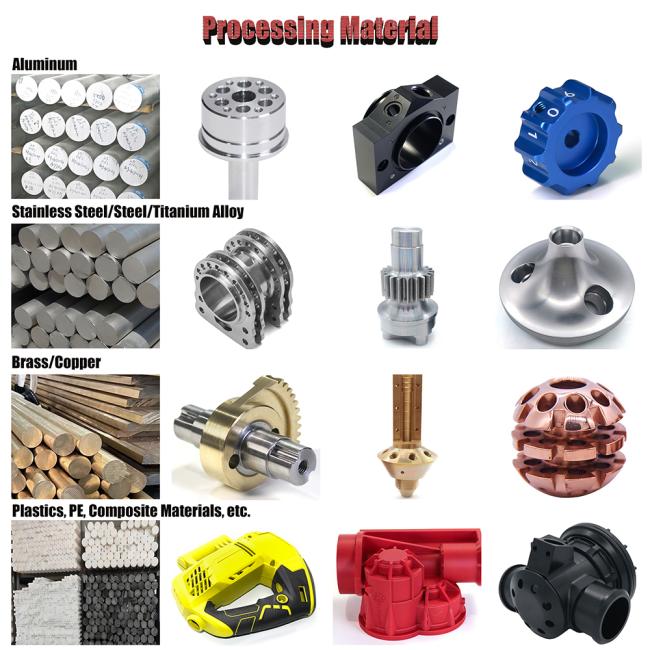
Common aluminum alloys used in CNC milling include 6061, 7075, and 5052, each offering specific properties suited to different performance requirements.
The Power of Customization
Customized precision aluminum parts are engineered to meet specific application needs where off-the-shelf solutions fall short. Customization ensures:
- Exact fit and function: Tailored dimensions for seamless integration into complex assemblies.
- Unique geometries: Including pockets, slots, grooves, and other detailed features.
- Special features: Such as threads, engraved logos, or mating surfaces.
- Adaptability: Custom parts can be optimized for weight, strength, thermal performance, or aesthetics.
This customization is particularly important in industries such as:
- Aerospace – where weight reduction and high performance are critical.
- Medical devices – where biocompatibility and micro-precision are essential.
- Robotics and automation – where parts must perform flawlessly under dynamic loads.
- Electronics – requiring enclosures and heat sinks with specific thermal profiles.
The CNC Milling Process for Aluminum Parts
1.Design Phase
Engineers use CAD software to design the part according to specifications. This includes all functional and cosmetic features.
2.Programming (CAM)
The CAD file is converted into a CNC program using CAM software. Tool paths are generated to define the cutting sequence and tool selection.
3.Material Preparation
Aluminum stock is selected and fixed onto the milling machine, ensuring stability and alignment.
4.Milling Operations
CNC machines execute the programmed operations, performing tasks such as face milling, contouring, drilling, and tapping with micron-level accuracy.
5.Finishing (Optional)
Additional treatments like anodizing, polishing, bead blasting, or powder coating may be applied to enhance appearance, durability, and corrosion resistance.
6.Inspection and Quality Control
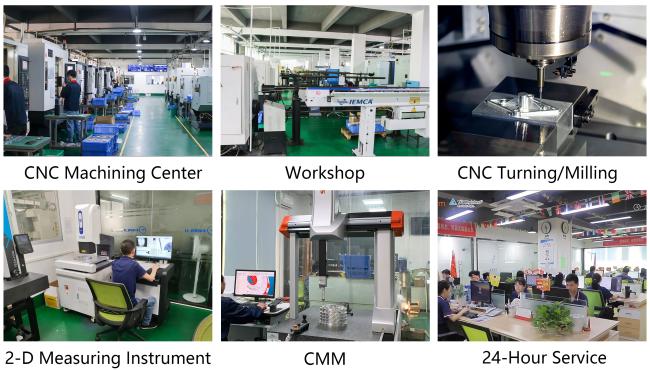
Dimensional checks using calipers, micrometers, or coordinate measuring machines (CMMs) ensure the part meets all specifications.
Advantages of CNC Milled Precision Aluminum Parts
- High dimensional accuracy – Critical for assemblies and moving parts.
- Repeatability – Ideal for production runs of hundreds or thousands of identical parts.
- Rapid prototyping – Quick turnaround from design to functional prototypes.
- Surface finish options – From raw machined surfaces to smooth, anodized finishes.
- Reduced labor and error – Automation minimizes human intervention and mistakes.
Applications of Customized Precision Aluminum CNC Parts
- Aerospace brackets, housings, and support frames
- Automotive engine components, pedals, and mounts
- Electronic device enclosures and heat sinks
- Medical equipment frames and tools
- Industrial automation fixtures and robotic arms

FAQ
1. Are you a manufacturer or a trading company?
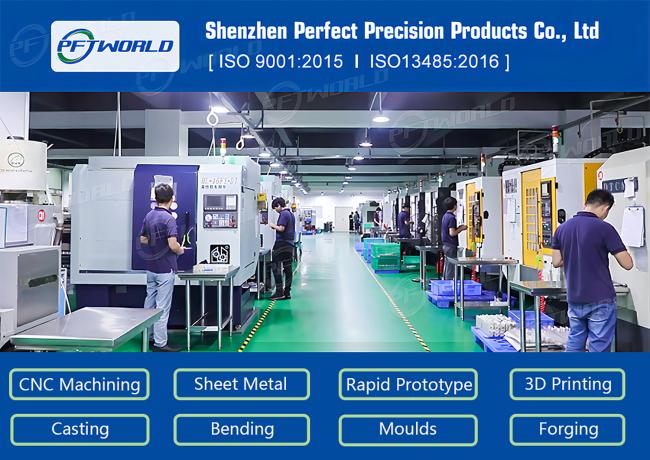
covering 6000 square meters. Complete facilities, including 3D quality inspection equipment, ERP system and 40 machines. If necessary, we can provide you with material certificates, sample quality inspection and other reports.
Detailed drawings (PDF/STEP/IGS/DWG...), including quality, delivery date, materials, quality, quantity, surface treatment and other information.
Get in Touch
Have questions about our products or want to discuss a custom order? Our team is ready to help you.