
Pre-Engineered Steel Building with Grade 8 Seismic Rating, Fireproof Construction, and Custom Design
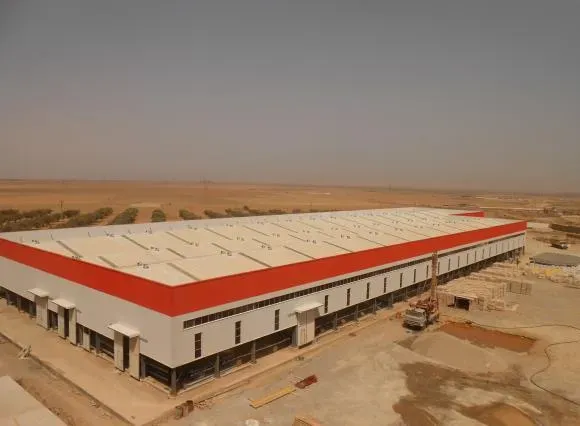
Pre-engineered steel buildings are steel structures built over a structural concept of primary members, secondary members, roof and wall sheeting connected to each other and various other building components.
These buildings can be provided with different structural and non-structural additions such as skylights, wall lights, turbo vents, ridge ventilators, louvers, roof monitors, doors & windows, trusses, mezzanine floors, fascias, canopies, crane systems, insulation etc., based on customer requirements. All steel buildings are custom designed to be lighter in weight and high in strength.

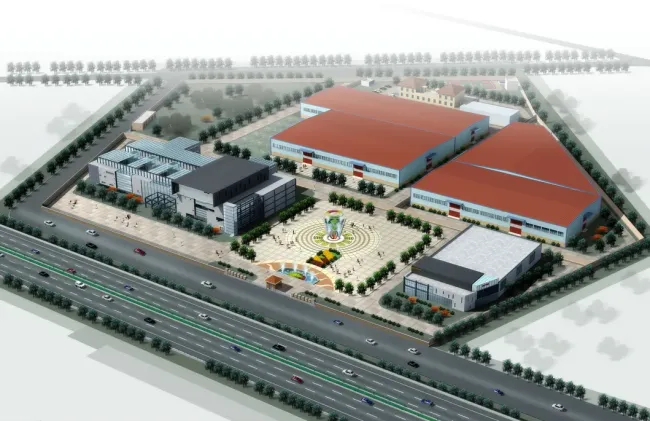
Pre-Engineered Buildings are the most flexible solutions for contractors and owners. With advantages of low cost, high durability, perfect quality control and fast erection; PEBs are used for various applications:
- Factories
- Workshops
- Warehouses
- Cold Storages
- Steel Mills
- Assembly Plants
- Showrooms
- Supermarkets
- Offices
- Shopping Centers
- Exhibition Halls
- Restaurants
- Logistic Centers
- Multi-purpose Buildings
- Schools
- Hospitals
- Conference Halls
- Laboratories
- Museums
- Stadiums
- Farms
- Utility Shelters
- Pump Stations
- Aircraft Hangars
- Airport Terminals
Price per square meter can be 25%-30% lower than conventional steel buildings. Site erection cost is low because of faster erection times and easier erection process.
All steel components are fabricated at the factory and linked by bolts at the site. So the erection process is fast, step by step, easy to install and requires simple equipment. 60% less construction time required compared with traditional R.C.C (reinforced concrete) building.
Pre-engineered steel buildings are flexible in any requirement of design, easy to expand in the future and also economically with low transportation costs.
Nowadays, pre-engineered buildings are the green solution for the environment with CO2 reduction, energy efficiency, and recyclability.
- Primary Members / Main Frames
- Secondary Members / Cold Formed Members
- Roof & Wall Panels
- Accessories, Buyouts, Crane System, Mezzanine System, Insulation, etc.
- Sandwich Panels
Primary members are the main load carrying and support members of a pre-engineered building. The main frame members include columns, rafters and other supporting members. The shape and size of these members vary based on the application and requirements.
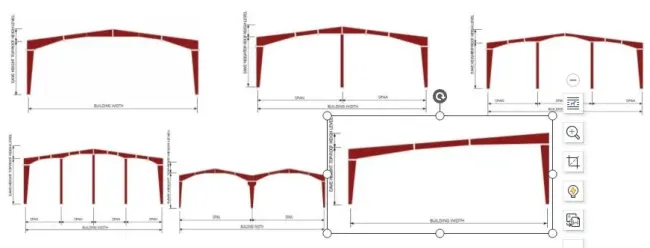
Secondary structural framing refers to purlins, girts, eave struts, wind bracing, flange bracing, base angles, clips and other miscellaneous structural parts. Purlins, girts and eave struts are cold formed steel members which have a minimum yield strength of 345 MPa (50,000 psi) and will conform to the physical specifications of GB/ISO/CE or equivalent.
Standard steel panels are 0.3, 0.4, 0.5 mm or 0.6 mm thick and have a minimum yield strength of 345 MPa. Steel panels are hot dipped and galvanized with zinc or zinc-aluminium coating. The base material is pretreated, before applying a corrosion resistant primer and top coat. The combined thickness of the painted film is 25 microns on the front side and 12 microns on the reverse side.
Other building accessories include anchor bolts, fasteners (bolts, nuts, turnbuckle, expansion bolts), gutters, downspouts, doors, windows, ventilators, skylight panels, louvers and all other building-related materials.
- Verify receiving documents and quantity of received material
- Submit load for QC inspection
- Visual inspection for surface condition and damages
- Dimensional inspection for length, width, depth, thickness
- Verification of material certificates and heat numbers
- Preparation of Incoming Material Inspection Report
Design and Development department creates structural drawings. Production department prepares items according to drawings:
- Drawings transferred to automated plate processing machine
- Automated punching of part marks
- Precision drilling according to NC files
- Plasma cutting of plates
- Automated cutting and drilling machine processing
- Precision drilling as per drawings
- Transfer to fit-up section after completion
Fabrication drawings issued to production supervisor. Fabricators collect prepared beams and connection details. End plates, gusset plates, stiffeners, purlin cleats, stay angle cleats fixed in appropriate places by tack welding. Completed fit-up offered to QC for inspection.
- Planning of jobs to be welded
- Cleaning welding locations free of dust, oil, grease
- Setting wire feed and voltage parameters
- Maintaining fillet size according to GB50661-2011 standard
- Removing spatters and slag after welding
- Grinding burrs, sharp edges and excessive reinforcements
- QC inspection after completion
- Planning of welding jobs
- Cleaning welding locations thoroughly
- Setting wire feed and voltage parameters
- Maintaining fillet size per GB50661-2011 standard
- Post-weld cleaning and grinding
- Final QC inspection
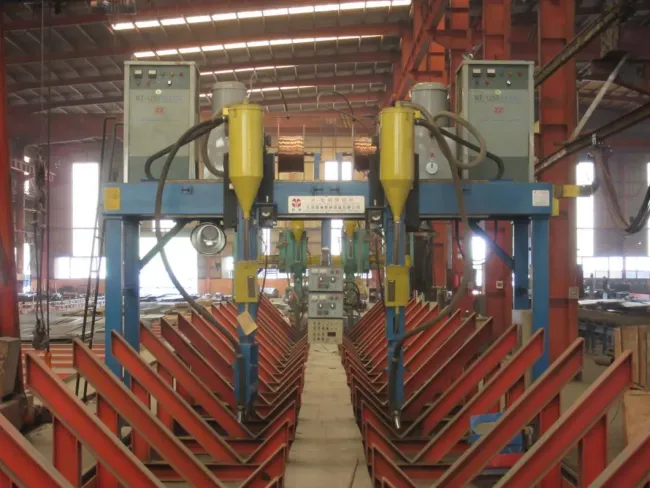
- Tool Box Talk performed before operations
- Recording fabricated steel ID for traceability
- Cleaning material with high pressure air
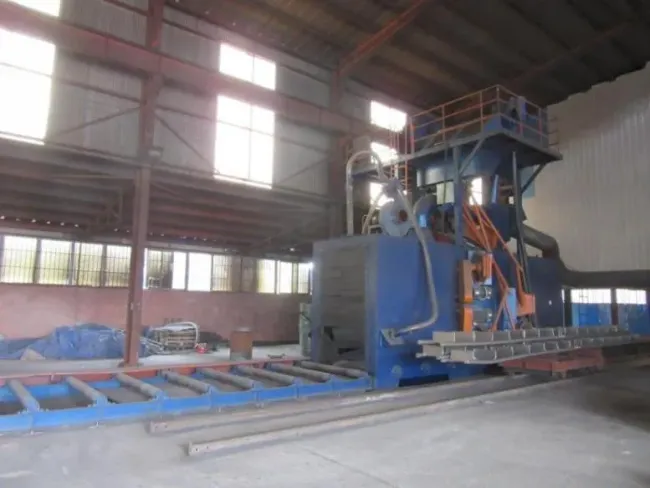
- Automated blasting through conveyor system
- Six internally mounted wheels for high-velocity blasting
- Achieving SA 2/2.5 surface preparation grade
- Full PPE requirement for personnel
Application of paint typically done once per day after blasting completion. QC inspection of blasted surfaces before primer application. Ambient conditions checked and recorded:
- Surface temperature: 3˚C above dew point
- Relative humidity: 85% or below
- Surface dry and free from contaminants
- Substrate temperature: 23-40˚C
Paint application primarily by Airless spray. Quality checks for shelf life, temperature, batch number. Monitoring of mixing ratio, tip size, agitation method, and pot life. Experienced spray applicators with appropriate PPE.
Specification of Painting System:
- Primer coat: Per project requirement
- Second coat: Per project requirement
- Third coat: Per project requirement
- Touchup at site after erection
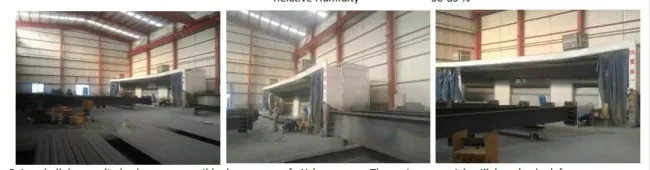
- Receiving finished components from painting department
- Proper storage job-wise in yard
- Arranging trucks from contract companies
- Loading after job clearance confirmation
- Documentation maintenance in job file
With 20 year warranty in the steel building industry, our company maintains strict quality standards. We have acquired ISO9001 and CE certificates. Following standards are strictly adhered to for design and fabrication:
- GB/T1591-2008/2018
- GB/T11263-2010
- GB/T 2518-2008
- GB/T12754-2006
- GB/T 1228-2006
To ensure the quality of fillet weld, meeting technical requirements of welded members and improve standardization of fabrication.
This manual applies for design, fabrication and inspection of fillet weld size.
Length of catheti from maximum isosceles triangle drawn from section of fillet welding seam.
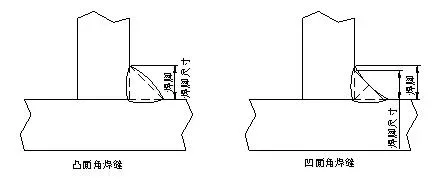
- All fillet weld size should not be less than drawing and design values
- Minimum fillet weld size: K≥1.5×t (t = thickness of thicker welding member)
- Maximum fillet weld size: K≤1.2t (t = thickness of thinner welding members)
- Edge welding limitations based on member thickness
- Circular/trench hole limitations: K≤(1/3)d
- Maximum size without groove: 17mm
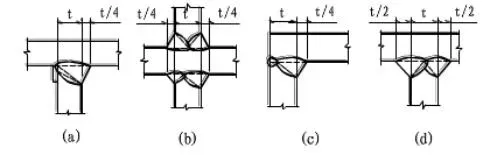
| Form of Fillet Weld Leg | K (Fillet Weld Size) Value | Note |
|---|---|---|
| Fillet weld without groove | K=(0.7~1)t and ≤15mm | For most steel structure buildings |
| Fillet weld without groove | K=(0.5~0.6)t | For strengthening ribs and secondary members |
| Fillet weld with groove (CJP and PJP) | K=t/4 and K≤10mm | For most steel structure buildings |
| Fillet weld with groove (CJP and PJP) | K=t/2 and K≤10mm | Important members (crane beams, web-flange connections) |
| Parent Metal Thickness (t) (mm) | Minimum Fillet Weld Size |
|---|---|
| t ≤ 6 | 3 (minimum 5 for crane beam) |
| 6 | 5 |
| 12 | 6 |
| t > 20 | 8 |
Steel plate cutting → H section assembly → Automatic welding → H section strengthening → Assembly → Manual welding → Shot blasting → Painting → Storage
H section steel plate checked for design compliance. Quality-focused cutting with material optimization. Professional setting-out for precision. CNC cutting preferred with high-purity gases (98.0% acrylic gas, 99.99% liquid oxygen) for smooth, notch-free surfaces. Special imported cutting machine for grooves.
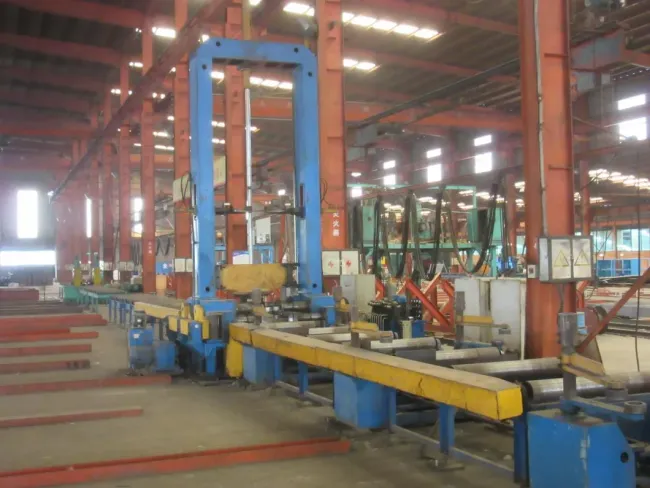
Assembly on imported H section production line. 4 hydraulic positioning system for flange/web plate alignment. CO2 gas shielded welding for fixing.
H section members hoisted into gantry-type submerged arc automatic welding machine. Welding according to specified sequence and parameters. Preheating for ultra-thick plates using electrical heaters.
Correction of flange flatness using strengthening machines. Flame correction for perpendicularity when needed. Side bending correction. Flame temperature controlled at 600-800ºC.
- Familiarization with component shop drawings
- Re-checking of model components by related departments
- Accurate mark-up procedures
- Inspection after first assembly
- Batch assembly after qualification
Precision manual welding for specific applications and complex joints.
Surface preparation using 10-ramming heads shot blasting machine. Capable of handling members up to 1200×2000 size. Achieving Sa2.5 surface preparation grade.
Even, flat, glossy painting without cracking, peeling or pin holing. Standard thickness: 150μm indoor, 125μm outdoor (-25μm allowable deviation). Coating specifications:
- Two coats of primer: 40±5μm thickness
- Two coats of finish paint: 60±5μm thickness
Get in Touch
Have questions about our products or want to discuss a custom order? Our team is ready to help you.