
0.95 Inch Small Color Oled Display 120*240 Resolution 24PINS SPI Interface 300c/D
Price:
$6~$1000
MOQ:
1000
Delivery Time:
4~6weeks
Brand:
HuaXin
Product Description
0.95 Inch Small Color OLED Display 120*240 Resolution 24PINS SPI Interface 300c/D
Product Attributes
| Attribute | Value |
|---|---|
| Display Technology | Touch Screen AMOLED |
| Size | 0.95 inch |
| Name | AMOLED Panel |
| Resolution | 120*240 |
| Interface | 24 pins SPI |
| View Angle | All |
| Brightness | 300C/D |
| Driving IC | CST8165 |
| Touch | Oncell |
Product Description
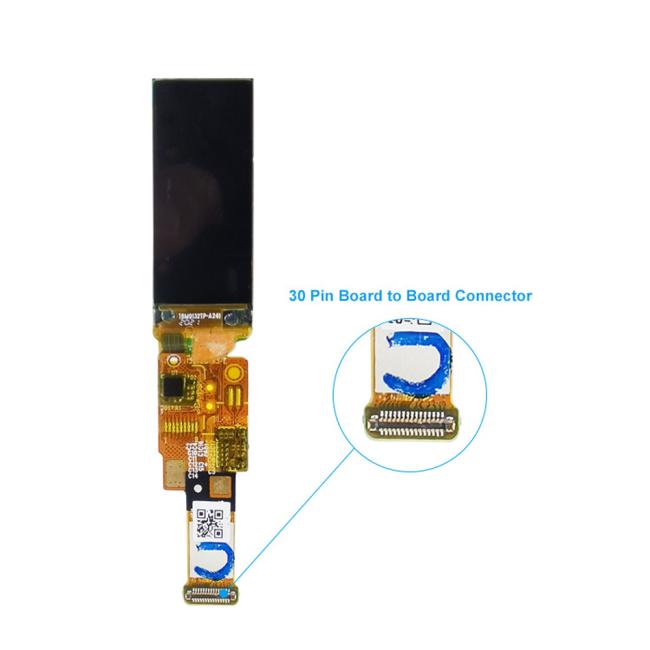
Oncell touch AMOLED display 0.95 inch 120*240 dots 24PINS SPI interface 300c/d driving IC CST8165 touch IC FT2201
Technical Parameters
| Part NO. | HX095RRC12B |
|---|---|
| Display Technology | AMOLED |
| Diagonal Screen Size | 0.95 inch |
| Resolution | 120*240 |
| Viewing Angle | All |
| Operation Temperature | -20 ~ +70 ℃ |
| Active Area (mm) | 10.96X25.57MM |
| Panel size(mm) | 12.96X30.94MM |
| Brightness(cd/m2) | 300/cd |
| Interface | 4-wire SPI |
| Pin q'ty | 24 pin |
| Contrast Ratio | 10000:1 |
| Driving IC | FT2201.CST8165 |
| Touch Panel | One cell |
Product Images
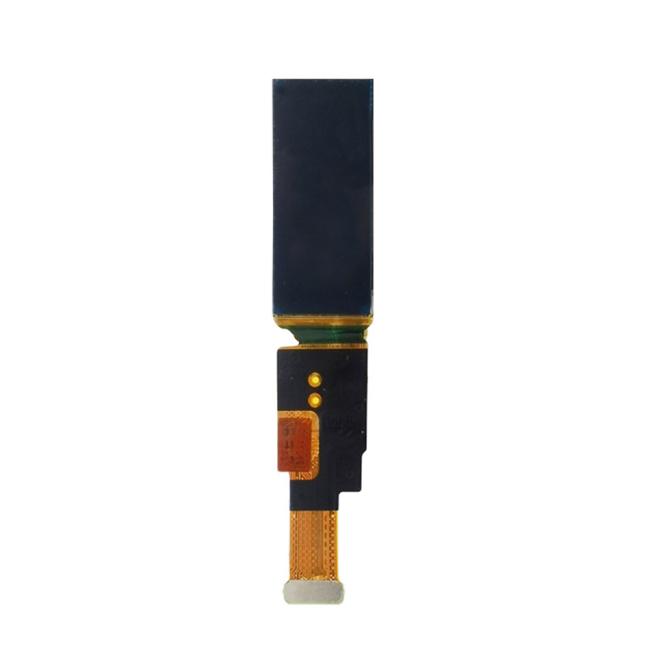
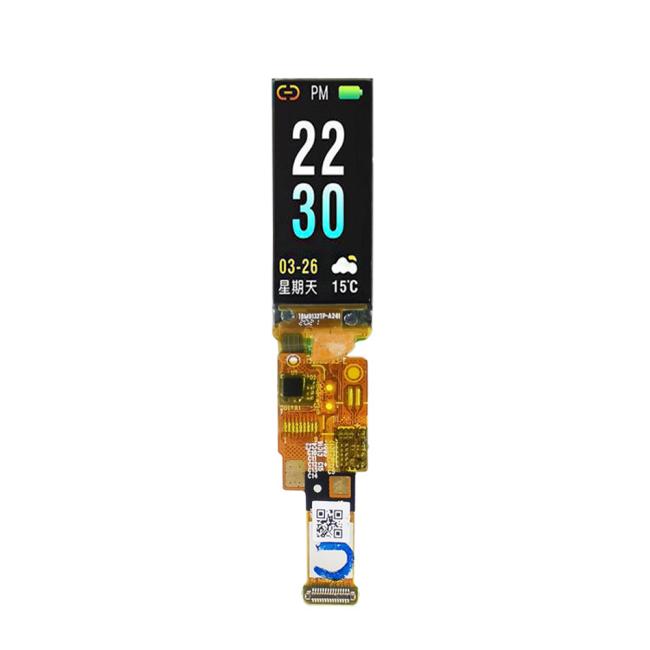
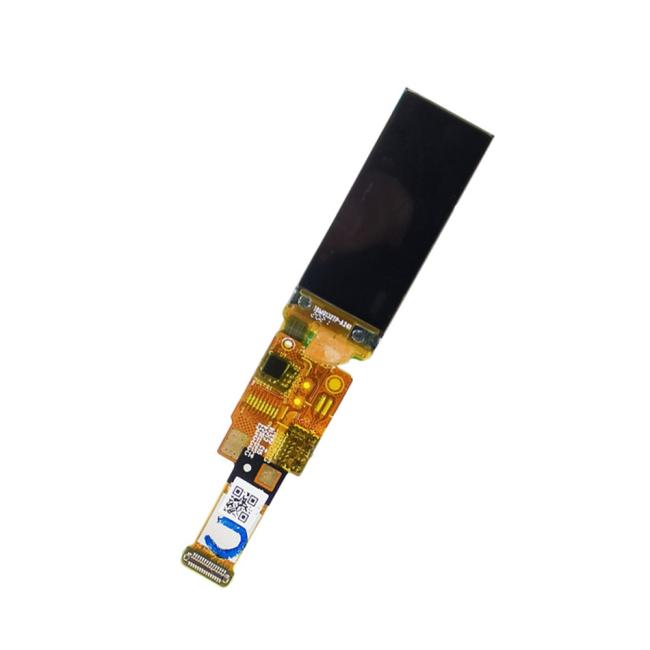
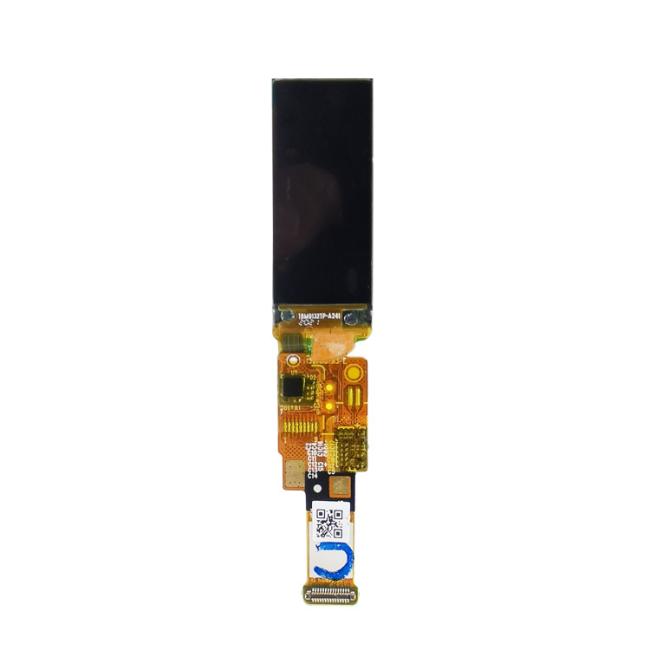
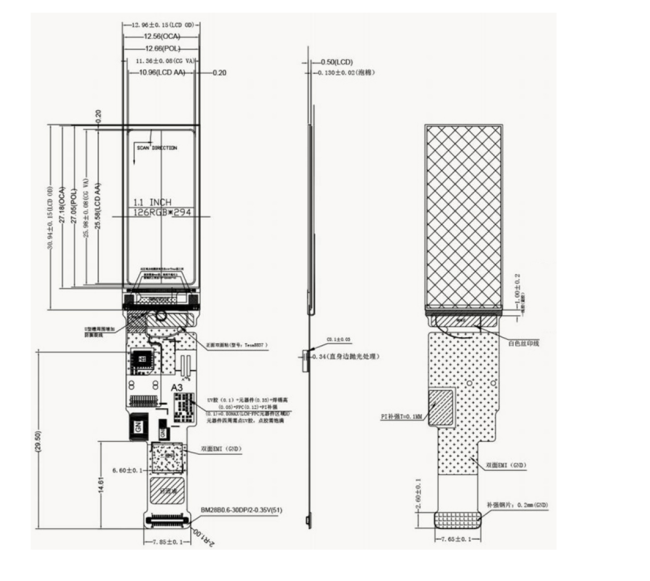
Drawing & Pin Definition
OLED Product Knowledge
Key Advantages of AMOLED Displays
- Perfect Blacks & Infinite Contrast
- Vibrant Colors & Wide Gamut
- Ultra-Fast Response Times
- Flexibility & Thin Designs
- Energy Efficiency
- Always-On Displays (AOD)
- Superior Viewing Angles
- HDR Performance
AMOLED Disadvantages
AMOLED is extremely expensive than LCD and TFT, lifetime is shorter than LCD and TFT and Lower peak brightness in sunstained use
Huaxin Advantage
- Factory base located at inland city which has cost effective
- Most advanced new equipment which can keep quality stable
- Most processes using fully automatic equipment which has efficiency and stable quality
- Professional engineers and production leaders who works in LCD field for more than 20 years
- Self design for customized product
Our Certificates
- ISO14001
- ISO9001/IATF16949
- SGS of LCD module
Company Information
Huaxin Technology (Enshi)Co.,LTD
- Hubei.Enshi
- Date of foundation: 2009
- High technology enterprise mainly work on research and development, producing and sells LCD, LCM, TFT, backlight, OLED
- LCD includes: VA, TN, HTN, STN, FSTN, CSTN and other series
- LCM includes: COB, TBA, COG, TP, LED backlight and other series
- Register capital: twenty million
- Current staff: 500+
- RD accounts for 10%
- QC accounts for 15%
Production Capacity
| Annual Production Capacity | 2021 (Current) | 2022 (Goal) | 2023 (Challenge) | 2024 (Challenge) | 2025 (Challenge) | Remark |
|---|---|---|---|---|---|---|
| LCD Production Capacity | 4.5 | 9 | 9 | 9 | 9 | Unit: thousands of logarithms/Day |
| LCM Production Capacity | 70 | 150 | 300 | 450 | 450 | Unit: Thousand piece/Day |
| Backlight Production Capacity | 100 | 200 | 300 | 500 | 500 | Unit: Thousand piece/Day |
| OLED Production Capacity | 10 | 20 | 30 | 40 | 50 | Unit: Thousand piece/Day |
Product Applications
- Smartphones and tablets
- Wearables (smartwatches like Apple Watch)
- AR/VR headsets
- Television and Monitors
- Automotive display
- Medical and smart home
Power Efficiency Comparison
How does the power efficiency of AMOLED displays compare to other display technologies?
Power Consumption:
- AMOLED displays consume power on a per-pixel basis, meaning that pixels that display black or dark content consume very little power, while pixels displaying bright or white content consume more power.
- LCD and LED displays, on the other hand, require a constant backlight that consumes power regardless of the displayed content.
Content Dependency:
- AMOLED displays are more power-efficient for content with a lot of dark or black areas, as the individual pixels can be turned off to save power.
- LCD and LED displays consume a relatively constant amount of power regardless of the displayed content, as the backlight remains active.
Brightness Control:
- AMOLED displays can dynamically adjust the brightness of individual pixels, allowing for better power efficiency in low-brightness scenarios.
- LCD and LED displays typically have a fixed backlight brightness, which can result in higher power consumption even when the display content does not require maximum brightness.
Display Size
- AMOLED displays tend to be more power-efficient for smaller display sizes, as the power consumption scales with the number of pixels.
- Larger LCD and LED displays may require more power-hungry backlights, potentially reducing their power efficiency compared to AMOLED displays of the same size.
Similar Products
Get in Touch
Have questions about our products or want to discuss a custom order? Our team is ready to help you.
Company
HuaXin Technology CO.,LTD
Location
WORKSHOP 60,3/F,BLK A, EAST SUN IND CTR NO. 16SHING YIP ST KWUN TONG, HK
Contact Person
Vivian