
Pyralux Polyimide Rigid Flex PCB 4 Layer 1Oz Copper Fabrication
| Attribute | Value |
|---|---|
| PCB Thickness | 0.6mm |
| Soldermask | Green, blue, yellow, red, etc. |
| Min. Line Width/Spacing | 0.075mm/0.075mm |
| Shield | Copper |
| Min. Bend Radius | 0.5mm |
| Copper Thickness | 1Oz |
| Material | FR-4, Polyimide |
PCB board name: Rigid-flex PCB fabrication
Brand: ONESEINE
Material: Fr4+flex
Thickness: Rigid 1.2MM, Flex 0.6mm
Surface: Immersion gold
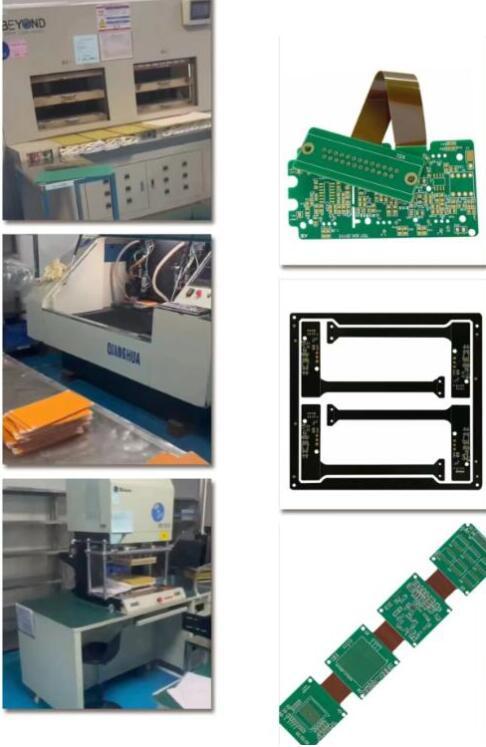
The combination of FPC and PCB technologies has led to the development of rigid-flex boards, which incorporate the characteristics of both flexible and rigid circuit boards through specialized laminating processes.
Rigid-flex board manufacturing requires both FPC and PCB production equipment. The process begins with electronic engineers designing the circuit and layout, followed by CAM processing and production planning. After separate fabrication of the FPC and PCB components, they are precisely aligned and laminated using specialized press equipment, followed by thorough quality inspection due to the high value of these components.
- Mobile phones (keyboards and side keys)
- Computers and LCD screens
- Motherboards and displays
- CD Walkman and drives
- Notebook computers
- Hard disk drive suspension circuits
- XE package boards
- Smartphones: Enables compact size and flexible display connections
- Tablets and Laptops: Facilitates thin profiles and folding mechanisms
- Wearable Devices: Conforms to device shapes while maintaining reliability
- Automotive Electronics: Withstands vibrations and temperature variations
- Aerospace and Defense: Performs in extreme conditions and tight spaces
- Medical Devices: Meets requirements for compact size and durability
- Industrial Equipment: Provides reliable connections in harsh environments
Rigid-flex PCBs combine rigid (typically FR4) and flexible (polyimide) materials, offering structural support in rigid areas while allowing bending in flexible sections. This hybrid construction provides significant advantages:
- Space efficiency: Eliminates need for connectors and cables
- Enhanced reliability: Fewer interconnects and better resistance to vibration
- Improved performance: Optimized signal routing reduces loss
- Design flexibility: Accommodates complex and irregular shapes
Get in Touch
Have questions about our products or want to discuss a custom order? Our team is ready to help you.