
Science Center Educational Display Real Dinosaur Egg Fossils Replicas Bone
Science Center Educational Display Real Dinosaur Egg Replicas Fossil Bone
A hands-on, multi-sensory educational system designed for Science Centers and museums to facilitate
interactive learning about dinosaur reproduction, ontogeny, and fossilization. This integrated display
combines hyper-realistic dinosaur egg replicas with authentic-feeling fossil bone fragments in a curated,
inquiry-based learning environment.
|
Items |
Parameters |
|
Size |
Life Size or Customized |
|
Material |
1. Steel frame 2. Resin 3. Fiber |
|
Usage |
Museum Education, Commercial Display, Zoo Decoration, Garden |
|
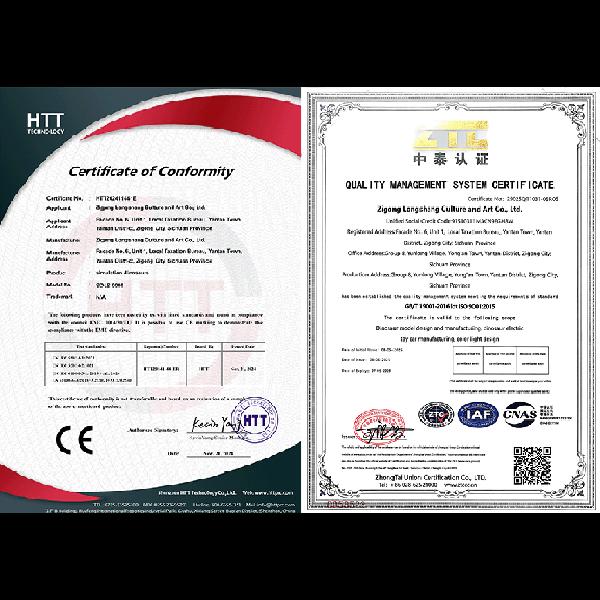
Certificates |
CE, ISO |
|
Loading Port |
Chengdu, Chongqing, Shanghai, Guangzhou, Shenzhen, Ningbo |
|
Transportation |
By Sea, Railway, Air |
|
Warranty |
12 months |
Certificates
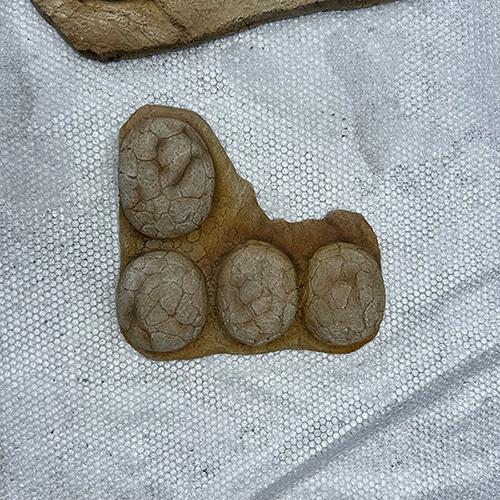
Product Showcase

1. Core Components of the Educational System
A. Real Dinosaur Egg Replicas
Scientific Basis:
-
Species-Specific Designs: Replicas based on published fossil specimens of dinosaur eggs.
-
Clutch & Nest Context: Eggs are presented as part of a simulated nest environment, including
replicas of nesting material (vegetation, mud) and often a partial or full embryo cast visible inside
a "broken" egg section.
Material & Fabrication:
-
Shell Material: Dyed and textured mineral-loaded resin to replicate the calcite composition and
surface texture of fossil eggshell. Surface features like pores, growth lines, and ornamentation
(nodes, ridges) are precisely reproduced.
-
Internal Matrix: For "clutch in situ" displays, eggs are embedded in a simulated sandstone or
mudstone matrix that can be gently "excavated" by visitors using provided brushes.
-
Scale & Variety: Kits include eggs of varying sizes (from 10cm to over 30cm in length) and
shapes (spherical, elongated) to illustrate diversity.
B. Fossil Bone Replicas (Fragment Kits)
Educational Focus: These are not full bones, but diagnostic fragments that teach identification and
inference.
-
Bone Types: Includes replicas of vertebrae centra, tooth crowns, claw cores, limb bone cross
sections, and skull fragments.
-
Pathology & Features: Some fragments show bite marks, healed fractures, or growth rings for
advanced discussion.
-
Material: Cast in the same "GeoLithic Matrix" as museum replicas, providing authentic weight
and texture.
2. Interactive Display & Station Design
The product is not just a set of objects, but a designed learning station.
Typical Station Layout Includes:
-
"The Nest Site" Dig Pit:
-
A sandbox or composite gravel pit with buried egg replicas and bone fragments.
-
Equipped with brushes, sieves, and measuring grids.
-
Teaches basic excavation methodology and spatial context.
-
-
"The Comparison Lab" Table:
-
Eggshell Microscopy Station: Magnifying lenses or a digital microscope connected to a screen,
-
allowing visitors to compare pore structures of different egg types (interpreted as clues to nesting
environment: buried vs. open).
- Bone ID Station: Labeled bone fragments with guides asking "Carnivore or Herbivore?" (based
on tooth shape), "What Body Part?" (based on bone shape).
3. Educational Curriculum & Learning Outcomes
Aligned with NGSS (Next Generation Science Standards) for Earth Science and Life Science.
-
Core Concepts Covered:
-
Fossilization Processes: How eggs and bones become fossils (permineralization, cast formation).
-
Dinosaur Biology: Reproduction, growth, and behavior inferred from eggs and bones.
-
Scientific Practice: Observation, comparison, measurement, inference, and evidence-based reasoning.
-
Paleoecology: Reconstructing ancient environments from nest structures and associated fossils
-
4. Durability & Safety Specifications
- Visitor-Proof Construction: All replicas are made of impact-resistant resins and designed to
withstand frequent handling, dropping, and cleaning with disinfectants.
- Safety: Rounded edges, non-toxic materials, heavy enough to not be a choking hazard but light
enough for children to handle.
- Hygiene: Surfaces are sealed and non-porous for easy cleaning. Dig pit "matrix" is a washable,
non-staining polymer gravel.
- Modular & Replaceable: Individual components (eggs, bones, tools) are sold separately for
easy replacement.
5. Value Proposition for Science Centers
-
High Engagement: Tactile, object-based learning proven to increase dwell time and knowledge retention.
-
STEM Alignment: Directly supports curriculum standards, making it attractive for school group visits.
-
Turnkey Solution: Includes hardware, software (digital content), curriculum, and training for educators.
-
Freshness & Rotationality: Modules and specimens can be rotated to create a "new" exhibit seasonally,
encouraging repeat visitation.
-
Accessibility: Makes rare and fragile fossil evidence accessible to all visitors in a hands-on format.
In essence, this product transforms paleontological science from a static, "look-don't-touch" subject into a
dynamic, participatory investigation. It allows visitors to think and act like paleontologists, moving from raw
evidence (an egg, a bone shard) to reasoned conclusions about the lives of dinosaurs, thereby fostering a
deeper, more personal understanding of deep time and the scientific process.
Get in Touch
Have questions about our products or want to discuss a custom order? Our team is ready to help you.