
Industrial PU Polyurethane Caster 8 Inch Dual Spring Load Bearing Wheel Rigid Swivel Lockable Castor 6202 Bearing
In the demanding environment of port terminals and freight yards, equipment mobility is critical for operational efficiency. Selecting the right heavy-duty casters is not just about moving loads—it’s about ensuring safety, durability, and long-term cost savings. This guide will help you navigate the key considerations when choosing industrial casters built to withstand the harsh conditions of port cargo handling.
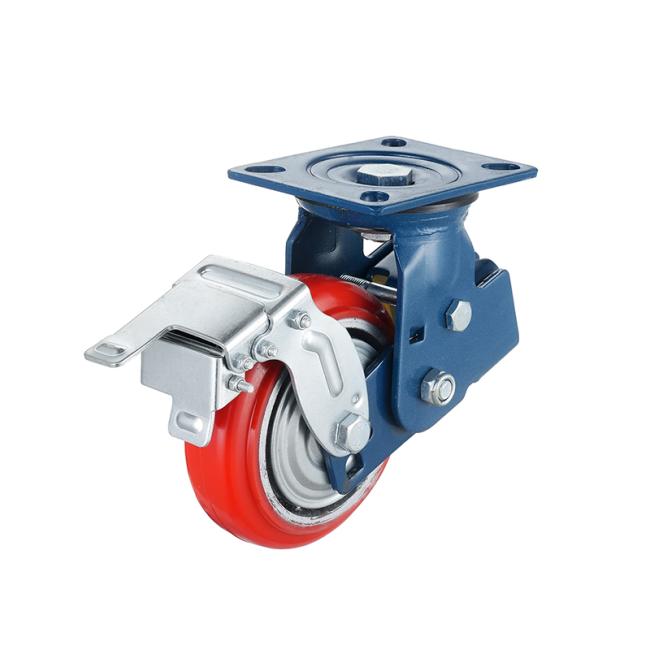
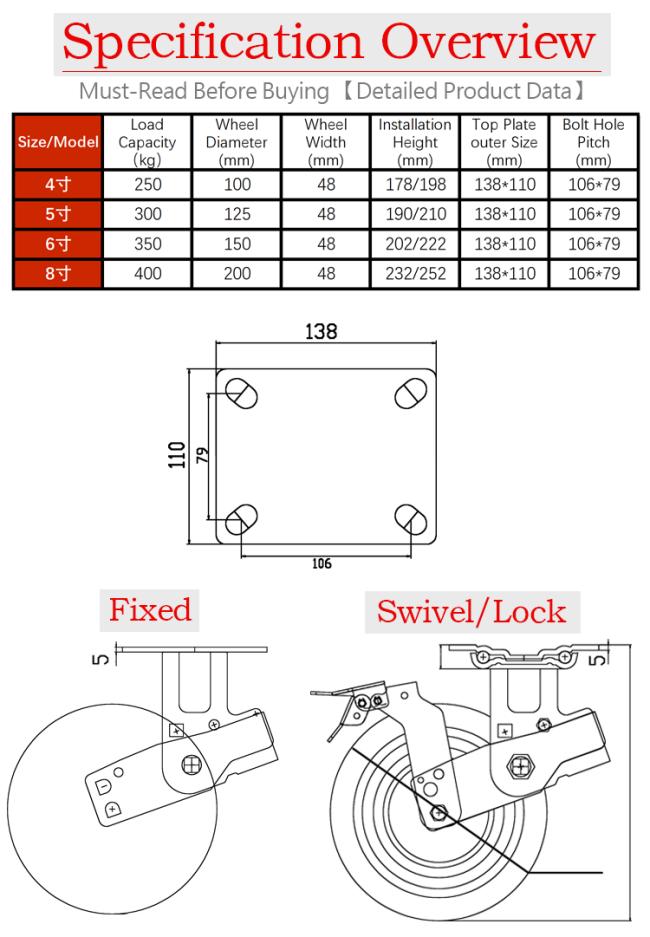
| Braking/Activation/Orientation | Braking / Swivel / Fixed |
|---|---|
| Size | 8 inches |
| Wheel Material | PU (polyurethane) |
| Base Plate Support Material | Q235 |
| Bearing | 6202 Bearing |
| Installation Height | 202/222 |
| Base Plate Size | 138*110 |
| Hole Distance | 105*80 |
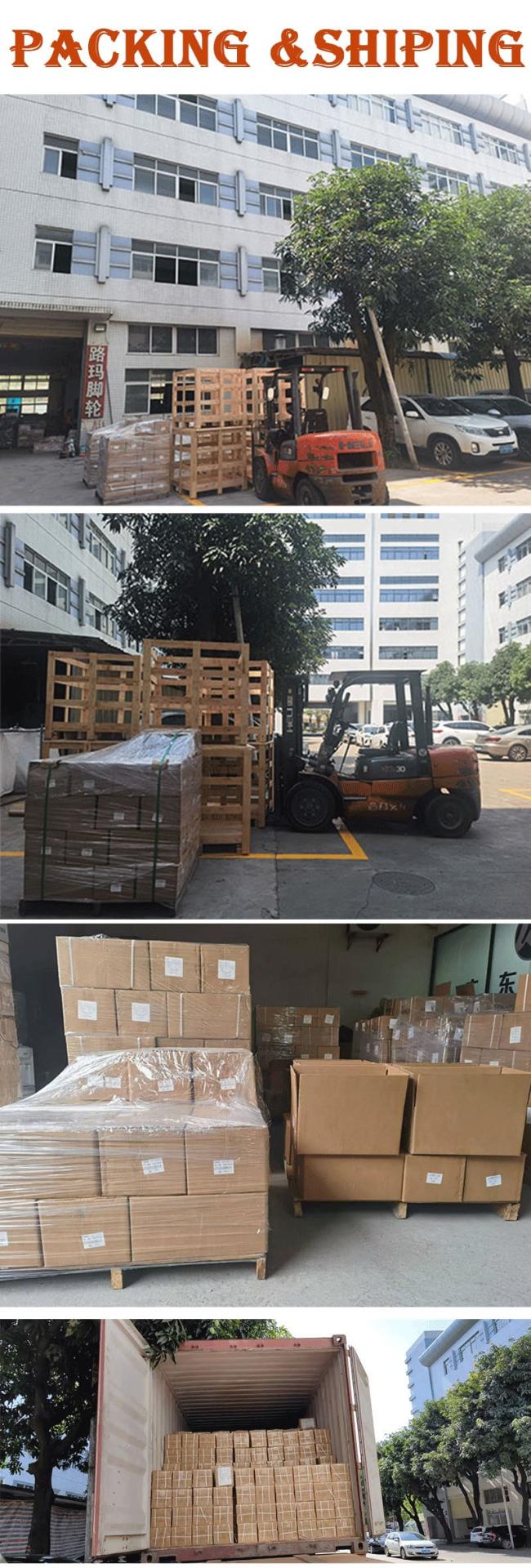
| Box Size | 49*28.5*23.5cm |
- Set 1: 2 brakes + 2 fixed
- Set 2: 2 swivel + 2 fixed
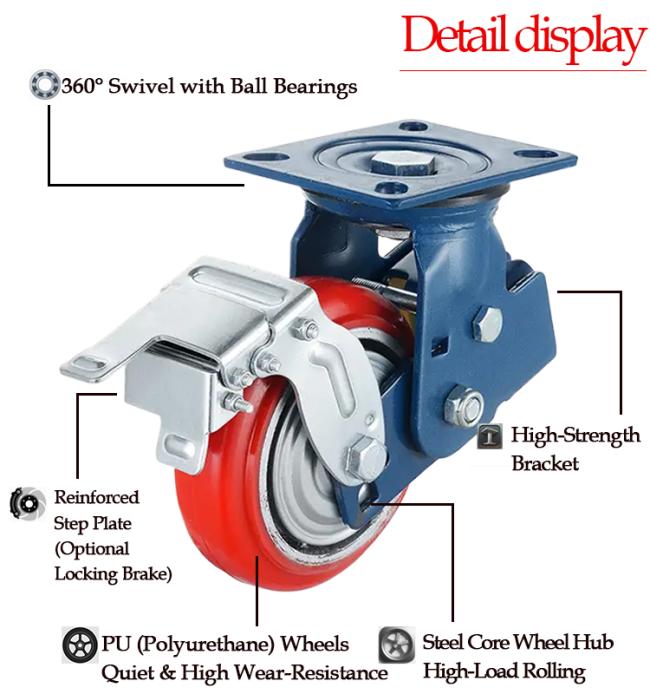
Port environments are characterized by uneven surfaces, constant impacts, and the need for precise movement of high-value goods. Spring-loaded or dampened casters provide critical benefits:
- Shock Absorption: They absorb vibrations and impacts when moving over dock gaps, rails, or rough pavement, protecting both the cargo and the equipment itself.
- Enhanced Stability: The spring mechanism helps distribute the load evenly, reducing the risk of tipping and making it easier to control heavy loads.
- Equipment Protection: By minimizing shock transmission, they extend the lifespan of the equipment structure and the casters’ wheels.
Bottom Line: For port freight applications, a spring-dampened caster is not just an option—it’s a recommended standard for operational excellence.
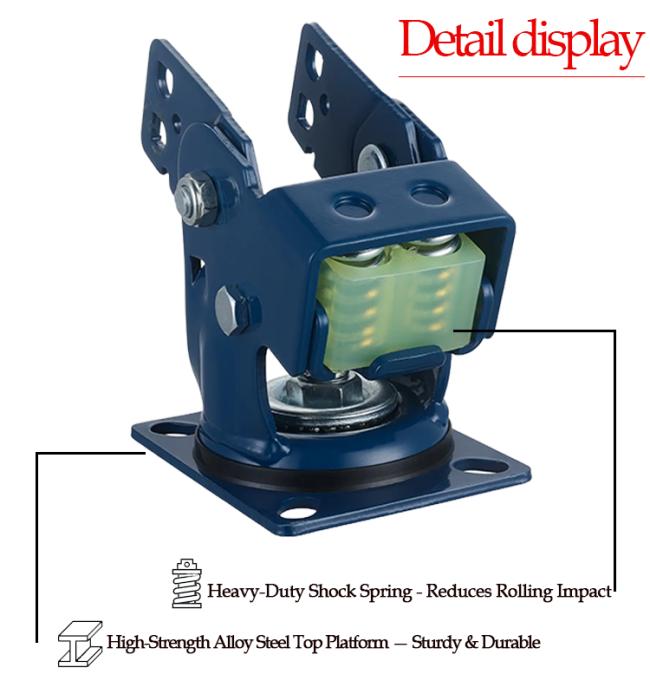
The choice of wheel material directly impacts performance, durability, and total cost of ownership. Here are the top materials for heavy-duty port casters:
- Best For: Ultra-heavy-duty applications, moving shipping containers, large machinery, and static loads.
- Key Features: Unmatched load-bearing capacity (often several tons per wheel), extreme structural integrity, and high resistance to deformation.
- Considerations: Heavier weight, can be noisy, and may mark delicate floor surfaces.
- Best For: General cargo, warehouse logistics, and environments with debris or chemical exposure (e.g., oils, salts).
- Key Features: Excellent wear resistance, high hardness, non-marking, and resistant to corrosion and chemicals.
- Considerations: Less shock-absorbent than polyurethane or rubber.
- Best For: A balance between heavy load capacity, floor protection, and noise reduction.
- Key Features: High load capacity, excellent wear resistance, quiet operation, and good traction. They offer a smooth roll and protect expensive flooring.
- Considerations: Can be damaged by extremely sharp objects or prolonged exposure to high heat.
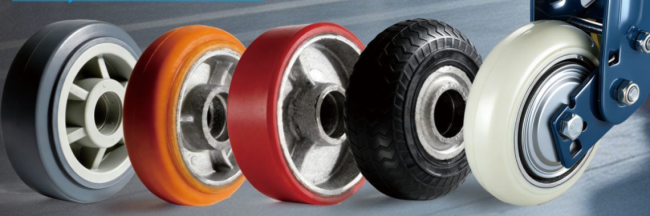
Follow this simple checklist to make the perfect choice for your port equipment:
-
Calculate the Load Capacity:
- Determine the total weight of the loaded equipment.
- Divide by the number of casters (use 3 for a 4-caster setup to account for uneven floors).
- Choose a caster with a load rating higher than this calculated value.
-
Assess the Floor & Environment:
- Rough Concrete/Asphalt: Prioritize durability (Nylon, Cast Iron).
- Smooth/Sensitive Floors: Prioritize floor protection (Polyurethane).
- Corrosive Environments (e.g., sea air): Choose materials with high corrosion resistance (Nylon, Stainless Steel components).
-
Verify the Total Configuration:
- Ensure the spring mechanism is rated for your load.
- Check for features like swivel locks and directional locks for added control.
- Always source from manufacturers who provide load-test certifications.

Get in Touch
Have questions about our products or want to discuss a custom order? Our team is ready to help you.