
Phenolic Resin Lab Countertop, Chemical Resistant Compact Laminate Worktop for School, Research Institute & Laboratory
Price:
70 to 200 dollars
MOQ:
45 square
Delivery Time:
Ships in about fifteen days
Brand:
Remeijia
Product Description
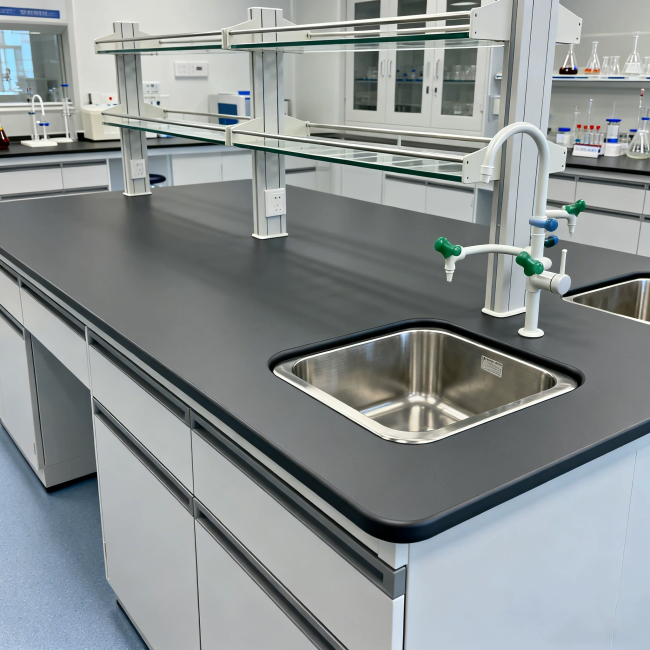
Our phenolic resin lab countertop is a high-pressure compact laminate (HPL) work surface engineered specifically for scientific and educational environments. Manufactured from multiple layers of kraft paper impregnated with thermosetting phenolic resin and finished with a melamine-resin decorative surface, the board is pressed under high temperature and pressure to form a dense, homogeneous, non-porous panel.
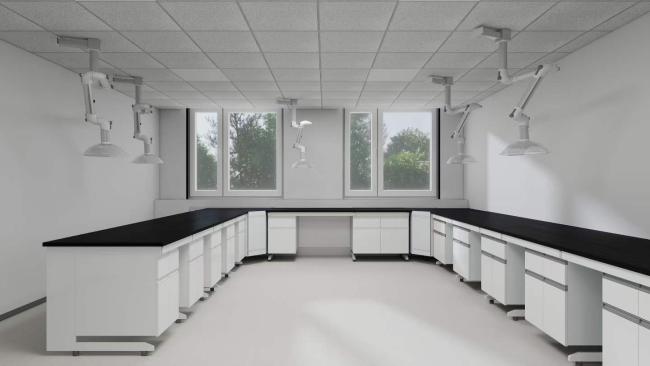
Designed for school science labs, university teaching rooms, research institutes, industrial testing laboratories and QA/QC centers, the countertop withstands daily exposure to acids, alkalis, solvents, reagents, moisture and abrasion while remaining easy to clean and maintain.
Available in a range of solid colors and customizable thicknesses, sizes and edge finishes, it is supplied as cut-to-size panels ready for bench top installation.
-
2. Key Features & Benefits
-
2.1 Chemical Resistance
-
Withstands a wide range of laboratory chemicals, including dilute acids, alkalis, organic solvents, detergents and reagent solutions.
-
Resists staining and surface degradation from routine chemical spills in teaching and research settings.
-
Non-porous surface prevents liquid penetration, limiting contamination build-up and simplifying decontamination.
-
2.2 Moisture & Water Resistance
-
Solid-through compact laminate construction does not delaminate or swell in high-humidity environments.
-
Suitable for wash-down areas, sink surrounds and constant humidity labs.
-
Sealed edges further protect against edge-face water uptake.
-
2.3 Mechanical Durability
-
Hard, scratch- and abrasion-resistant surface withstands daily use of glassware, instruments and lab equipment.
-
Good impact resistance against dropped objects compared with普通人造石 or wood-based alternatives.
-
Dimensionally stable under normal temperature and humidity variations.
-
2.4 Heat & Thermal Performance
-
Resists brief contact with moderately hot items (e.g. drying racks, warm glassware) within typical lab working ranges.
-
Not rated for direct placement of open flames or extremely hot plate surfaces; heat mats or stands are recommended.
-
2.5 Hygiene & Cleanability
-
Smooth, non-porous, easy-to-wipe surface — compatible with standard disinfectants and laboratory cleaners.
-
Does not support bacterial or fungal growth under normal lab conditions.
-
Low-maintenance: no sealing, waxing or periodic re-finishing required.
-
2.6 Aesthetic & Customization
-
Available in multiple solid colors (commonly black, light gray, dark gray, white/beige, green-blue) to match lab interior design.
-
Cut-to-size panels, rounded corners, drilled cut-outs for sinks / gas taps / power outlets available on request.
-
Edge options: square edge, sealed edge, post-formed / bullnose edge.
-
3. Typical Technical Specifications
The values below are typical industry parameters for standard-grade phenolic compact laminate worktops. Exact figures depend on the selected grade and certification; final data is confirmed on the quotation / datasheet.
|
Parameter
|
Typical Value
|
Note
|
|---|---|---|
|
Material
|
Phenolic resin impregnated kraft paper core + melamine resin decorative surface
|
Compact laminate / HPL
|
|
Standard panel size
|
1220 × 2440 mm (4' × 8')
|
Other large formats available by request
|
|
Common thickness
|
12 mm / 16 mm / 19 mm / 25 mm
|
12.7 mm / 19 mm most common for lab tops
|
|
Density
|
approx. 1.35–1.45 g/cm³
|
Solid, through-color core
|
|
Water absorption (24h)
|
≤ 2%
|
Per standard laminate test methods
|
|
Chemical resistance
|
Resistant to dilute acids, alkalis, common solvents, detergents
|
List of resistant chemicals available on request
|
|
Surface finish
|
Matte / semi-matte, scratch-resistant
|
Reduces glare under lab lighting
|
|
Light stability
|
Good color retention under normal indoor lighting
|
Avoid prolonged direct UV exposure
|
|
Edge treatment
|
Square / sealed / post-formed
|
Sealing recommended in wet areas
|
|
Custom processing
|
Cut-to-size, CNC routing, corner rounding, sink cut-out, drilling
|
Fabrication drawings required
|
Note for buyers: Specific test reports (e.g. BS EN 438, ISO 4586, chemical resistance lists, fire rating) can be provided upon request along with the quotation. Fire-retardant / A-grade variants are available for projects requiring higher fire performance.
-
4. Applications
???? Education
-
Primary / secondary school science benches
-
University teaching labs (chemistry, biology, physics)
-
Training centers and vocational workshops
???? Research & Industry
-
Research institute & government lab worktops
-
Pharmaceutical / biotech QC labs
-
Food & beverage testing laboratories
-
Environmental and analytical testing labs
Also widely used as base for fume hoods, lab island benches, wall benches, reagent shelving tops, and instrument stands.
-
5. Why Choose Phenolic Resin Worktops
|
Surface type
|
Pros
|
Typical use
|
|---|---|---|
|
Phenolic compact laminate (this product)
|
Good chemical & moisture resistance, cost-effective, easy to fabricate, wide color range
|
School labs, teaching labs, general research, QC labs
|
|
Epoxy resin
|
Higher chemical & heat resistance, seamless
|
Advanced chemistry / pharma labs (higher budget)
|
|
Stainless steel
|
Heat resistant, hygienic
|
Microbiology, food, cleanroom areas
|
|
Ceramic / solid chemical-resistant board
|
Maximum chemical resistance
|
Heavy acid / solvent labs
|
Phenolic compact laminate offers the best balance of chemical resistance, durability and cost for most school, university and general research laboratory applications.
-
6. Cleaning & Maintenance
-
Routine cleaning: Wipe with a soft cloth dampened with mild detergent or laboratory glass cleaner.
-
Spillages: Clean chemical spills promptly; prolonged contact with strong solvents or concentrated acids should be avoided.
-
Disinfection: Compatible with common lab disinfectants (dilute bleach, ethanol, quaternary ammonium solutions) — test on a small area first.
-
Avoid: Abrasive scouring pads, steel wool, and harsh undiluted acids / solvents on a regular basis.
-
Heat: Use heat mats or trivets for hot equipment; do not place open flames or directly heated plates on the surface.
![]()
![]()
Similar Products
Get in Touch
Have questions about our products or want to discuss a custom order? Our team is ready to help you.
Company
Guangzhou Fushengjia New Material Co., Ltd.
Location
No translation needed, the text is already in Chinese.
Contact Person
Liu Jin Bei