
Heavy-Duty SS304 Wire Rope Mesh — 7×19 Cable Netting for Bridge Safety Protection and Pedestrian Railing Infill High Breaking Load
Heavy-Duty SS304 Wire Rope Mesh — 7×19 Cable Netting for Bridge Safety Protection and Pedestrian Railing Infill High Breaking Load
Wire rope mesh Description
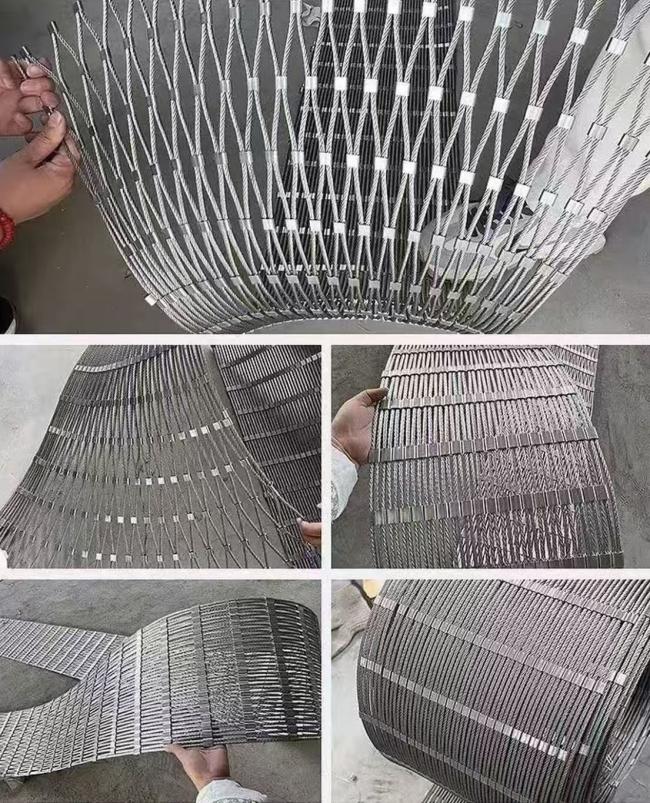
Engineered for infrastructure safety, this heavy-duty stainless steel wire rope mesh provides reliable fall protection on bridges, overpasses, and elevated walkways. The 7×19 cable construction — seven strands of nineteen wires each — delivers the highest breaking load in our range at 7.38kN, making it suitable for the most demanding structural applications.
The mesh is tensioned across support structures using stainless steel edge cables and anchors, creating a continuous protective barrier that withstands wind loads, ice accumulation, and pedestrian impact without permanent deformation. Unlike rigid welded panels, this flexible system distributes concentrated loads across the entire mesh surface.

Features
Maximum breaking load:7×19 construction delivers 7.38kN minimum breaking force per cable — the strongest specification available.
Tensioned system engineering:Designed to handle initial tension, wind, ice, snow, and impact loads through the full supporting structure.
Long lifespan in harsh environments:304 stainless steel offers excellent corrosion resistance with an expected service life exceeding 30 years in outdoor infrastructure applications.
Low maintenance:No repainting, no re-tensioning under normal conditions. Visual inspection is sufficient for ongoing maintenance.
Aesthetic transparency:Maintains open sightlines for bridge users while providing secure fall prevention.
| Product Name | Wire rope mesh |
| Material | 304 / 304L / 316 / 316L |
| Rope Construction | 7×19 (heavy-duty) / 7×7 (standard) |
| Cable Diameter | 2.0mm – 3.2mm |
| Mesh Aperture | 50mm × 50mm – 200mm × 200mm |
| Connection Type | Ferruled |

| Code | Rope construction | Rope diameter |
Aperture |
Min breaking load | ||
|
Inch |
Mm |
Inch |
Mm |
(Ibs) |
||
|
CYSW-1 |
7×7 |
1/8 |
3.2 |
2×2 |
51×51 |
1600 |
|
CYSW-2 |
7×7 |
3/32 |
2.4 |
4×4 |
102×102 |
920 |
|
CYSW-3 |
7×7 |
3/32 |
2.4 |
3×3 |
76×76 |
920 |
|
CYSW-4 |
7×7 |
3/32 |
2.4 |
2×2 |
51×51 |
920 |
|
CYSW-5 |
7×7 |
5/64 |
2.0 |
3×3 |
76×76 |
676 |
|
CYSW-6 |
7×7 |
5/64 |
2.0 |
2×2 |
51×51 |
676 |
|
CYSW-7 |
7×7 |
5/64 |
2.0 |
1.5×1.5 |
38×38 |
676 |
|
CYSW-8 |
7×7 |
1/16 |
1.6 |
3×3 |
76×76 |
504 |
|
CYSW-9 |
7×7 |
1/16 |
1.6 |
2×2 |
51×51 |
504 |
|
CYSW-10 |
7×7 |
1/16 |
1.6 |
1.5×1.5 |
38×38 |
504 |
|
CYSW-11 |
7×7 |
1/16 |
1.6 |
1×1 |
25×25 |
504 |
|
CYSW-12 |
7×7 |
3/64 |
1.2 |
2×2 |
51×51 |
606 |
|
CYSW-13 |
7×7 |
3/64 |
1.2 |
1.5×1.5 |
38×38 |
306 |
|
CYSW-14 |
7×7 |
3/64 |
1.2 |
1×1 |
25×25 |
306 |
|
CYSW-15 |
7×7 |
3/64 |
1.2 |
4/5×4/5 |
20×20 |
306 |
|
CYSW-16 |
7×19 |
1/8 |
3.2 |
4×4 |
102×102 |
1600 |
|
CYSW-17 |
7×19 |
1/8 |
3.2 |
3×3 |
76×76 |
1600 |
|
CYSW-18 |
7×19 |
1/8 |
3.2 |
2×2 |
51×51 |
1600 |
Our Service
Structural engineering consultation for load calculations
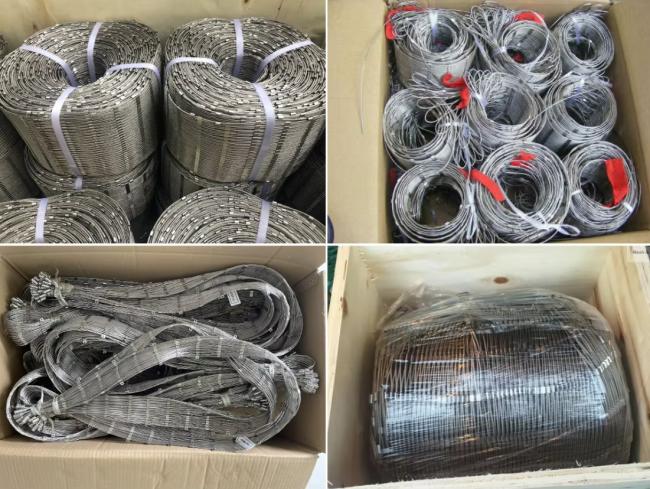
Complete system supply including edge cables, tensioners, and anchors
Installation supervision available for large projects
Project-specific test certificates provided
Production capacity: 5,000 m² per month
Applications
Bridge pedestrian railing infill
Overpass and elevated walkway fall protection
Suspension bridge safety netting
Highway ball stop fences
Stadium and arena perimeter protection
Skylight and atrium safety nets


FAQ
Q: What safety factor does your mesh provide?
A: To determine the working load, divide the breaking strength by 10. A 7×19 mesh at 7.38kN breaking load gives a safe working load of approximately 0.738kN per cable.
Q: Can this mesh be used on suspension bridges?
A: Yes. We supply mesh for bridge railing infill, anti-throw screens, and fall prevention systems on various bridge types including suspension, cable-stayed, and pedestrian bridges.
Q: What's the recommended cable diameter for a pedestrian bridge?
A: For standard pedestrian railings, 2.4mm or 3.2mm cable with 7×19 construction is recommended. For higher-risk locations like highway overpasses, we suggest 3.2mm at minimum.
Get in Touch
Have questions about our products or want to discuss a custom order? Our team is ready to help you.