
Wear Resistant Ceramic Hose with Impact Resistance and Long Service Life for Slurry Conveying
Ceramic Rubber Hose High Wear Resistance Anti Abrasion Long Service Life
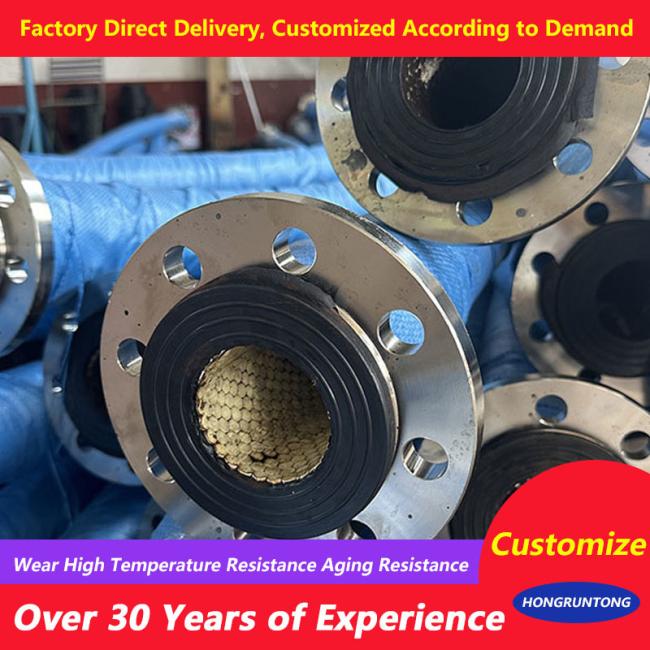
Ceramic Hose is a composite industrial hose developed for conveying abrasive liquids and solid-liquid mixtures under conditions where ordinary rubber, plastic, or unlined flexible hose constructions may experience accelerated internal wear. The product combines an abrasion-resistant ceramic lining with a high-strength reinforced rubber body, creating a flexible conveying component capable of handling demanding slurry-transfer conditions while maintaining structural stability.
An iron ore processing operation in Western Australia required replacement of several flexible connections installed between slurry pumps and fixed processing pipelines. The plant transported concentrated iron ore slurry through a continuous processing circuit. The existing flexible sections were exposed to abrasive particles, pump vibration, and frequent pressure fluctuations.
The plant engineering team evaluated the operating conditions and identified internal abrasion as the primary failure mechanism. A Ceramic Hose configuration was selected for the high-wear flexible sections. The required hose diameter and length were matched to the existing pipeline, while the reinforcement structure was selected according to the operating pressure and dynamic movement.

| Parameter | Specification |
|---|---|
| Name | Ceramic Hose Pipe |
| Tube | NR, BR, SBR |
| Reinforcement | High Tensile Steel Wire Spiral |
| Cover | NR, CR |
| Working Pressure | < 25 Bars |
| Flange Material | Q235B carbon steel paint |
| Working Temperature | -30℃ to +80℃ |
| Safety Factor | 5:1 |
| Inner Diameter (mm) | Working Pressure (Mpa) | Burst Pressure (Mpa) | Length (m) | Wall Thickness (mm) |
|---|---|---|---|---|
| 300 | 0.4-1.2 | 3.6 | 1-3 | 34-37 |
| 414 | 0.4-1.2 | 3.6 | 1-3 | 35-37 |
| 560 | 0.4-1.2 | 3.6 | 2-3 | 40-45 |
| 600 | 0.4-1.2 | 3.6 | 2-3 | 40-45 |
| 700 | 0.8-1.5 | 4.5 | 2-3 | 40-45 |
| 800 | 1.2-2.5 | 5.5 | 2-3 | 50-52 |
| 900 | 1.5-2.5 | 7.5 | 2-3 | 55-58 |
| 1000 | 2.0-2.5 | 7.5 | 3-5 | 75-78 |
The primary engineering function of the ceramic lining is to withstand prolonged contact with abrasive particles moving through the hose. Mineral slurry can produce several forms of internal wear, including sliding abrasion, impact abrasion, cutting, gouging, and localized erosion.
The hose body incorporates reinforcement layers designed to withstand internal pressure while maintaining dimensional stability during operation. When slurry is pumped through a pressurized flexible connection, the hose is subjected to circumferential expansion forces, longitudinal loads, vibration, and movement caused by connected equipment.
Industrial slurry systems frequently connect rigid pipelines to rotating or reciprocating equipment. Pumps can generate continuous mechanical vibration and pressure pulsation, while thermal movement and equipment displacement may create additional stresses in fixed pipework.
Reliable hose performance depends on correct integration with the surrounding pipeline. A hose that is incorrectly sized, excessively compressed, twisted, or forced into an unsuitable bend can experience unnecessary mechanical stress regardless of the quality of its materials.
- Iron Ore and Mineral Concentrate Processing
- Aggregate and Sand Processing
- Cement and Mineral-Based Industrial Systems
Hongruntong Marine has more than 30 years of manufacturing experience in marine and industrial rubber products. Ceramic Hose requires coordinated control of several components, including rubber compounds, reinforcement layers, ceramic lining, connection assemblies, and curing processes.
Industrial slurry pipelines differ significantly in operating conditions, even when nominal hose diameters are identical. Particle concentration, flow velocity, temperature, pressure, bending radius, connection type, and installation geometry can influence hose selection.
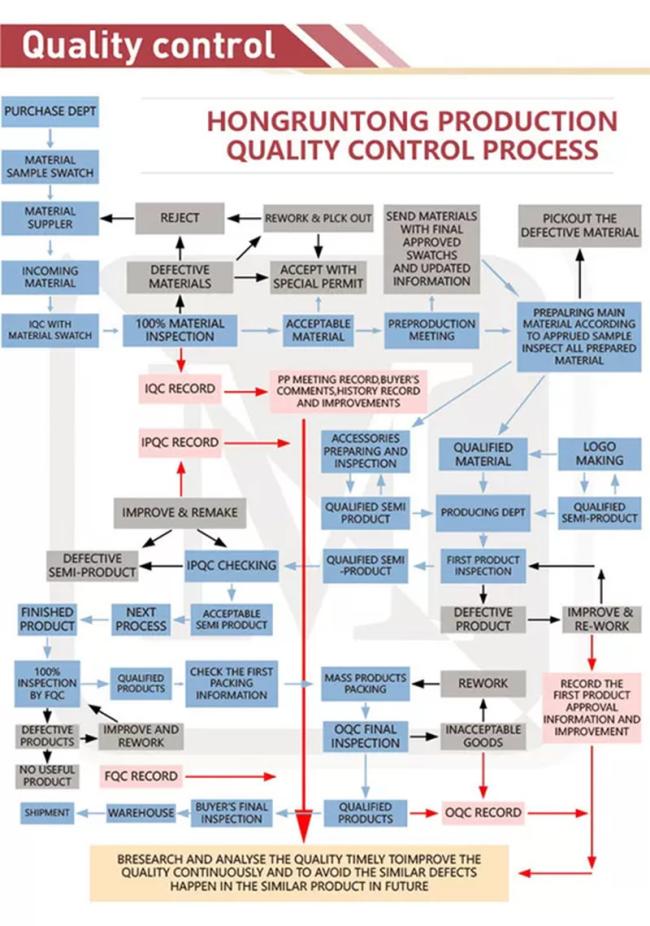
Quality control is applied throughout the manufacturing process to help maintain consistency in dimensions, appearance, connection configuration, and structural assembly. Depending on the project specification, inspection can include dimensional checks, visual inspection, connection verification, and applicable pressure testing.
Industrial hose procurement frequently involves communication between equipment manufacturers, engineering contractors, maintenance departments, and end users. Hongruntong Marine can coordinate technical information such as drawings, dimensions, pressure requirements, connection standards, operating media, and delivery specifications during the order process.
The construction is determined primarily by working pressure, nominal diameter, hose length, bending requirements, operating temperature, and mechanical movement. Additional consideration should be given to pump pulsation and external loading where applicable.
It can be configured for different abrasive media, but the appropriate ceramic arrangement and rubber structure depend on particle size, hardness, concentration, and flow velocity. Coarse particles may generate higher impact loads, while fine particles can produce sustained sliding abrasion.
The hose should be installed without twisting, excessive stretching, sharp bending, or forced misalignment. The specified minimum bend radius and pressure limits should be respected, and the hose should not be used as a permanent support for adjacent pipeline weight unless specifically designed for that purpose.
Yes. End connections can be configured according to the applicable pipeline or equipment requirements, subject to technical confirmation. Flange dimensions, bolt-hole patterns, face configuration, and hose orientation should be confirmed before production.
Reuse depends on the condition of the ceramic lining, rubber body, reinforcement, and end connections. A removed hose should be inspected for external damage, deformation, leakage, lining deterioration, and connection condition before any decision to reinstall it. A hose showing structural or significant lining damage should not be reused.


Get in Touch
Have questions about our products or want to discuss a custom order? Our team is ready to help you.