
1.5 Ton Industrial RO Water Treatment Plant / Reverse Osmosis Water Filter Machine For Drinking Water
1.5 Ton Industrial RO Water Treatment Plant/Reverse Osmosis Water Filter Machine For Drinking Water
| Model | Productivity(T/H) | Motor power(KW) | Recovery rate(%) | Outlet water conductivity(μs/cm) | Raw water conductivity(μs/cm) |
| CK-RO-1500L | 1.5 | 2 | 50 | ≤10 | ≤300 |
1.5 Ton ro water treatment machine Process flow
The conventional reverse osmosis process is: raw water → pretreatment system → high pressure water pump → reverse osmosis membrane module → purified water.
The pretreatment system can adopt coarse filtration, activated carbon adsorption, fine filtration, etc. depending on the water quality and effluent requirements of the raw water. Fine filtration is essential to protect the reverse osmosis membrane and prolong its service life. In addition, the composite membrane pair The free chlorine in the water is very sensitive, so the pretreatment system is usually equipped with activated carbon adsorption.
1.5 Ton ro water treatment machine Pretreatment
Feedwater pretreatment is critical to the safe operation of reverse osmosis. Both surface water and groundwater contain some soluble or insoluble organic and inorganic substances.
In addition, different membrane materials have different chemical stability, and they have a great influence on the stability of p H, residual chlorine, temperature, bacteria, certain chemicals, etc., and the requirements for water supply pretreatment are also different. In general, membrane module manufacturers will propose water quality indicators. These indicators include:
(1) Silt density index (S D I). The index can better reflect the content of colloid, turbidity and suspended matter in the water. After the water is pretreated, the lower the S D I is, the longer the service life of the membrane module is. Generally, S D I ≤ 4 is required. Reduce the S D I in the feed water by flocculation, sedimentation, filtration, etc.
(2) p H. The composite membrane has a wide range of p H resistance (2 to 11), while the cellulose triacetate has a narrow p H range (3 to 8). The membrane is easily hydrolyzed beyond the specified range. Another purpose of adjusting p H is to reduce the alkalinity in the feed water.
(3) Basicity. Alkalinity is the ability to measure the acidity of a water sample. The substances that can be neutralized with acid are hydroxide ions, carbonates, hydrogencarbonates, silicates and phosphates. Alkalinity with hydroxides and carbonates. Salt scaling is closely related. If the alkalinity is too high, it must be destroyed by acid neutralization.
(4) Temperature. The temperature resistance of different membrane materials varies. For example, the temperature resistance of the composite membrane can be as high as 45 °C, while the membrane of triacetate can not exceed 35 °C. If the temperature of the water is too high, the compaction of the membrane will increase, and the water production of the membrane module will be greatly reduced. In addition, higher water temperatures (above 25 °C) will accelerate the growth of bacteria, and more attention should be paid to sterilization.
(5) The content of iron and manganese. Iron and manganese tend to cause the deposition of dirt on the membrane surface.
(6) Sulfate. Sulfate (such as CaSO4) is not easy to remove. When the content of sulfate and calcium and magnesium is high, it is necessary to add anti-scaling agent and strictly control the recovery rate of water.
(7) Hardness. Hardness mainly refers to the content of calcium ions and magnesium ions, which are the main components of carbonate scale and sulfate scale. The tendency of scaling can be judged by calculating the Lange2lier saturation index, Stiff and Davis stability index in water.
(8) Residual chlorine. Chlorination sterilization is also an indispensable process in the reverse osmosis desalination process, but the chlorine resistance of different membrane materials is very different. The cellulose triacetate has a good chlorine resistance and can withstand a residual chlorine of 1.0 mg/L, while the composite membrane can only be operated at less than 0.1 mg/L. Residual chlorine can be reduced by the addition of sodium hydrogen sulfite.
(9) Total organic carbon (TOC). Excessive TOC may cause microbial contamination, especially after sterilization and disinfection, such as high water temperature, disinfection and decomposition of organic matter, which is the bait of bacteria, so that the remaining bacteria multiply faster, and the cellulose acetate membrane is very sensitive to this. Lowering the TOC in the feed water can be adsorbed by activated carbon.
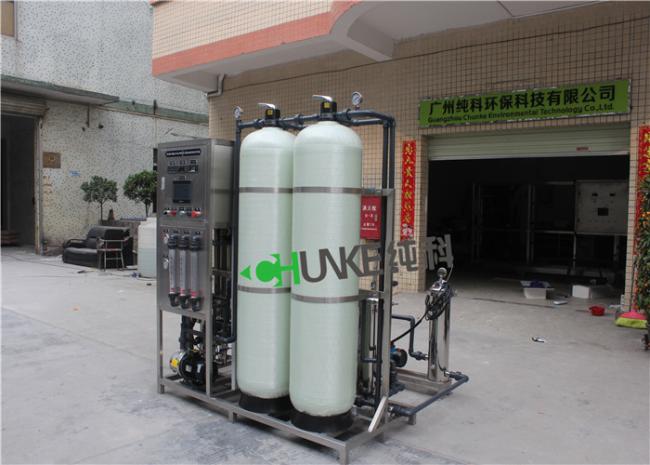
Picture show detail for your referance
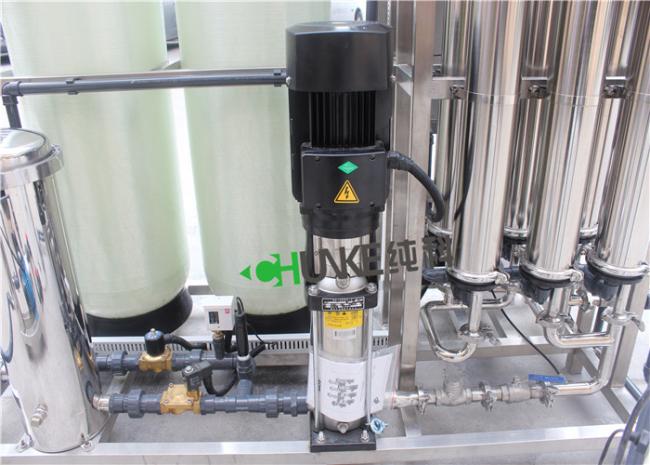
CNP High pressure pump, or customize by your requierment
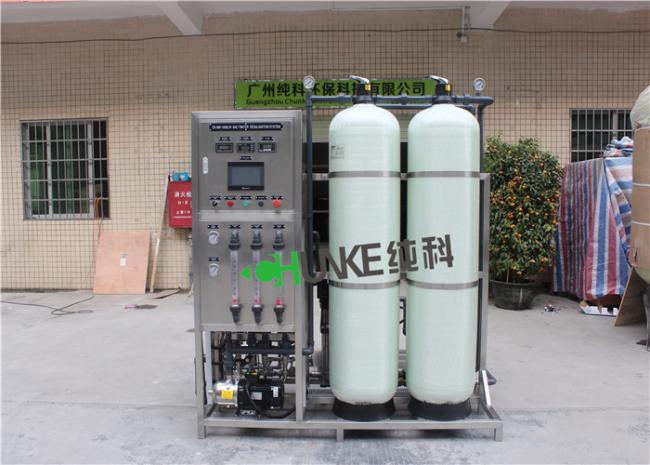
PLC Electronic control system
Get in Touch
Have questions about our products or want to discuss a custom order? Our team is ready to help you.